 France
 English
 Deutsch
 Español
 Italiano
 Nederlands
 Polski
 Português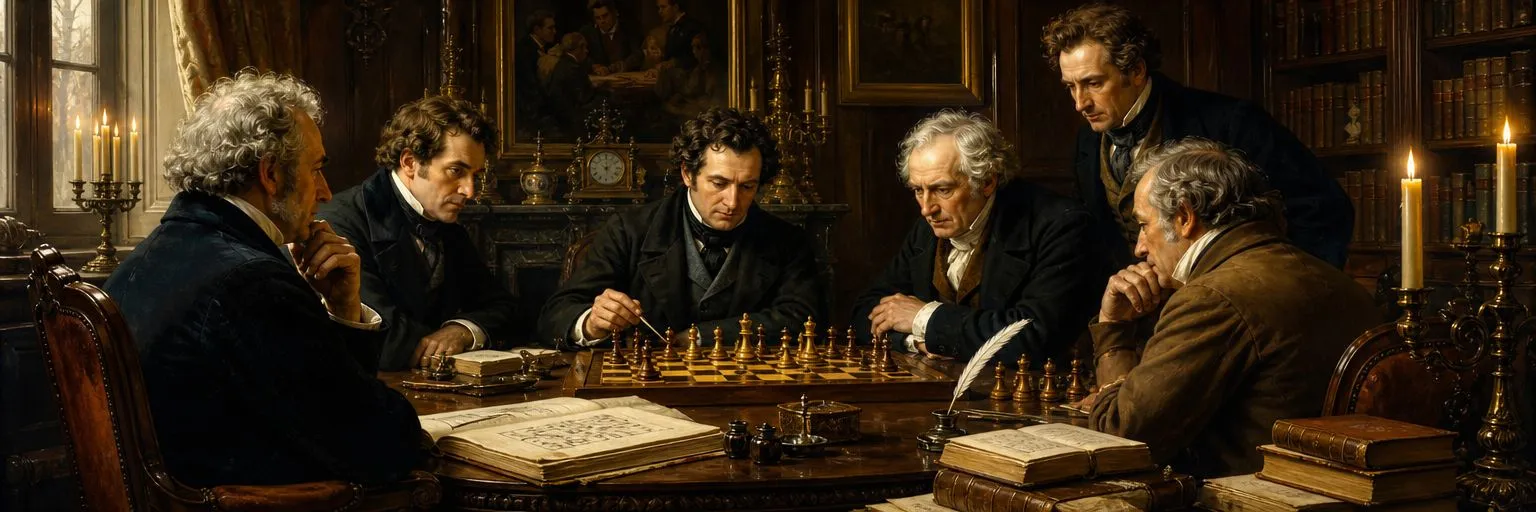
The pioneers who shaped the history of chess
Long before the era of live broadcasts and analysis engines, a few major figures laid the foundations of the modern game. These masters transformed chess into a recognized intellectual discipline by refining the principles of opening play, strategy, and endgames. Their legacy continues to influence both amateurs and today’s grandmasters.
Philidor and the birth of positional thinking
In the 18th century, François-André Danican Philidor marked a decisive turning point with an idea that became famous: “pawns are the soul of chess.” This vision, revolutionary for its time, highlighted the importance of pawn structure, space control, and piece coordination. By moving away from a purely tactical style of play, Philidor helped bring about a deeper and more enduring understanding of positions.
Paul Morphy, the early genius
In the 19th century, Paul Morphy established himself as one of the first international prodigies. His style, based on rapid development, initiative, and exploiting his opponents’ mistakes, still impresses with its clarity. His games are still studied for their elegance and educational value. Morphy also demonstrated that a seemingly simple style of play could conceal formidable strategic precision.
Wilhelm Steinitz and the foundations of modern chess
The first official world champion, Wilhelm Steinitz profoundly changed the way a game was approached. He championed the idea that an effective attack must be based on advantages accumulated gradually: better structure, piece activity, opponent weaknesses, or control of key squares. This scientific approach gave rise to many principles that remain central to learning modern chess.
Emanuel Lasker, the art of adaptation
Emanuel Lasker, Steinitz’s successor, further enriched this evolution by adding a psychological dimension to the battle on the chessboard. World champion for twenty-seven years, he knew how to adapt his style to each opponent, choosing the most uncomfortable positions for his rivals. His influence shows that mastery of the game does not rely only on variations, but also on a human and practical understanding of competition.
A legacy still alive
These pioneers paved the way for all the generations that followed. Their ideas can be found in manuals, annotated games, and today’s training methods. Understanding their contribution makes it easier to grasp why famous chess playersof today are part of a long history shaped by innovation, turning points, and the passing down of knowledge. Through them, modern champions inherit a tradition that has shaped the very identity of the game.
The undisputed legends of world chess
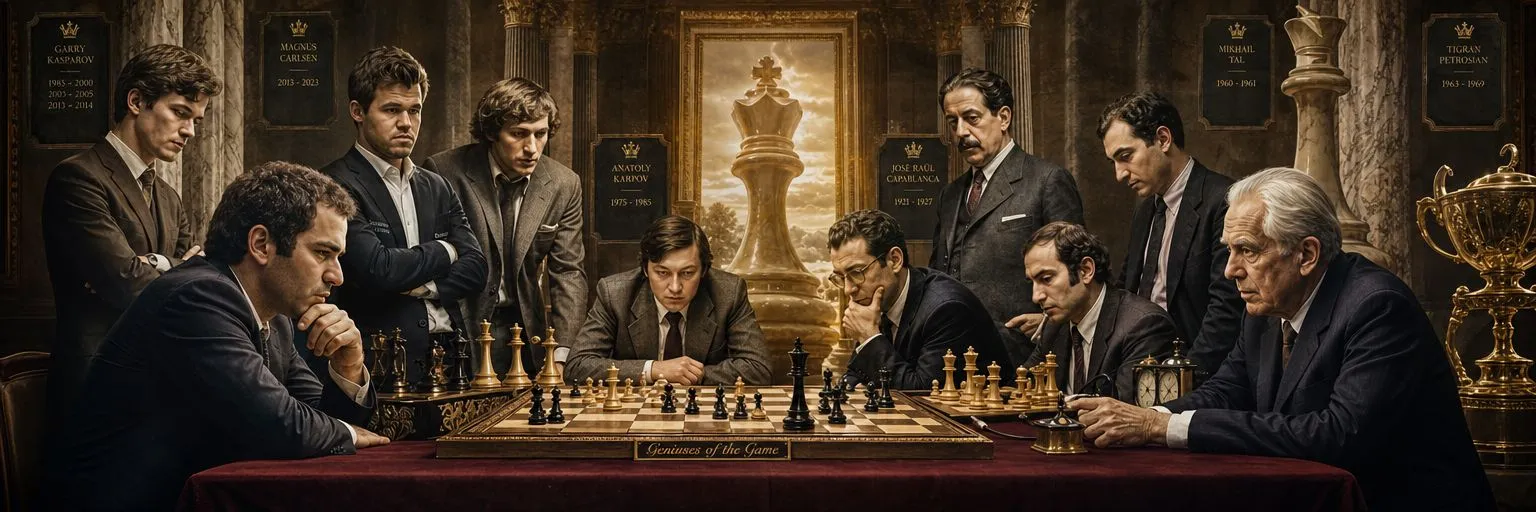
Some figures go beyond the simple status of champion to become true landmarks in the history of the game. Through their dominance, style, and lasting influence, these famous chess players have shaped the collective imagination and elevated world chess to the rank of a universal intellectual art form.
Garry Kasparov, the embodiment of supremacy
It is impossible to speak of the great legends without mentioning Garry Kasparov. World champion for fifteen years, he left his mark on his era with formidable preparation, calculated aggression, and exceptional strategic understanding. For many observers, he remains one of the greatest chess champions of all time. His match against Deep Blue also helped popularize debates around artificial intelligence and human genius.
Bobby Fischer, the prodigy who became a myth
Bobby Fischer holds a unique place in the memory of enthusiasts. His 1972 coronation against Boris Spassky went beyond the sporting arena to become a major cultural and geopolitical event. A precocious genius, obsessive worker, and player of remarkable precision, he transformed the image of chess stars by surrounding his personality with an almost novelistic aura.
Anatoly Karpov and positional mastery
With Anatoly Karpov, legend takes the form of patience, control, and technical elegance. His style, often associated with silent yet constant pressure, became a model for others. In the world of grandmasters, Karpov remains a model of positional finesse and consistency at the highest level. His rivalry with Kasparov ranks among the most memorable in contemporary sporting history.
José Raúl Capablanca and natural fluidity
Capablanca still fascinates with the sense of simplicity he projected at the chessboard. The Cuban seemed to play with disarming ease, especially in endgames, where his precision was nearly unmatched. His name remains inseparable from the legends of chess, so much do his natural talent and clarity of play continue to inspire today’s generations.
Alexander Alekhine and the art of attack
In contrast to a purely minimalist style, Alexander Alekhine left the image of a creative fighter, capable of producing brilliant combinations and spectacular attacks. His legacy is immense in the world of top-level chess, where his tactical sense and imagination are still studied. He is one of those names that helped make the game as captivating for the public as it is for specialists.
Why these names endure through generations
If these figures remain at the top of the collective memory, it is not only thanks to their achievements. Each of them embodies a singular way of thinking, creating, and dominating on the chessboard. Through their games, their rivalries, and their theoretical influence, they built a unique legacy that continues to fuel the passion surrounding famous chess players and to nourish the fascination with the greatest icons of the game.
World champions who defined their era
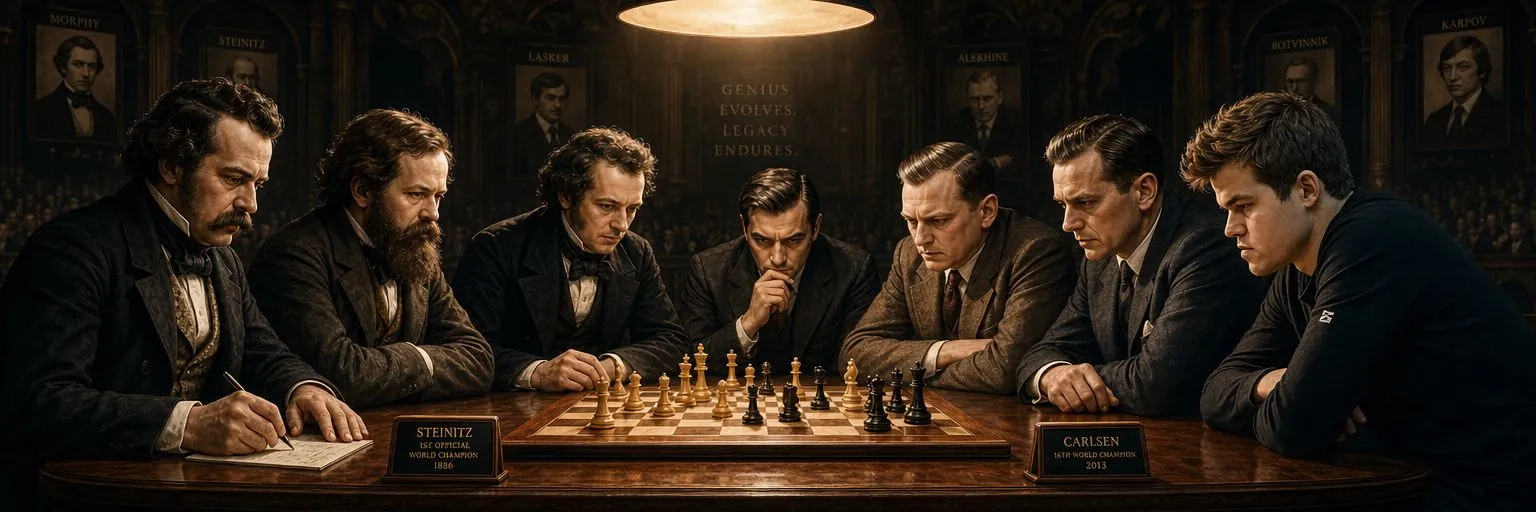
Over the decades, several holders of the supreme title have transformed the way chess is understood, prepared for, and played. Each imposed a style, a vision, and a dominance that reflect both personal talent and the evolution of top-level play. These famous chess players left a lasting mark, far beyond their championship victories.
Capablanca, Alekhine, and the elegance of the early world reign
José Raúl Capablanca remains associated with exceptional strategic clarity and almost unmatched endgame technique. His fluid and natural play fascinated entire generations. Alexander Alekhine, by contrast, embodied a more combative approach, rich in tactical complications and creative ambitions. Together, they illustrate a period when world chess champions were already shaping opposing schools of thought while helping enrich theory.
Botvinnik and the era of scientific preparation
Mikhail Botvinnik symbolized a new stage in chess history: that of method, deep analysis, and rigorous preparation. His influence went beyond his own matches, as he also helped train several future great Soviet names. With him, the world title became the pinnacle of structured, almost scientific work. In any list of the most influential chess grandmasters, his name occupies a central place.
Fischer and the rupture that shook the world
Bobby Fischer profoundly shaped his era by breaking Soviet hegemony during the 1972 match against Boris Spassky. His meteoric rise, extreme demands, and theoretical genius propelled chess onto the international stage. Few chess stars have generated such a media and cultural impact. Fischer also redefined the standards of individual preparation, paving the way for a new vision of professionalism.
Karpov, Kasparov and the intensity of a historic rivalry
Anatoly Karpov established himself through his precision, positional control, and ability to gradually suffocate his opponents. Garry Kasparov, by contrast, embodied energy, calculating power, and dynamic aggressiveness. Their confrontation defined a major period in the discipline, marked by legendary matches, psychological tension, and theoretical innovations. For many enthusiasts, they remain among the greatest chess players of all time, such is the immense influence they continue to have on the modern game.
Anand, Carlsen and the modernity of the complete champion
Viswanathan Anand represented the opening up of top-level chess to a truly global dimension. Fast, versatile, and exceptionally well prepared, he proved that a champion could excel in every format. Magnus Carlsen then pushed this image of the complete player even further, capable of dominating in classical, rapid, and blitz alike. His exceptional understanding of positions and his consistency make him one of the most iconic famous chess players of the contemporary era. With these figures, the World Championship continues to embody absolute excellence in the world of chess.
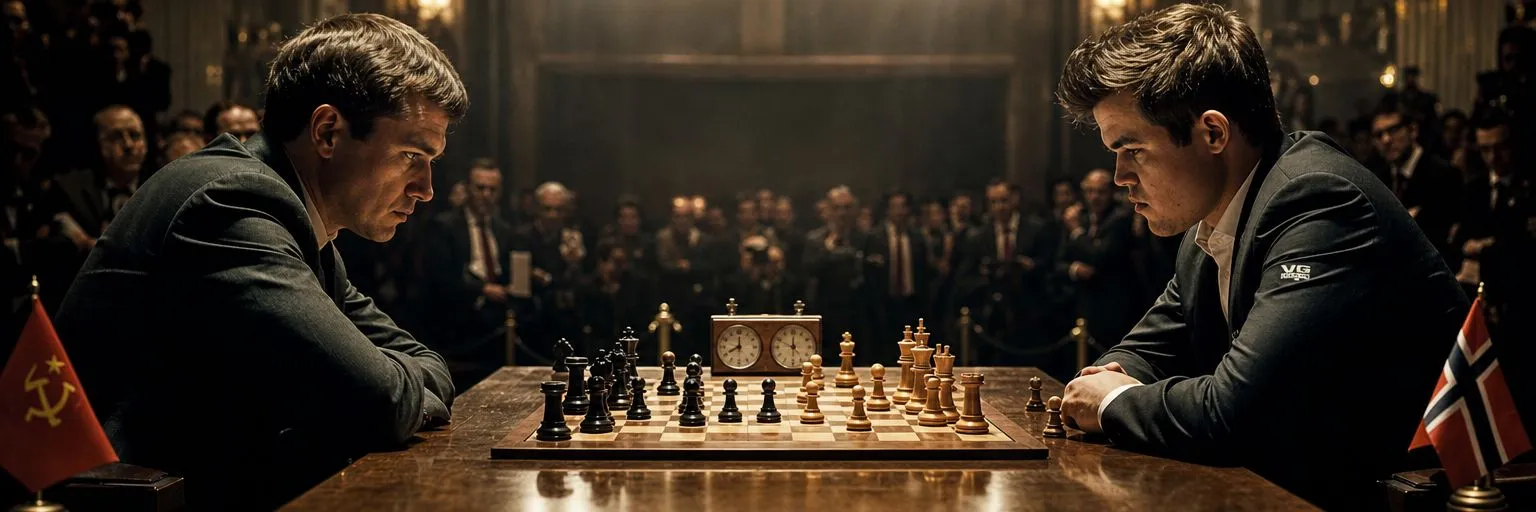
Legendary clashes that changed the history of chess
Beyond individual records, certain confrontations have left a lasting mark because they crystallized opposing styles, eras, and visions of the game. These duels captivated the public, influenced theory, and sometimes even went beyond the sporting arena to enter the collective imagination of chess.
Fischer versus Spassky, the match that went beyond the chessboard
The 1972 World Championship between Bobby Fischer and Boris Spassky remains without doubt one of the most famous confrontations in history. In the context of the Cold War, this face-off took on an unprecedented political dimension. Fischer, an unpredictable American genius, faced Spassky, the representative of a Soviet school that had dominated for decades.
Beyond the symbolism, this match brought famous chess players to the attention of a global audience. Fischer’s demands, the twists surrounding his arrival, and his final victory turned this encounter into a worldwide event. For many, this duel marks the moment when chess became a spectacle followed far beyond the circle of insiders.
Karpov versus Kasparov, the rivalry of endurance and innovation
Few rivalries have been as intense as the one between Anatoly Karpov and Garry Kasparov. Their first match for the world title, which began in 1984, was interrupted after months of an exhausting struggle. Karpov embodied remarkable positional precision, while Kasparov imposed a combative energy and revolutionary theoretical preparation.
Their successive clashes profoundly influenced the understanding of the modern game. Each game seemed to push the limits of strategy, preparation, and psychological resilience. This rivalry also helped shape the image of great chess champions capable of advancing the discipline through their competition.
Kasparov versus Deep Blue, the clash between human and machine
In 1997, the duel between Garry Kasparov and the computer Deep Blue opened a new era. For the first time, a reigning world champion lost a match to a machine under official conditions. The event upended perceptions of the relationship between human intuition and computing power.
This head-to-head did not only mark a milestone in the technological history of chess. It also raised major questions about the future of training, analysis, and preparation for chess players. Since that moment, engines have become essential tools, permanently changing top-level play.
Carlsen versus Anand, the shift toward a new generation
The match between Magnus Carlsen and Viswanathan Anand in 2013 symbolizes a major transition. Anand represented experience, rigor, and a generation that had dominated the top of the world rankings for years. Carlsen, meanwhile, brought a more fluid approach, built on constant pressure, long endgames, and an exceptional understanding of apparently equal positions.
The Norwegian’s victory confirmed the emergence of a new figure among the game’s modern stars. This duel also illustrated the evolving profile of famous chess players in the digital age, where media visibility, online platforms, and instant analysis contribute to renown just as much as tournament results.
Why these duels remain etched in the collective memory
If these clashes have become legendary, it is because they tell a story that goes beyond a simple result. They pit strong personalities, different methods, and sometimes even worldviews against one another. They also serve as milestones for understanding the evolution of the game, from prestigious marquee matches to confrontations shaped by technology and media coverage.
By retracing these historic showdowns, we gain a better understanding of why certain names remain forever associated with the greatest moments in chess. These rivalries continue to inspire enthusiasts, analysts, and new generations of chess champions around the world.
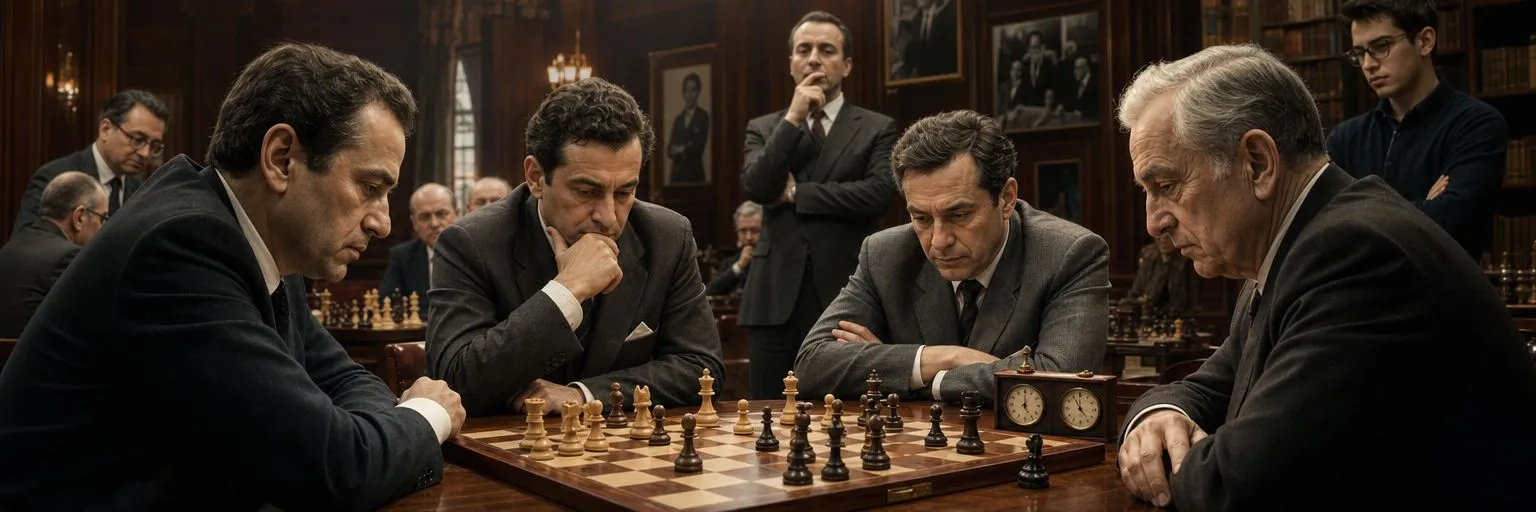
The Soviet grandmasters and their legacy
For several decades, the Soviet Union exercised an impressive dominance over the international scene, to the point of redefining the standards of elite play. This school produced an exceptional concentration of famous chess players, capable of combining theoretical rigor, methodical preparation, and tactical creativity.
A Soviet school built on method
The success of the Soviet masters was not based solely on individual talent. It rested on a genuine training system, with coaches, study circles, highly competitive internal tournaments, and extensive collective analysis. In this context, the Soviet grandmasters developed a scientific approach to the game, in which every opening, every endgame, and every pawn structure was the subject of in-depth work.
This culture helped bring forth several chess champions with very different styles, yet united by the same demanding goal: to understand the game in all its complexity. The Soviet legacy can still be seen today in modern training methods, databases, and the importance placed on preparation.
Major figures such as Botvinnik, Tal, and Petrosian
Mikhail Botvinnik undoubtedly embodies this structured tradition better than anyone. Often regarded as the father of the Soviet school, he left his mark on chess through his analytical seriousness, his sense of planning, and his influence on subsequent generations. In apparent contrast, Mikhail Tal captivated the world with his attacking genius, bold sacrifices, and exceptional intuition, becoming one of the most spectacular chess players in history.
Tigran Petrosian, for his part, illustrated another facet of this dominance: the art of prophylaxis, active defense, and positional control. With such varied profiles, the Soviet Union proved that it was not cultivating a single style, but an elite capable of excelling in every aspect of the game.
Kasparov and the transition to the modern era
Among the most remarkable heirs to this tradition, Garry Kasparov holds a unique place. Trained in the Soviet environment, he took its principles to an unprecedented level of dynamism and depth. His theoretical work, fighting spirit, and longevity made him one of the greatest names among chess legends.
Kasparov also symbolizes the shift between two worlds: that of classic Soviet structures and that of modern chess stars, more high-profile, more international, and more connected to new technologies. His influence extends far beyond his titles, particularly in computer-assisted preparation and in popularizing the game with a wider audience.
A legacy still visible in contemporary chess
The Soviet imprint remains deep in the way professionals study and approach competitions. Many strategic concepts, training patterns, and analytical principles passed down by these masters remain at the heart of top-level play. Even among the new generations of famous chess players, this demand for precision, this work ethic, and this ambition for complete mastery can still be found.
In this sense, the great Soviet grandmasters did not merely dominate an era: they shaped a lasting legacy that continues to influence today’s chess champions and to fuel the fascination with the great figures of this game.
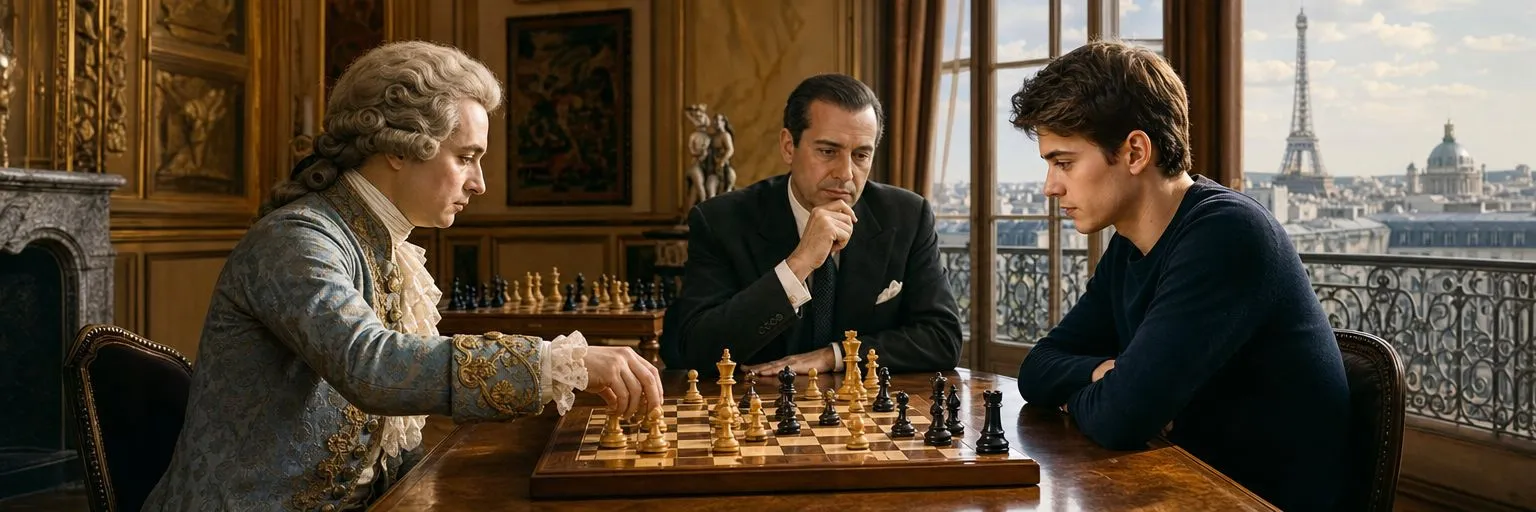
Famous French chess players to know
France has seen the emergence of several notable figures who, each in their own way, illustrate the richness of its chess history. From 18th-century theorists to today’s famous chess players, the country has regularly produced talents respected on the international stage.
François-André Danican Philidor, a historical reference
It is hard to discuss famous French chess players without mentioning Philidor. A renowned composer and outstanding player, he remains associated with an idea that became famous: “pawns are the soul of chess.” This strategic vision profoundly influenced the understanding of positional play. In this respect, Philidor holds a special place among the great figures of chess in France and around the world.
Louis-Charles Mahé de La Bourdonnais, the 19th-century champion
Another iconic name, La Bourdonnais established himself as one of the best players of his time. His legendary clash with Alexander McDonnell at the beginning of the 19th century remains one of the great chapters in the history of the game. His combative style and sense of initiative make him one of the first great French representatives among the most influential chess champions.
Alexander Alekhine, a legacy also tied to France
Even though his career extends beyond a strictly French framework, Alexander Alekhine became a naturalized French citizen and contributed to the prominence of famous chess players associated with France. A world champion with a sharp, creative, and fearsomely precise style, he remains a major figure for understanding French influence in 20th-century chess history.
Joël Lautier, Étienne Bacrot and the rise of modern top-level chess
In the contemporary era, several grandmasters have strengthened France’s visibility on the international circuit. Joël Lautier, highly promising from a very young age, embodied the revival of French top-level chess. Étienne Bacrot, who became a grandmaster very early, then confirmed this momentum with remarkable longevity at the highest level. These names are among the famous chess players who paved the way for the next generation.
Maxime Vachier-Lagrave, the French star of the current era
Among the modern stars of chess, Maxime Vachier-Lagrave is undoubtedly the best-known French name. Regularly present among the world elite, he has stood out for his incredible tactical mastery, his opening preparation, and his performances in rapid time controls as well as blitz. For many enthusiasts, he now represents the face of famous French chess players and France’s ambition at the highest level.
Why France still holds an important place in chess history
Although France has not always dominated the world stage over the long term, it has produced remarkable figures in different eras. Between theoretical heritage, great historical duels, and a regular presence among the international elite, it retains a recognized place in the world of chess. This continuity explains why famous French chess players remain key references to know in order to better understand the evolution of this game.
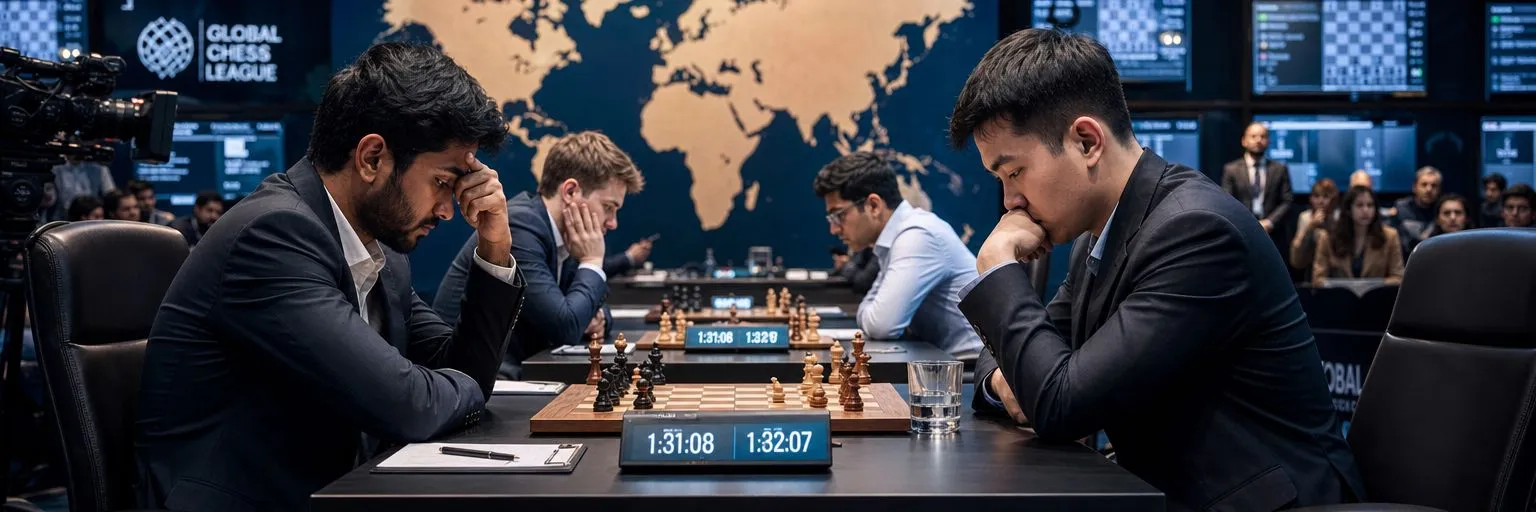
The modern stars dominating the international scene
Since the rise of the Internet, online gaming platforms, and live broadcasts, a new generation of talent has emerged as the face of contemporary chess. These champions do not shine only through their tournament results: they also influence theoretical preparation, the popularity of the game, and the image of famous chess players among the general public.
Magnus Carlsen, the benchmark of the modern era
It is hard to discuss modern chess stars without mentioning Magnus Carlsen. World champion for many years, the Norwegian left his mark on his era through his exceptional consistency, mastery of endgames, and ability to win seemingly equal positions. His universal style, combined with a deep understanding of the game, makes him one of the most admired grandmasters in recent history.
Beyond his titles, Carlsen has helped modernize the image of the professional player. Present on the rapid, blitz, and classical circuits, he has shown that a champion can dominate all formats and remain a central figure on the international stage.
Hikaru Nakamura, between performance and media influence
Hikaru Nakamura holds a unique place among modern chess players. Formidable in blitz and bullet, he has established himself as one of the most spectacular competitors of his generation. His tactical sense, speed of calculation, and experience at the highest level allow him to remain a major force in the world’s top competitions.
But his influence goes beyond the strictly sporting sphere. Thanks to streaming and social media, Nakamura has helped make chess more accessible and more visible, especially to a younger audience. He thus embodies the meeting point between sporting excellence and digital culture.
Ding Liren, Ian Nepomniachtchi, and the depth of the world elite
The current scene is not defined by a single dominant figure. Ding Liren has established himself as a symbol of China’s rise to prominence, with a solid, precise style that is particularly difficult to counter. Ian Nepomniachtchi, for his part, impresses with his dynamism, incisive preparation, and ability to create imbalances from the very opening.
Around them, several names confirm the richness of the very highest level: Fabiano Caruana, Alireza Firouzja, Wesley So, and Anish Giri. This intense competition shows just how much today’s chess champions compete in a demanding environment, where every detail of preparation can tip the balance of a game.
A new generation already ready to write history
Modern chess is also characterized by the rapid rise of young prodigies capable of competing with the very best from an early age. Alireza Firouzja, for example, symbolizes this new wave: ambitious, creative, and perfectly suited to the demands of the contemporary game. Computer-assisted analysis, online preparation, and the frequency of competitions are accelerating the development of these talents.
This evolution is constantly reshaping the global hierarchy and fueling public interest in international chess. More widely covered, faster-paced, and more closely followed than ever, today’s competitions confirm that the stars of our time are not just champions: they are also ambassadors of a game that is rapidly expanding.
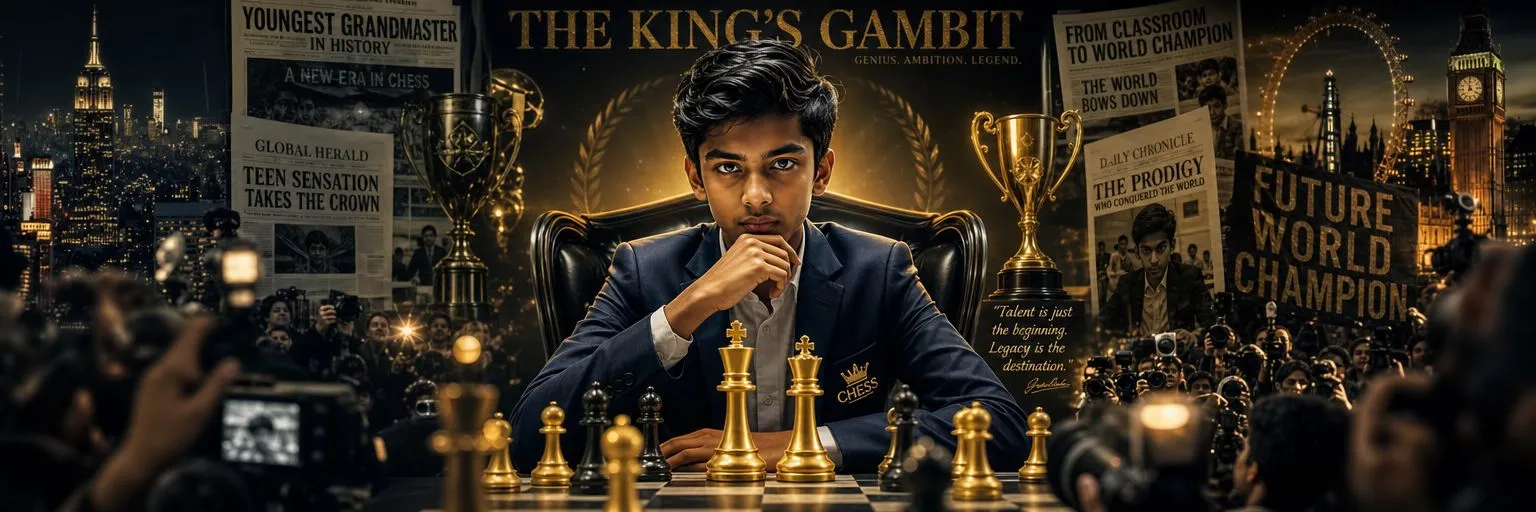
Chess prodigies who became global icons
Some early talents do more than simply pile up records: they captivate the general public, inspire entire generations, and give chess global visibility. From Bobby Fischer to Magnus Carlsen, including Judit Polgár and Sergey Karjakin, these famous chess players displayed exceptional abilities very early on before establishing themselves as true symbols of the game.
Meteoric beginnings that leave a lasting impression
The hallmark of a prodigy is the way they disrupt the usual benchmarks. When a child takes on and then defeats experienced masters, attention quickly extends beyond the circle of enthusiasts. Bobby Fischer, who became a grandmaster at just 15, embodied this spectacular precocity. Later, Sergey Karjakin broke that record by earning the grandmaster title at an even younger age, confirming that the phenomenon of chess prodigies fascinates as much as it impresses.
This rapid rise also fuels a powerful narrative: that of an extraordinary talent capable of competing with the world elite before even reaching adulthood. In the world of chess, where rigor, memory, and preparation matter enormously, such an advantage immediately creates a unique aura.
When talent becomes a global benchmark
Not every young genius becomes an icon, but some cross that threshold through their consistency, charisma, or cultural impact. Magnus Carlsen is an emblematic example. Recognized very early on as a phenomenon, he then confirmed his status by becoming world champion and popularizing a more accessible, modern, and media-friendly image of modern chess.
Judit Polgár also holds a unique place. By regularly facing the best players on the planet and refusing to limit herself to women’s competitions, she transformed the perception of elite-level chess. Her career made her one of the great figures of chess, far beyond statistics and titles.
An influence that goes beyond the chessboard
What truly sets these precocious champions apart is their ability to transcend the sporting arena. Their name becomes recognizable even among those who play little or not at all. Fischer embodied a cultural and political shock during the Cold War. Carlsen, meanwhile, has established himself as an international personality, present in the media, advertising campaigns, and the digital world.
Thus, these chess champions are not admired solely for their performances. They help shape the image of the game, attract new audiences, and strengthen the prestige of famous chess players in global popular culture.
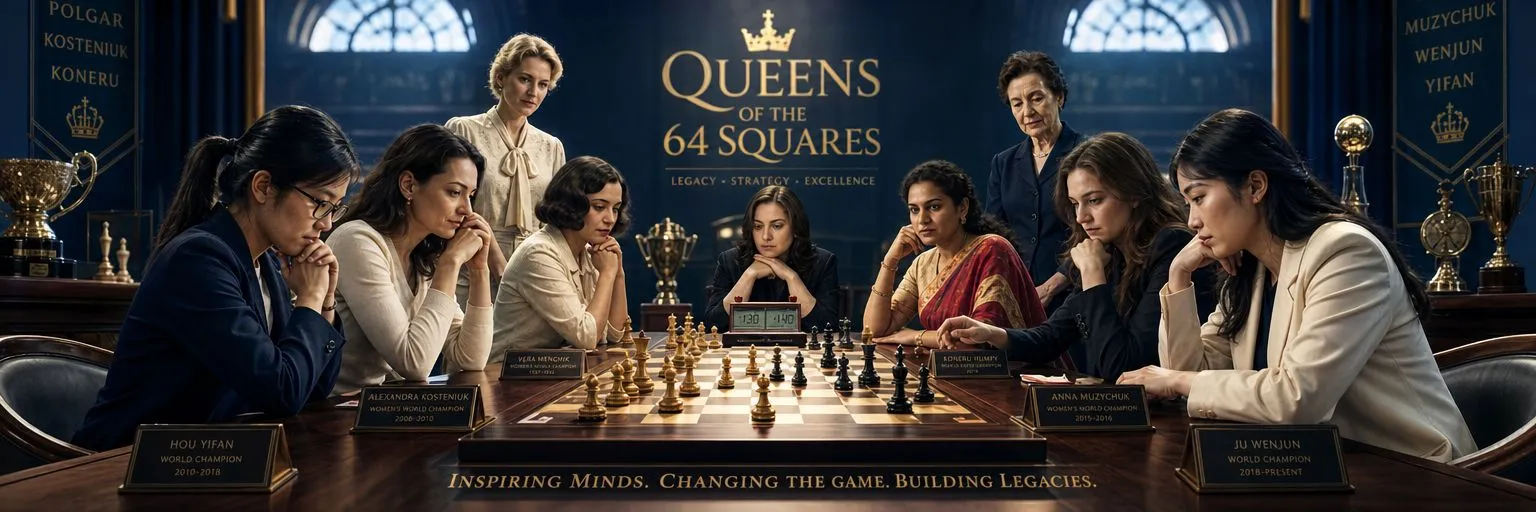
Famous women chess players who have shone at the highest level
In the history of the game, several champions have proven that chess excellence knows no boundaries. Through their titles, their performances against the world elite, and their lasting influence, these famous women chess players hold an essential place among the great figures of chess.
Judit Polgár, the ultimate benchmark of the world elite
It is impossible to discuss the great women champions without mentioning Judit Polgár. The Hungarian left her mark on her era by regularly facing the best players in the world, even reaching the world top 10. Her career profoundly changed how famous women chess players are viewed, because she did not merely dominate women’s competitions: she competed with the greatest chess champions of her time, from Garry Kasparov to Viswanathan Anand.
Her dynamic, aggressive, and ambitious style also contributed to her renown. Today, Judit Polgár remains an essential figure whenever famous chess players are discussed, across all categories.
Nona Gaprindashvili and Maia Chiburdanidze, the Georgian school at the top
Long before the media rise of modern stars, Georgia produced exceptional champions. Nona Gaprindashvili was the first woman to receive the international grandmaster title under open criteria, a major achievement in chess history. Her reign over the women’s world championship symbolized the entry of women players into a new competitive dimension.
Maia Chiburdanidze then carried on this legacy with remarkable precocity. Becoming world champion at a very young age, she embodied a generation capable of combining strategic rigor with impressive maturity. Both are among the famous female chess players who helped raise the standard and visibility of women’s chess.
Xie Jun, Hou Yifan and the rise of China
China’s rise to prominence in chess owes much to champions like Xie Jun, who ushered in a new era by becoming world champion. Her success served as a model for an entire generation of Asian talents.
More recently, Hou Yifan has established herself as one of the leading figures on the international circuit. A multiple world champion, she has stood out for her technical solidity, consistency, and ability to compete in strong mixed tournaments. Her name is often mentioned alongside the greatest famous chess players of the contemporary era, as her influence extends far beyond the sole sphere of women’s competitions.
An influence that goes beyond titles
These champions have not only amassed titles: they have also played a decisive role in the democratization and recognition of top-level women’s chess. By serving as role models for new generations, they have enriched the history of famous female chess players and helped make chess a more visible, more open, and more inspiring world.
Their legacy is measured as much by their victories as by their cultural and sporting impact. In this respect, they fully belong in the pantheon of the great figures among famous chess players, alongside the legends and modern stars of the game.
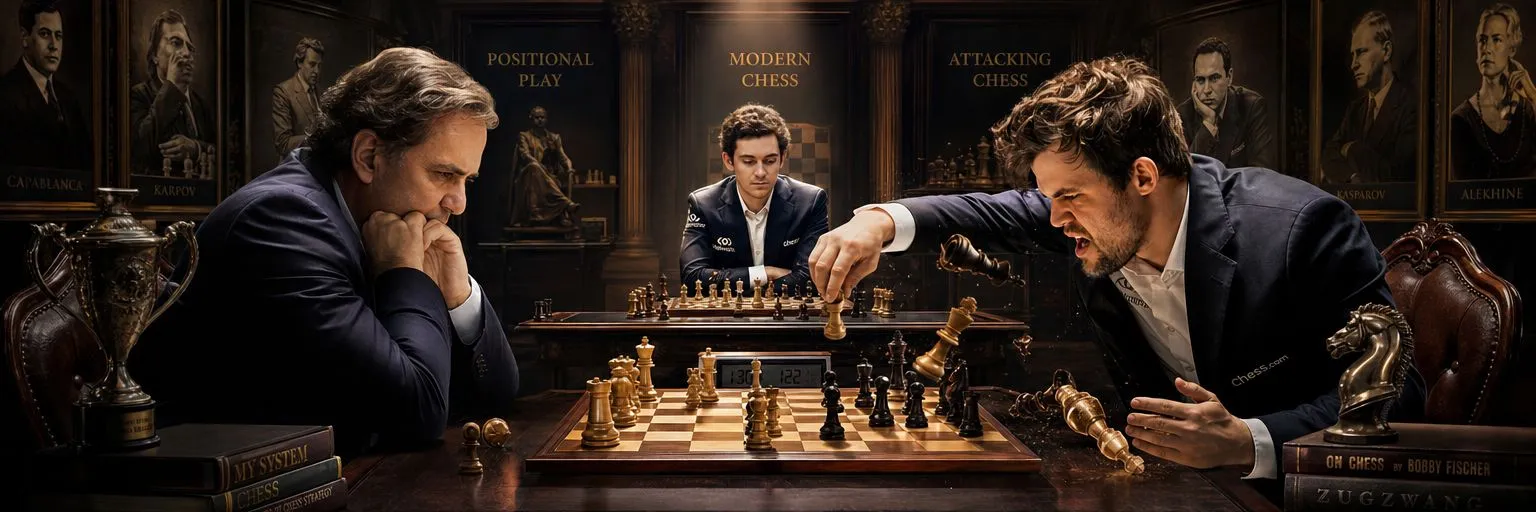
The playing styles that made certain figures unforgettable
It is not only titles that engrave a name in the collective memory, but also a unique way of occupying the board, posing problems, and inspiring admiration. For several famous chess players, style has become a signature: dazzling attack, positional precision, a sense of counterplay, or icy mastery of endgames.
Attack as spectacle and as a weapon
Masters like Mikhail Tal embodied an almost theatrical taste for sacrifice, initiative, and constant complication. This type of attacking play, often associated with the great legends of chess, is appealing because it turns every game into an adventure. Even when modern analysis qualifies some choices, the visual and emotional impact of these combinations continues to fascinate amateurs and experts alike.
The positional domination of great strategists
At the opposite end of apparent chaos, other champions built their reputation on gradually controlling the position. José Raúl Capablanca, Anatoly Karpov, and Tigran Petrosian showed that a restrained style could be formidable. Their strength lay in anticipation, the quiet improvement of their pieces, and the methodical exploitation of the slightest weakness. This approach left its mark on the history of chess champions by reminding us that the beauty of the game also lies in precision and patience.
The virtuosos of preparation and adaptation
With the evolution of top-level play, some players stood out for their ability to prepare deep opening lines while remaining extremely flexible. Garry Kasparov embodied this modern intensity, combining tactical energy, immense theoretical work, and constant pressure on the opponent. More recently, Magnus Carlsen has popularized a more universal style, capable of turning equal positions into suffocating endgames. For these chess grandmasters, identity does not rest on a single formula, but on a superior ability to adapt to every form of battle.
Why some styles endure across generations
If certain figures remain so present in the collective imagination, it is because the way they play says something broader than a simple result. A memorable style reflects an era, a personality, and a vision of the game. It is this alchemy that explains why the games of Fischer, Tal, Kasparov, or Carlsen are still studied, commented on, and shared. In the world of chess, flair, rigor, or inventiveness can be enough to make a champion truly unforgettable.
The most impressive records in chess history
Chess history can also be read through performances that seem to defy time, logic, and sometimes even human limits. From unbeaten streaks to Elo rating peaks, and titles won at an exceptional age, these achievements have shaped the legend of the greatest famous chess players and continue to fuel fascination with chess to this day.
The highest level ever reached
Among the most discussed benchmarks is the Elo rating record held by Magnus Carlsen, who reached 2882 points in 2014. This figure symbolizes the dominance of a player capable of excelling in classical, rapid, and blitz, with exceptionally rare consistency. Before him, Garry Kasparov long embodied the absolute pinnacle, notably thanks to his exceptional longevity as the world number one. These performance records alone summarize an essential part of the history of chess champions.
Reigns that left their mark on several generations
Some records are impressive less for a peak in form than for their longevity. Emanuel Lasker held the world title for 27 years, an almost unreal feat in a world where every generation produces new challengers. Garry Kasparov, for his part, remained world number one for nearly two decades, setting a standard of dominance that left a lasting mark on famous chess players of the 20th century and early 21st century.
Precocity and youth records
The chess world is also fascinated by prodigies. Sergey Karjakin long held the record for the youngest grandmaster in history, earning the title at just 12 years and 7 months old. More recently, Abhimanyu Mishra pushed that limit even further. These performances illustrate the evolution of modern training, where intensive practice, databases, and analysis engines accelerate the rise of new talents among the future chess champions.
Undefeated streaks and tournament feats
Other records stand out for their consistency. Magnus Carlsen put together an exceptional streak of games without defeat in classical time control, demonstrating extraordinary strategic and psychological mastery. In another category, Bobby Fischer remains associated with sequences of victories that have become legendary, especially on his road to the world championship. This type of achievement fuels the reputation of the great figures and reminds us why some names go beyond the sporting arena to enter chess popular culture.
Records that feed the legend
Whether it is longevity, precocity, dominance, or mental endurance, these historic benchmarks help distinguish simply very good players from true icons. They also make it possible to measure the imprint left by each era, from the old masters to contemporary stars. It is precisely this accumulation of achievements that keeps the memory of famous chess players alive and continues to inspire enthusiasts, amateurs, and future chess champions.
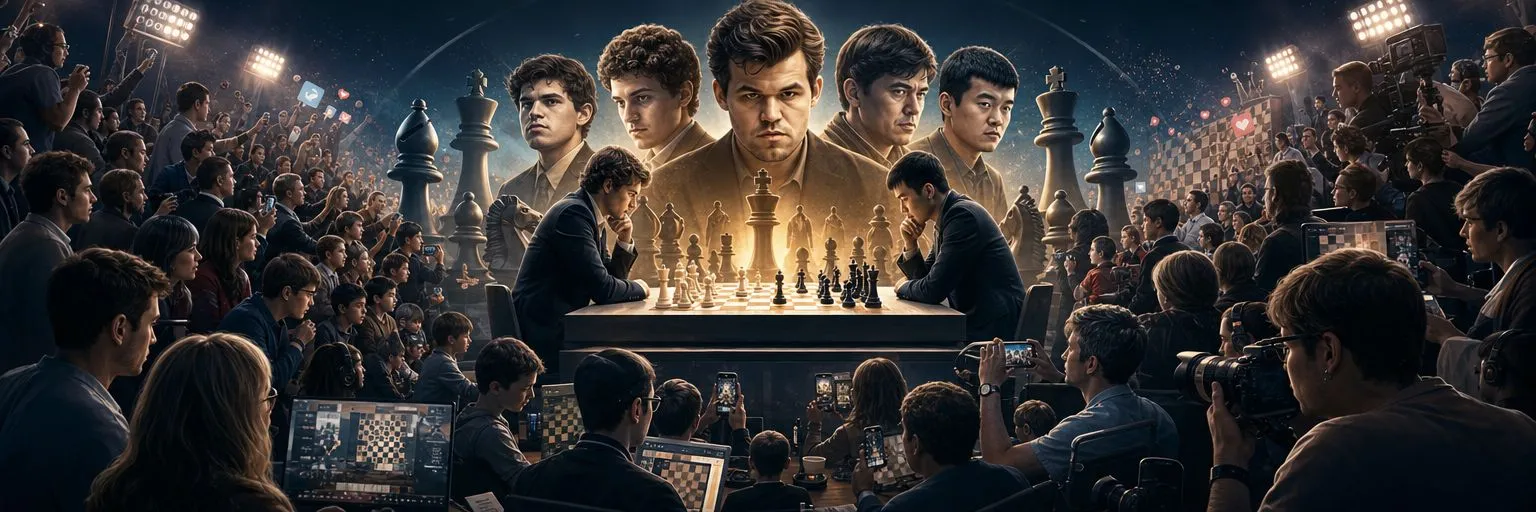
The impact of famous players on the popularity of chess
When a big name emerges, chess often stops being seen as a world reserved for insiders and becomes a spectacle followed, discussed, and shared far beyond specialized clubs. Figures such as Bobby Fischer, Garry Kasparov, Judit Polgár, and Magnus Carlsen have drawn the attention of mainstream media, inspired vocations, and helped turn chess into a cultural phenomenon at certain times.
Champions who attract the general public
The most well-known players put a human face on a discipline sometimes seen as abstract. Their personality, playing style, rivalries, and public statements create a narrative capable of captivating a new audience. A famous chess player is appealing not only because of their results: they embody an era, a temperament, and a way of experiencing competition. It is precisely this narrative dimension that strengthens the popularity of chess.
The impact of media, digital platforms, and social networks
In the modern era, champions’ fame is also built outside the chessboard. Interviews, videos, streams, documentaries, and educational content allow millions of curious viewers to discover games, openings, and behind-the-scenes insights into top-level play. Contemporary stars such as Magnus Carlsen and Hikaru Nakamura have played a major role in this evolution, bringing famous chess players into the world of digital culture and online entertainment.
A lasting influence on vocations and learning
The impact of great figures can also be seen in schools, clubs, and training platforms. When a champion leaves a strong impression, many beginners want to imitate their ideas, replay their games, or understand their strategic choices. This fascination fuels the progress of new players and reinforces the image of the game as a rewarding intellectual activity. In this sense, every highly publicized chess champion can become a powerful force for passing on the game.
Icons that go beyond the world of sport
Some names end up symbolizing far more than their titles. They become benchmarks of rigor, creativity, psychological resilience, or excellence. This ability to go beyond the simple competitive framework explains why the greatest legends of chess continue to influence the collective imagination. Thanks to them, chess gains visibility, prestige, and modernity, while remaining deeply connected to its rich historical heritage.
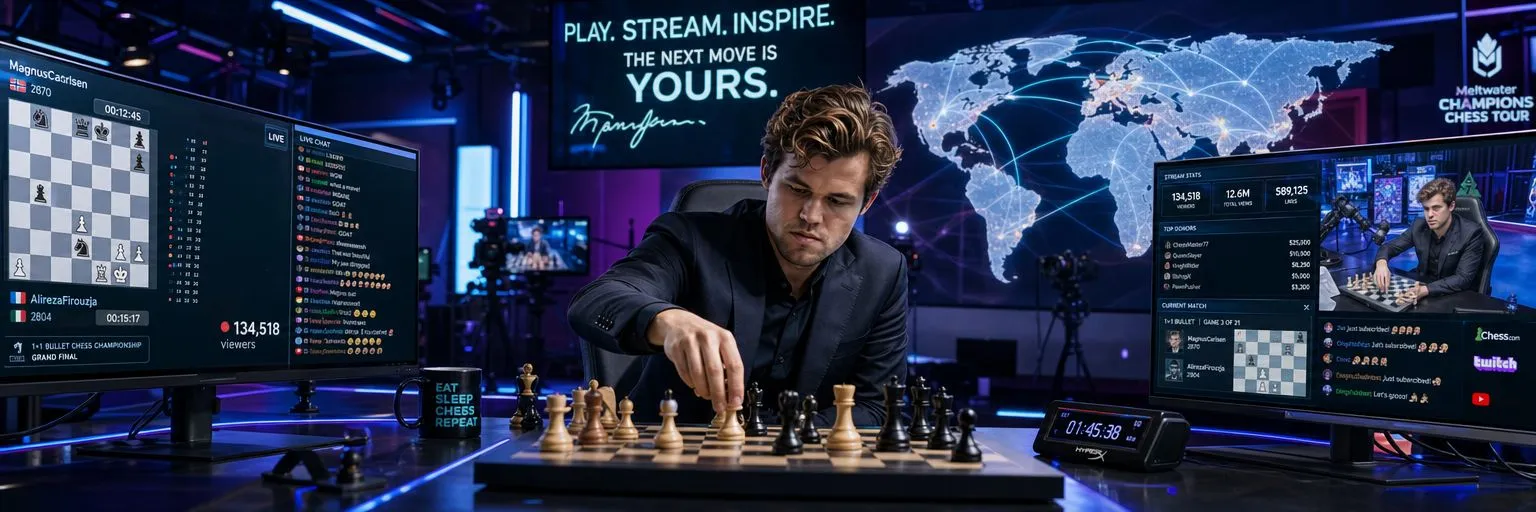
Chess champions in the age of the Internet and streaming
Top-level chess is no longer played only in tournament halls: it is also experienced on online platforms, social networks, and live streaming channels. This transformation has brought about a generation of champions capable of being both elite competitors, content creators, and media faces of a game that is now accessible in just a few clicks.
Champions constantly in the spotlight
With the internet, top-level games are followed in real time by millions of enthusiasts. Figures such as Magnus Carlsen, Hikaru Nakamura, and Fabiano Caruana benefit from continuous exposure, far beyond the major championships. This new visibility is profoundly changing the status of famous chess players: their performances are commented on instantly, analyzed by engines, and shared with a global audience.
Streaming has also changed the relationship between champions and their communities. Where older generations often remained at a distance, today’s stars can explain their ideas, share their preparations, or play fast-paced formats in front of their audience. Chess champions thus become personalities followed as much for their style of play as for their ability to entertain and teach.
The central role of online platforms
Sites like Chess.com and Lichess have contributed to the explosion of online play, while Twitch and YouTube have brought a new dimension to the spectacle of chess. Grandmasters no longer limit themselves to playing classical games: they also excel in blitz, bullet, and hybrid events combining competition, education, and entertainment. This evolution highlights highly versatile profiles, capable of shining on the board while capturing the attention of a wide audience.
In this context, modern chess stars are building a more direct and interactive image. Hikaru Nakamura is the most striking example: his success on streaming platforms has helped popularize fast chess and reach new audiences, including beyond the usual circle of classical competition fans.
Between sporting performance and cultural influence
The digital era has strengthened the idea that chess grandmasters can also become cultural influencers. Magnus Carlsen, for example, remains an absolute benchmark thanks to his track record, but his fame also rests on his media presence, his participation in online events, and his ability to embody contemporary chess for an international audience.
This dynamic benefits the discipline as a whole. Modern broadcasts, accessible commentary, and fast formats make the game more vibrant for beginners and connoisseurs alike. In the age of streaming, champions therefore do not represent competitive excellence alone: they also actively contribute to the spread, modernization, and global popularity of chess.

The new generations of players shaping the future of chess
Driven by digital tools, the boom in online play, and increasingly advanced preparation, the rising generation is moving ahead at high speed. Young talents are no longer merely promising: they are already establishing themselves among the circuit’s benchmarks, shaking up the hierarchy, and redefining the image of famous chess players for a much wider audience.
Prodigies already established at the highest level
Names like Gukesh Dommaraju, Praggnanandhaa Rameshbabu, Nodirbek Abdusattorov, Arjun Erigaisi, and Alireza Firouzja embody this ambitious, precocious, and exceptionally well-prepared generation. Their rise illustrates a major shift: today, future chess champions gain international experience very early, face the elite both online and over the classical board, and develop impressive strategic maturity from their teenage years.
This rapid emergence is also explained by a more competitive environment. Databases, analysis engines, and live-broadcast tournaments allow these young grandmasters to learn faster, immediately correct their weaknesses, and test themselves against the world’s best players without delay.
A new way of playing and preparing
The new wave stands out not only because of its age, but also because of its approach. Opening repertoires are broader, transitions between time controls are more natural, and the ability to move from classical to rapid or blitz has become a decisive advantage. This versatility is profoundly transforming the profile of modern chess players, who are able to shine across multiple formats with the same intensity.
Their style is often more dynamic, more concrete, and more adaptable. Where some generations relied on clearly defined schools of thought, today’s young talents readily combine positional rigor, tactical sense, and cutting-edge computer preparation. This produces spectacular games and helps renew public interest in top-level chess.
A more open and more diverse global scene
One of the striking features of this rising generation is its truly international dimension. India, Uzbekistan, Iran, France, and the United States are seeing the emergence of players capable of competing with the historic strongholds. This geographical diversification enriches the competition and shows that tomorrow’s famous chess players can come from many different backgrounds.
This openness is accompanied by an important cultural shift: young stars are also media figures. They appear in educational content, on social media, and at events broadcast via streaming, making chess more accessible and more appealing to new generations of enthusiasts.
The possible faces of the next era
More than a simple changing of the guard, this generation is already preparing the next chapter in chess history. Some of these talents have the potential to become future world champions, while others could leave a lasting mark on their era through their style, consistency, or influence. Together, they are shaping the future of famous chess players and confirming that the game continues to evolve without losing any of its depth or its power to captivate.
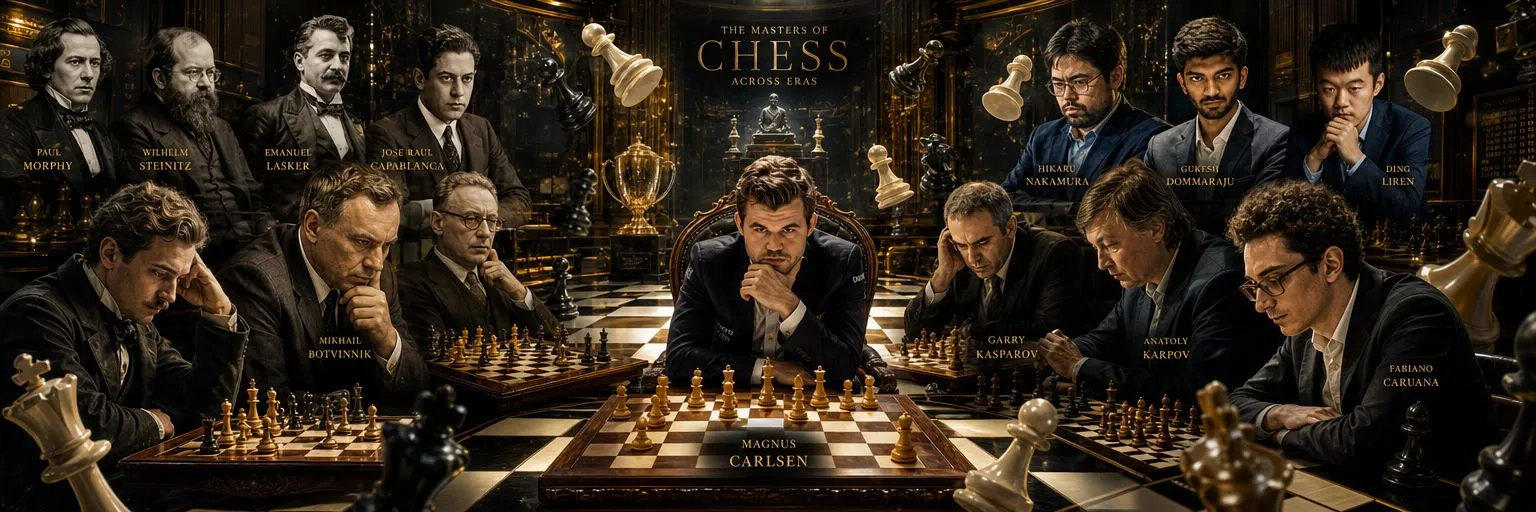
Why some chess players become true legends
Not all great champions automatically become mythical figures. To earn a lasting place in the collective memory, it takes far more than a high ranking or a few major victories. A legend is often born from the meeting of sporting excellence, a striking personality, a recognizable style, and a rare ability to symbolize an entire era.
Performances that go beyond a simple list of achievements
The first factor is, of course, playing strength. The names that endure across generations are generally associated with exceptional dominance, a series of titles, records, or matches that have become famous. But what truly sets some famous chess players apart is their ability to go beyond statistics and establish new standards at the highest level.
When a champion transforms opening theory, influences modern preparation, or redefines the art of the endgame, they stop being merely a winner: they become a benchmark. It is this technical and strategic imprint that elevates a grandmaster from elite status to that of a historical figure.
An immediately identifiable style
Enthusiasts also remember players who are capable of offering a singular vision of the game. Some captivate with their aggressiveness, others with their defensive precision, their sense of sacrifice, or their positional mastery. When a player imposes a signature style that is instantly recognizable, they leave a lasting mark on the collective imagination.
In the world of chess, style matters almost as much as results. A brilliant, bold, or revolutionary game can survive far longer than a simple trophy. Legends are often those whose games are still replayed, not only to learn, but also to admire.
A personal story that resonates with the public
A champion’s prestige grows when they embody a powerful story: an early prodigy, a charismatic rival, a comeback player after years away, or a player capable of triumphing in a particular political, cultural, or media context. This narrative dimension adds extra depth to a career and brings chess champions closer to the general public.
Rivalries, tense moments, unconventional paths, and unexpected victories all help build a unique aura. A legend is not admired only for their strength; they are also followed for the story they tell.
An influence that continues after victory
The greatest figures leave a lasting legacy. Their name continues to appear in books, analyses, videos, tournament commentary, and popular culture. They inspire younger generations, fuel debate, and become role models for other grandmasters.
In the digital age, this influence extends even further. A player can become legendary not only through their exploits on the chessboard, but also through their ability to popularize the game, attract a new audience, and showcase modern chess far beyond specialist circles.
Time as the ultimate judge
Finally, it is often historical perspective that confirms a legend. Many shine for a few years, but only a select few continue to be cited, studied, and admired decades later. Posterity chooses those whose impact remains visible long after the end of their career.
Becoming a legend therefore means bringing together several dimensions: winning, innovating, captivating, and enduring. That is why some names are associated not only with tournaments or titles, but with the very history of the game.