 France
 English
 Deutsch
 Español
 Italiano
 Nederlands
 Polski
 Português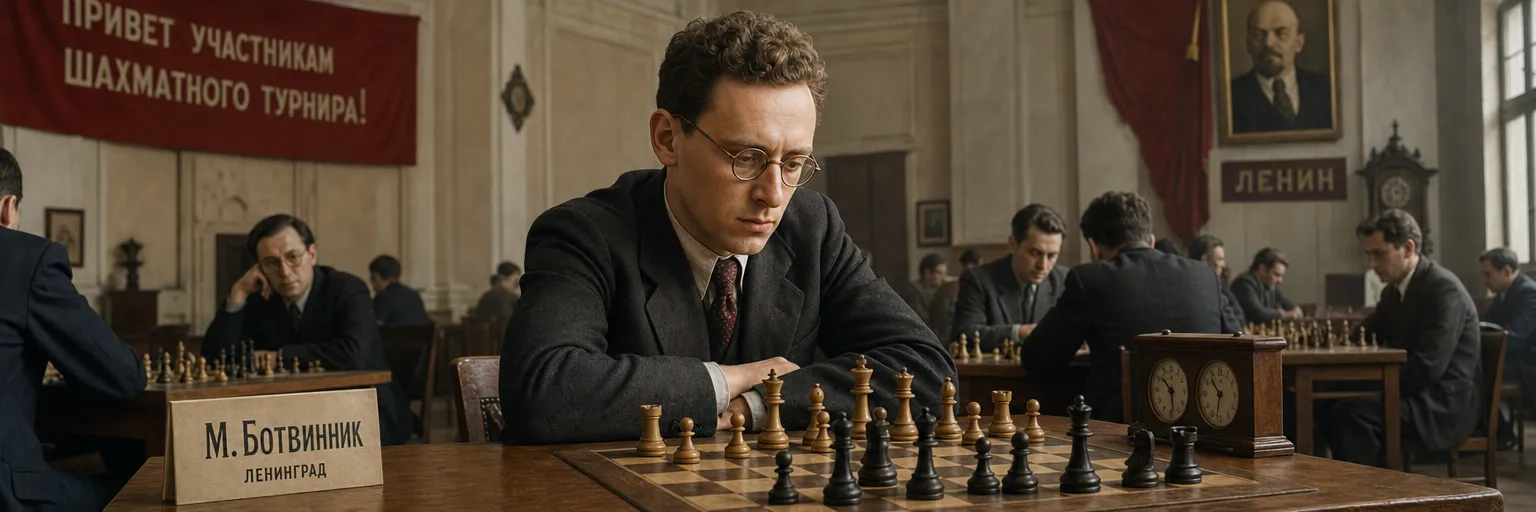
Mikhail Botvinnik's early years and his rise in the world of chess
Mikhail Botvinnik was born in 1911 in Kupiansk, in the Russian Empire, before growing up in Leningrad, where he discovered chess at a very young age. His development did not rely solely on raw talent: he quickly stood out for his rigorous work ethic, rare discipline, and constant determination to analyze his own games. This scientific approach to chess would become one of the hallmarks of Mikhail Botvinnik, the future world champion and a central figure in 20th-century chess history.
An early discovery of the game and a methodical talent
As a teenager, Botvinnik learned the rules relatively late compared with other prodigies, but he made up for it with an exceptional ability to structure his training. While many young players relied on intuition, he quickly developed an approach based on the systematic study of openings, endgames, and complex positions. This taste for deep analysis already foreshadowed what would become the strength of the Soviet school of chess, of which he would later become one of the main architects.
His early successes in local competitions quickly attracted attention. He showed unusual maturity against more experienced opponents and built a reputation as a serious, diligent, and hard-to-rattle player. This rapid progress took place in a context in which chess was becoming increasingly important in the Soviet Union, encouraging the emergence of talents destined to shine on the international stage.
The first landmark tournaments
One of the decisive moments of his early career came when he faced recognized masters in the Leningrad and Soviet Union championships. There, Botvinnik proved that he could compete with the national elite thanks to a solid, positional, and remarkably well-prepared style. His performances were anything but accidental: each game was treated as a laboratory of ideas, where post-game analysis mattered just as much as the result itself.
His rise was confirmed in the 1930s, when he began achieving top-level results on the Soviet and then international stage. By winning the USSR Championship and excelling in several major tournaments, he gradually established himself as a natural contender for the world summit. At that time, the name Botvinnik was already becoming synonymous with theoretical seriousness, meticulous preparation, and competitive endurance.
A rise toward the international elite
What truly sets Mikhail Botvinnik apart from the other players of his generation is his ability to combine top-level practical play with long-term strategic thinking. Trained as an engineer, he applies an almost scientific logic to chess, based on experimentation, verification, and continuous improvement. This method allows him to progress steadily and adapt to opponents with a wide variety of styles.
His rise to the top is therefore not merely that of a talented player, but of a builder. By establishing himself among the best, a future world chess champion, he lays the foundations of a training model that will have a lasting influence on several generations of Soviet masters. His early years thus tell a story far greater than individual success: they mark the emergence of a new way of thinking about competition, training, and excellence in the world of chess.
Botvinnik's path to the world championship title
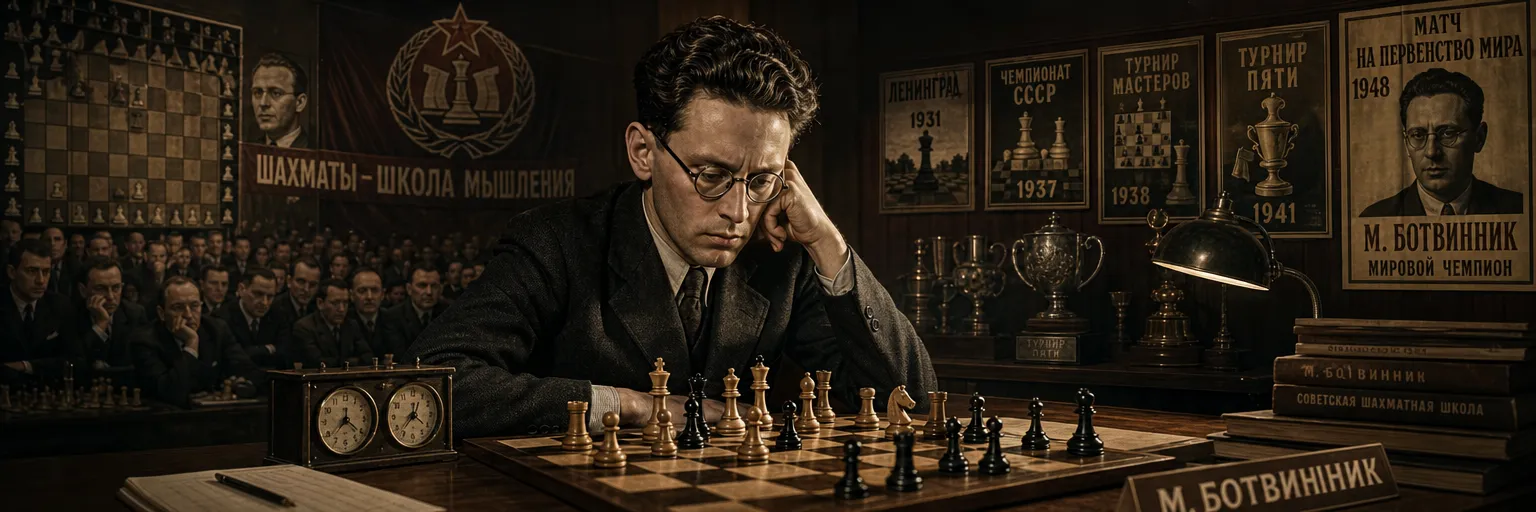
Before reaching the summit, Botvinnik established himself as one of the most methodical and ambitious players of his time. His journey toward the world crown was not based solely on raw talent: it was also the result of scientific preparation, exceptional discipline, and a strategic understanding that would leave a profound mark on the history of chess.
From national success to early international recognition
In the 1930s, Botvinnik confirmed his dominance on the Soviet scene by winning several USSR Championships, particularly high-level competitions. These performances allowed him to measure himself against the best foreign masters in major international tournaments. Facing an experienced world elite, he demonstrated that he could compete with the very best, thanks to a style rooted in positional logic, technical precision, and a remarkable analytical ability.
His results against top-level players strengthened his reputation. He did not merely produce spectacular play: he built coherent games, carefully prepared, in which every decision fit into an overall plan. This rigorous approach helped establish him as a credible contender for the highest title.
Preparation conceived as laboratory work
What set Botvinnik apart from many of his contemporaries was the way he viewed chess as a field of study in its own right. He analyzed his games in depth, identified his weaknesses, prepared his openings with great meticulousness, and developed plans tailored to each opponent. This almost scientific working method became one of the future champion's hallmarks.
At the same time, he developed a modern vision of training, in which consistency and objectivity played a central role. His personal discipline allowed him to make lasting progress and prepare for the toughest confrontations. This rigor would make him a central figure in the future Soviet chess school.
The historical context and access to the world crown
The Second World War naturally disrupted the schedule of major international competitions and slowed the organization of a traditional world championship. When world champion Alexander Alekhine died in 1946, the title became vacant, an exceptional situation in chess history. A new format then had to be put in place to designate his successor.
In 1948, a major tournament was organized under the auspices of FIDE to decide between the best players of the time. Botvinnik notably faced Vasily Smyslov, Paul Keres, Samuel Reshevsky, and Max Euwe. Thanks to his consistency, superior preparation, and command of critical moments, he finished first and became world champion. This triumph recognized not only an exceptional player, but also a new way of thinking about high-level competition.
A coronation that goes beyond individual performance
Botvinnik’s rise to the top of the world had considerable significance. His title symbolized the rise of the USSR in the chess world and opened a period of lasting Soviet dominance. More than just a winner, he appeared as a model of seriousness, preparation, and strategic mastery.
His journey to the title perfectly illustrates the transformation of chess into a discipline of intensive study. By becoming world champion, Mikhail Botvinnik established a lasting benchmark for future generations and laid the foundations for what would become the strength of an entire Soviet chess tradition.
Why Mikhail Botvinnik is considered the father of the Soviet chess school
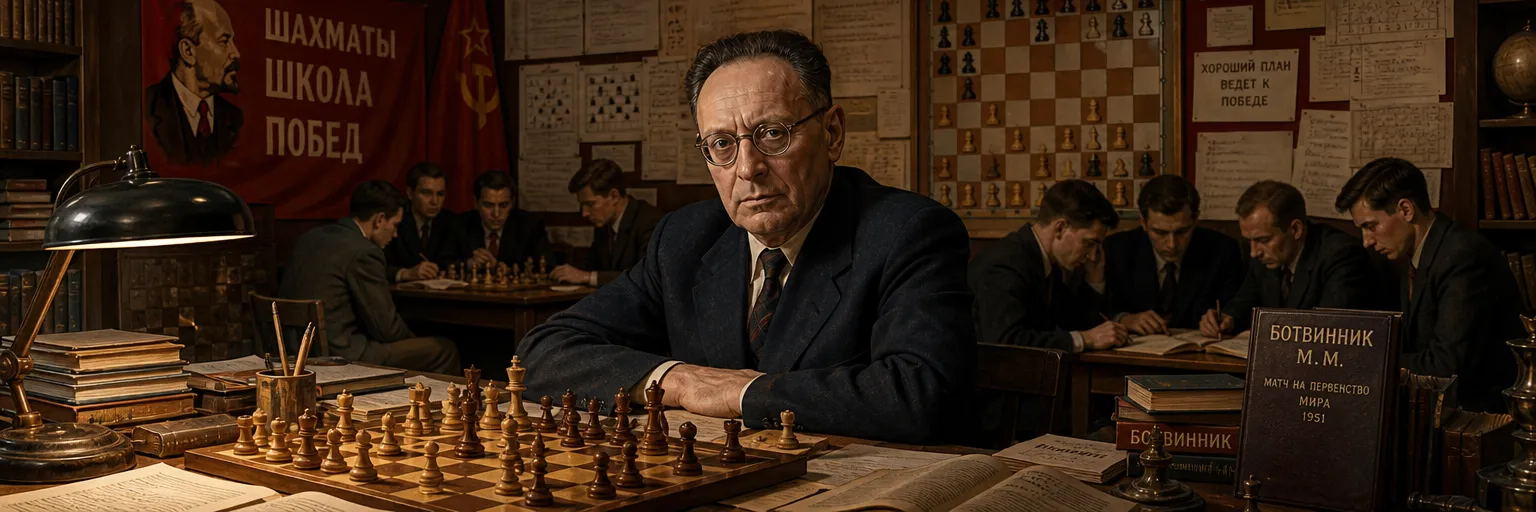
While his record is impressive, it is above all his lasting influence on the way the game is learned, analyzed, and passed on that explains this unique status. Far beyond his titles, Botvinnik shaped a true chess culture based on discipline, scientific preparation, and the systematic training of talent, to the point of embodying the spirit of the Soviet chess school all by himself.
A rigorous and scientific working method
Botvinnik viewed chess as a demanding field of study, almost comparable to an applied science. Every game had to be prepared, dissected, and understood in depth. This approach was based on opening analysis, precise endgame evaluation, the identification of strategic patterns, and the critical examination of his own mistakes. By imposing this work ethic, he provided a lasting framework for the training of Soviet players and reinforced the idea that success depended not only on talent, but also on methodical preparation.
The founder of a training tradition
One of the main reasons he is regarded as the father of the Soviet school lies in his role as a teacher. Botvinnik did not just win; he also passed on his knowledge. His famous work with young players helped structure a system in which future champions were guided, corrected, and encouraged to develop independent thinking. This training culture had an immense impact on several generations and enabled the Soviet Union to dominate the international scene for a long time.
A direct influence on future champions
Botvinnik’s legacy can also be measured through the great names he inspired or trained. Players such as Anatoly Karpov, Garry Kasparov, and Vladimir Kramnik belong, to varying degrees, to this intellectual lineage. His teaching emphasized the player’s responsibility for their choices, the quality of post-game analysis, and the need for constant evolution. In this sense, Mikhail Botvinnik laid the foundations of a true school of thought, whose influence extends far beyond Soviet history.
A model for the organization of chess in the USSR
His importance was not limited to the board. Botvinnik also represented a model for the overall organization of Soviet chess: early talent detection, the promotion of study, regular competition, and supervision by experienced coaches. This model turned chess into a tool of cultural and intellectual prestige for the USSR. Within this system, Botvinnik emerged as the ultimate reference figure, at once champion, theorist, and educator.
A legacy that goes beyond his era
What deeply sets Botvinnik apart is the enduring nature of his influence. Even today, his name remains associated with a demanding vision of the game, founded on hard work, logic, and transmission. To be regarded as the father of the Soviet school of chess is therefore not only to acknowledge his victories, but also to honor his decisive role in building a model that left its mark on the global history of chess.
Botvinnik's playing principles and working method
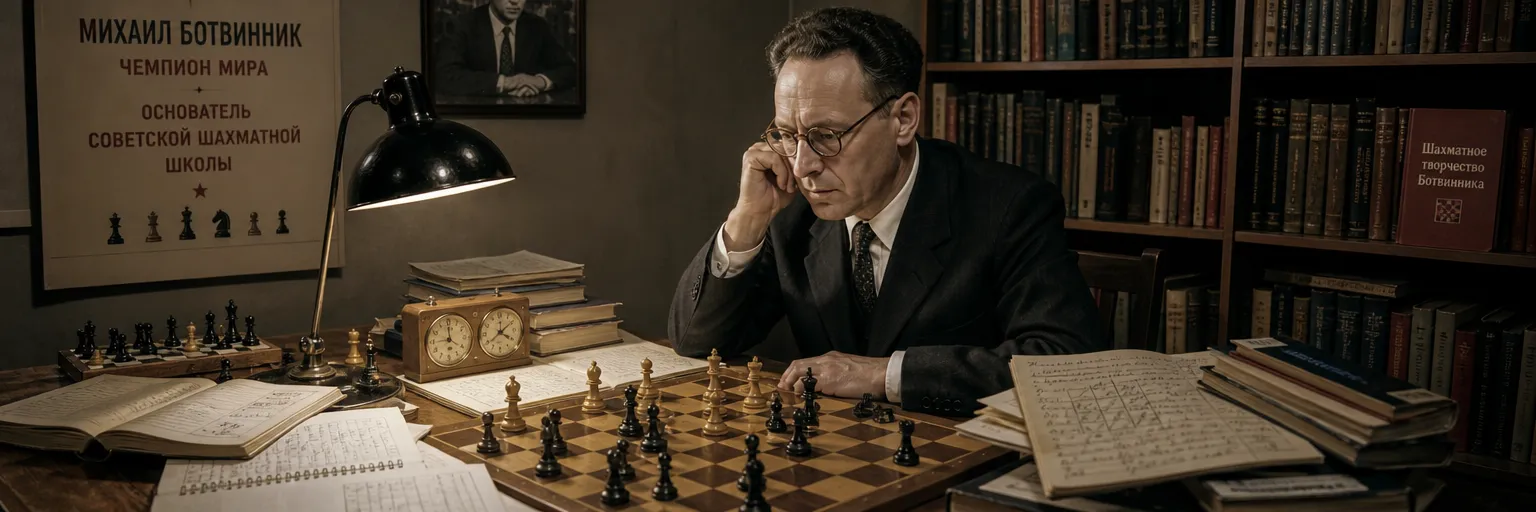
For Botvinnik, strength did not rest solely on talent, but on a rigorous organization of thought. His vision of chess combined scientific preparation, personal discipline, and a deep understanding of pawn structures. This approach shaped a true method, based on objective analysis, long-term planning, and the constant pursuit of improvement.
A style grounded in logic and structure
Botvinnik attached great importance to solid positions, lasting imbalances, and coherent plans. Rather than seeking immediate effect, he aimed to build positions in which each piece fulfilled a precise function. His play was based on evaluating weaknesses, controlling key squares, and methodically exploiting his opponents' mistakes. This highly rational conception helped define the foundations of the Soviet school of chess.
He particularly excelled in strategic positions where patience, precision, and coordination took precedence over spectacular combinations. For him, an effective attack had to arise from previously established positional superiority. This way of playing perfectly illustrates Botvinnik's playing principles, centered on preparing the ground before the decisive action.
Preparation as a pillar of performance
Botvinnik believed that an elite player had to arrive at the board with considerable analytical knowledge. He studied openings in depth, not to mechanically memorize variations, but to understand the types of middlegames that resulted from them. His goal was to steer the game toward positions he mastered better than his rivals.
This exacting approach explains the reputation of Botvinnik's working method. He analyzed his own games with severity, identified his shortcomings, and developed tailored training programs. Every defeat became study material, every tournament a source of correction. This almost scientific rigor profoundly influenced modern chess preparation.
Critical analysis and systematic training
Another essential characteristic of Botvinnik lay in his approach to post-game analysis. He was never satisfied with a superficial judgment. He revisited critical moments, checked variations, compared possible plans, and sought to understand the deep causes of a success or a failure. This habit of methodical examination helped shape what can be called modern chess preparation.
His work often followed a structured logic: opening study, endgame analysis, practical training, then critical review of the games played. This disciplined framework shows how much his progress stemmed from organized effort. In this respect, his legacy extends far beyond his titles: he established a lasting way of thinking about learning the game.
A lasting influence on later generations
Botvinnik’s method served as a model for many champions trained in the Soviet Union. His emphasis on discipline, study, and objectivity inspired an entire training system, in which talent had to be supported by methodical work. Players such as Anatoly Karpov and Garry Kasparov inherited, directly or indirectly, this culture of in-depth analysis.
If Botvinnik remains a central figure in the history of chess, it is also because he transformed individual practice into a true intellectual endeavor. His name remains associated with a demanding vision of progress, in which understanding, rigor, and preparation hold an essential place.
Botvinnik’s influence on the emergence of Soviet champions
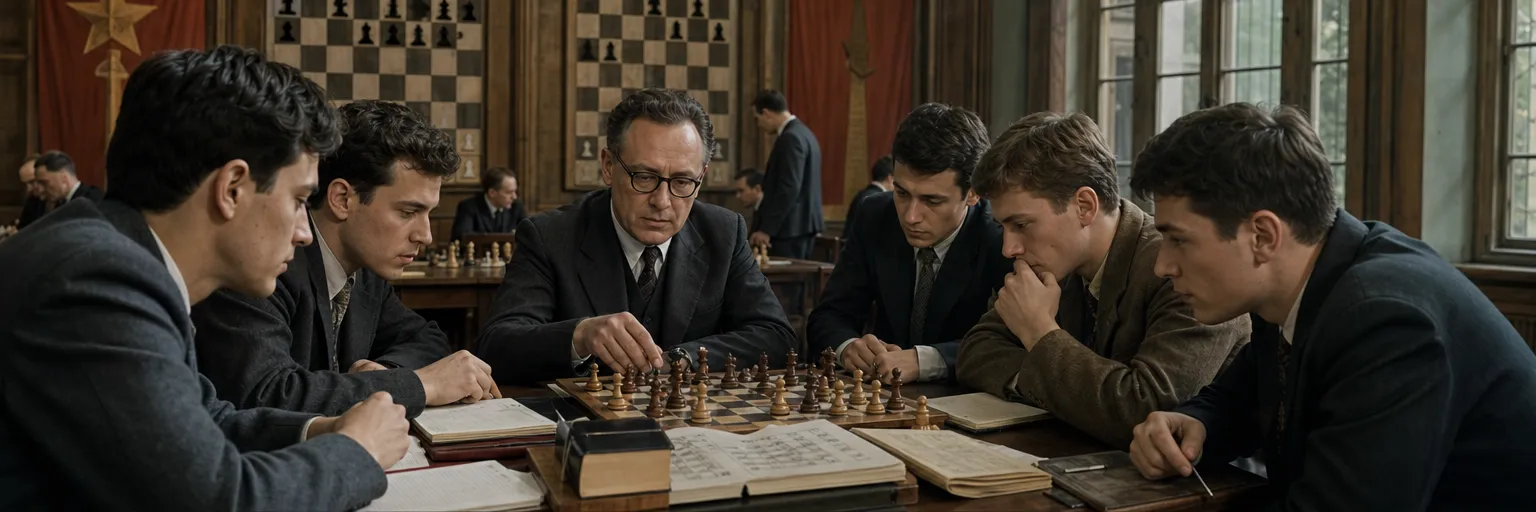
Far beyond his own successes, Botvinnik shaped an environment in which several future champions learned to think about chess as a complete discipline, combining preparation, positional logic, and scientific rigor. His legacy is therefore not limited to famous games: it is embodied in an intellectual lineage that profoundly shaped the Soviet elite for decades.
A training model for an entire generation
Botvinnik’s mark can be seen in the way young Soviet talents were trained. He advocated a structured study of the game, based on the critical analysis of one’s own games, endgame work, understanding strategic plans, and meticulous opening preparation. This vision helped make the USSR a true breeding ground for Soviet champions, capable of competing at the highest level thanks to a particularly solid methodological foundation.
Through his school and institutional influence, he imposed the idea that a great player should leave nothing to chance. Future masters learned to document their thinking, correct their weaknesses, and build a lasting style. This approach played a central role in the rise of Soviet chess training, often seen as one of the most effective in history.
The decisive role of his chess school
The school founded by Botvinnik served as a laboratory for the most promising talents. It did not merely pass on theoretical knowledge: it instilled a disciplined work ethic, a culture of analysis, and high intellectual standards. In this environment, young players were encouraged to justify their choices, delve deeper into their lines, and develop an overall understanding of the game.
It was within this framework that several major figures benefited, directly or indirectly, from the master’s legacy. The influence of this Soviet chess school was immense, as it made it possible to formalize a reproducible method capable of turning young talents into world-class competitors.
A visible influence on Karpov, Kasparov, and the heirs of the USSR
Among the players associated with this tradition, Anatoly Karpov and Garry Kasparov perfectly illustrate the reach of Botvinnik’s teaching. Although their styles differ, they share characteristic traits of this school: thorough preparation, strategic sense, adaptability, and seriousness in study. Botvinnik thus helped pave the way for several generations of Soviet grandmasters, whose dominance left its mark on the 20th century.
His influence extended well beyond his own era, as his principles continued to circulate in training circles, academies, and specialized works. In this sense, Botvinnik’s imprint goes beyond the individual: it helped build a culture of excellence that brought forth some of the greatest names in chess history.
Mikhail Botvinnik’s most memorable games
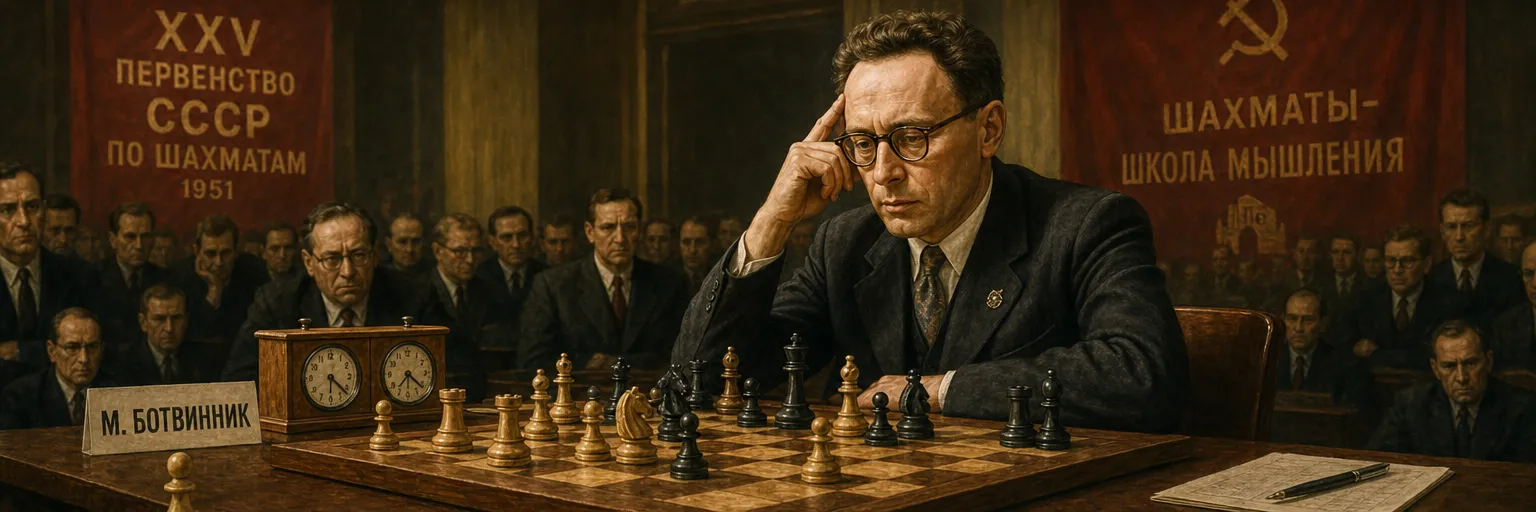
Certain encounters alone capture Botvinnik’s greatness: strategic precision, a sense of timing, and the ability to turn a slight advantage into lasting domination. Through these famous games, one understands why his name remains associated with a deeply modern vision of chess.
The defining victory against Capablanca
Among the memories most often mentioned is his victory over José Raúl Capablanca at the Moscow tournament in 1936. Defeating a former world champion of such prestige gave Botvinnik decisive international recognition. This game already illustrates his trademark: serious preparation, highly controlled positional play, and an excellent understanding of imbalances. In the history of Mikhail Botvinnik’s most memorable games, this success stands out as a major turning point.
The 1948 World Championship match
The 1948 tournament-match, organized to determine the successor to Alexander Alekhine, holds a central place in the Soviet master's career. Botvinnik dominated several elite opponents, including Vassily Smyslov, Paul Keres, and Samuel Reshevsky. More than just a sporting triumph, this performance demonstrated his superiority in preparation and adaptability. For many historians, these world championship games represent the fullest expression of his style: rigor, long-term planning, and composure in complex positions.
The memorable duels against Tal and Smyslov
The clashes with Mikhail Tal and Vassily Smyslov are also among the defining moments of his career. Against Tal, a player of attack and intuition, Botvinnik had to answer explosive creativity with even deeper analysis. His revenge in the 1961 return match remains emblematic of his work ethic. Against Smyslov, the battles were more evenly matched and often very subtle from a positional standpoint. These encounters show that Mikhail Botvinnik knew not only how to impose his game, but also how to correct his weaknesses and come back stronger.
A legacy visible in the study of great games
If these meetings are still discussed today, it is because they serve as instructional models. They make it possible to study piece coordination, the handling of a strategic middlegame, and endgame conversion. In many anthologies devoted to the best games of Botvinnik, one finds this same impression of relentless logic. His legacy is therefore not limited to his titles: it also lives on in the way his games continue to be analyzed, taught, and admired by enthusiasts of chess history.
Botvinnik against his greatest opponents on the chessboard
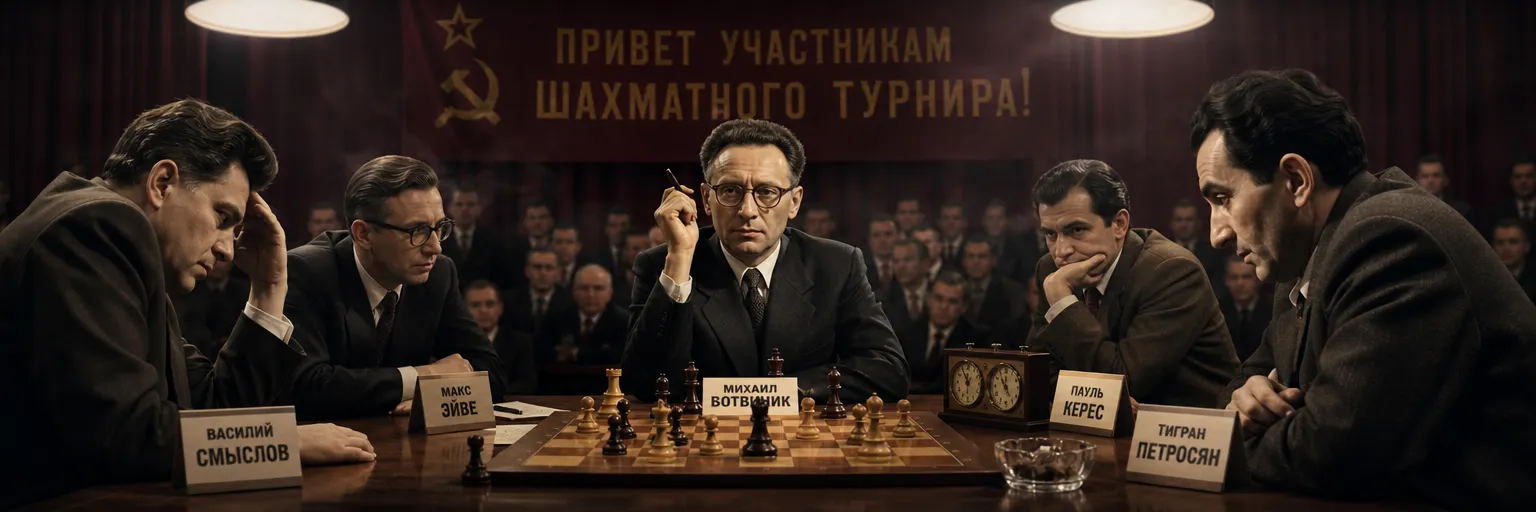
Botvinnik’s great duels reveal the full extent of his competitive character. Against the best players of his time, he sought not merely to win a game, but to impose a vision of chess based on preparation, discipline, and strategic mastery. It was in these highest-level confrontations that Mikhail Botvinnik’s stature fully asserted itself.
A formidable rival against Capablanca
Among the most emblematic encounters was his victory over José Raúl Capablanca at the AVRO tournament in 1938. Defeating the former world champion meant far more than an isolated feat: it showed that Botvinnik could compete with the greatest benchmarks of classical chess. This game helped establish Botvinnik as a credible contender for the top of the world rankings, thanks to an approach in which positional precision took precedence over spectacular effects.
The intense matches against Smyslov
The rivalry with Vassily Smyslov holds a central place in the history of the world championships. The two men faced each other several times in matches of tremendous depth. Smyslov brought natural harmony and remarkable technical fluidity, while Botvinnik responded with systematic preparation and an iron will. This clash of styles left its mark on chess history, particularly in the matches of 1954, 1957, and 1958, where Botvinnik’s full ability to adapt after a setback is on display.
The clash of generations with Tal
When Mikhail Tal burst onto the world stage, the contrast was striking. Tal embodied boldness, attack, and tactical intuition, while Botvinnik represented order, analysis, and structure. Their world title match in 1960 illustrates one of the most fascinating contrasts in the history of the World Chess Championship. Defeated the first time by the Latvian genius, Botvinnik nevertheless managed to reclaim his title in 1961 by meticulously correcting his weaknesses and preparing positions less favorable to his opponent’s explosive style.
Petrosian, the opponent of maturity
Against Tigran Petrosian, Botvinnik encountered a player whose defensive solidity and prophylactic understanding made every initiative difficult. Their clash in 1963 symbolizes a new phase in his career, when experience alone was no longer always enough to contain the evolution of the Soviet elite. Even in defeat, Mikhail Botvinnik retained major influence, as his matches served as analytical models for several generations of players and coaches.
Rivalries that shaped his legend
Capablanca, Smyslov, Tal, and Petrosian were not merely prestigious opponents: they helped define Botvinnik’s unique place in history. Each of these duels highlighted his ability to prepare in depth, learn from his failures, and come back stronger. That is also why his name remains associated with the idea of a complete champion, the architect of a modern way of thinking about the game and a major figure in the history of Soviet chess.
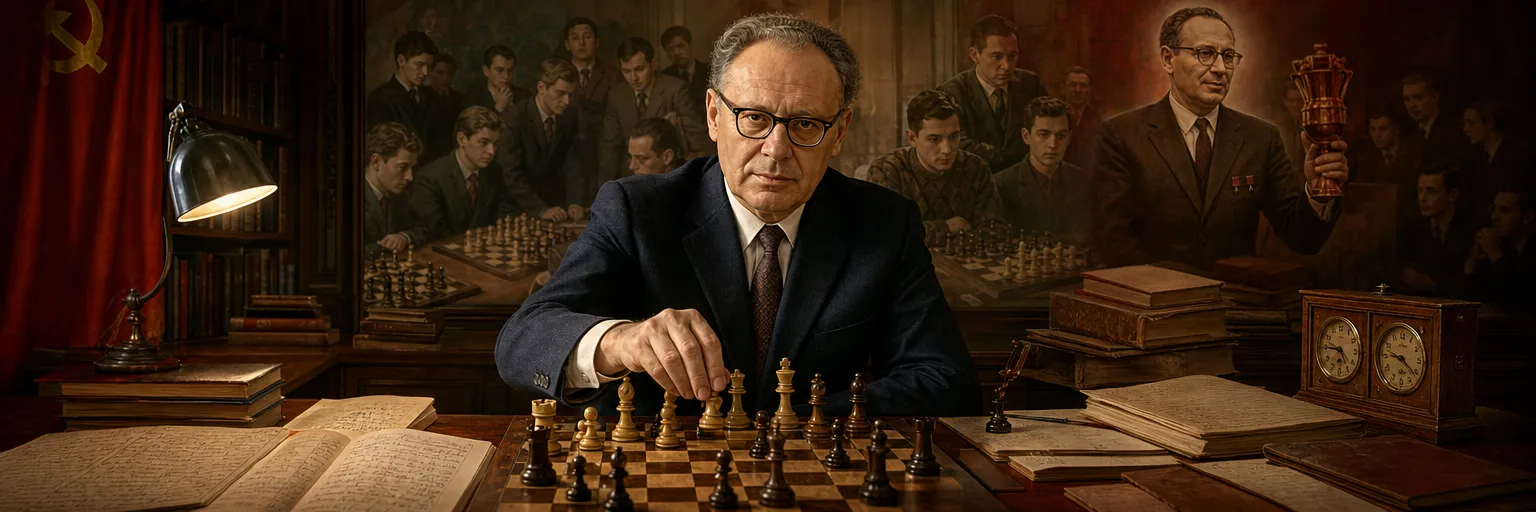
Mikhail Botvinnik’s legacy in chess history
Across generations, few figures have left as profound a mark on the evolution of the game as Mikhail Botvinnik. His name goes far beyond that of a simple world champion: he embodies a way of thinking about chess, studying it, and passing it on. By imposing a demanding intellectual discipline, he helped usher top-level play into a more structured, analytical, and professional era.
A lasting benchmark for theory and preparation
Botvinnik’s contribution to the history of the game is measured first and foremost in the field of preparation. He popularized an approach in which in-depth position analysis, opening work, and critical study of one’s own games became cornerstones of improvement. This vision profoundly shaped the Soviet school of chess, which would later make methodical preparation a true hallmark.
His legacy is also found in opening theory and in his ability to connect general strategy with concrete calculation. With him, nothing was left to chance: every plan had to be justified by the pawn structure, the activity of the pieces, and the long-term prospects. This rigor continues to influence coaches, masters, and contemporary players.
The central role of teacher and mentor
Botvinnik’s influence continued long after his greatest competitive successes thanks to his work in passing on knowledge. His school helped train major talents, including Anatoly Karpov, Garry Kasparov, and Vladimir Kramnik. Through them, an essential part of his legacy spread throughout the whole of modern chess history.
This role as a teacher reinforces his status as the father of the Soviet school of chess. He did not seek merely to produce brilliant players, but competitors capable of analyzing with clarity, preparing seriously, and understanding the deep laws of the position. This conception of training helped establish lasting standards in the development of the world elite.
An influence that goes beyond the Soviet Union
Although Botvinnik is closely associated with Soviet dominance on the chessboard, his legacy extends far beyond that historical framework. His training model, based on planning, self-criticism, and the constant pursuit of improvement, inspired people well beyond the USSR. Even today, many players adopt methods close to those he advocated, whether in computer-assisted study or targeted preparation against an opponent.
In this respect, Mikhail Botvinnik holds a singular place in the memory of the game: that of a builder. His legacy rests not only on his titles, but on a lasting transformation of chess culture. In the history of chess, he remains one of the rare masters to have changed not only the results, but also the very way excellence is conceived.
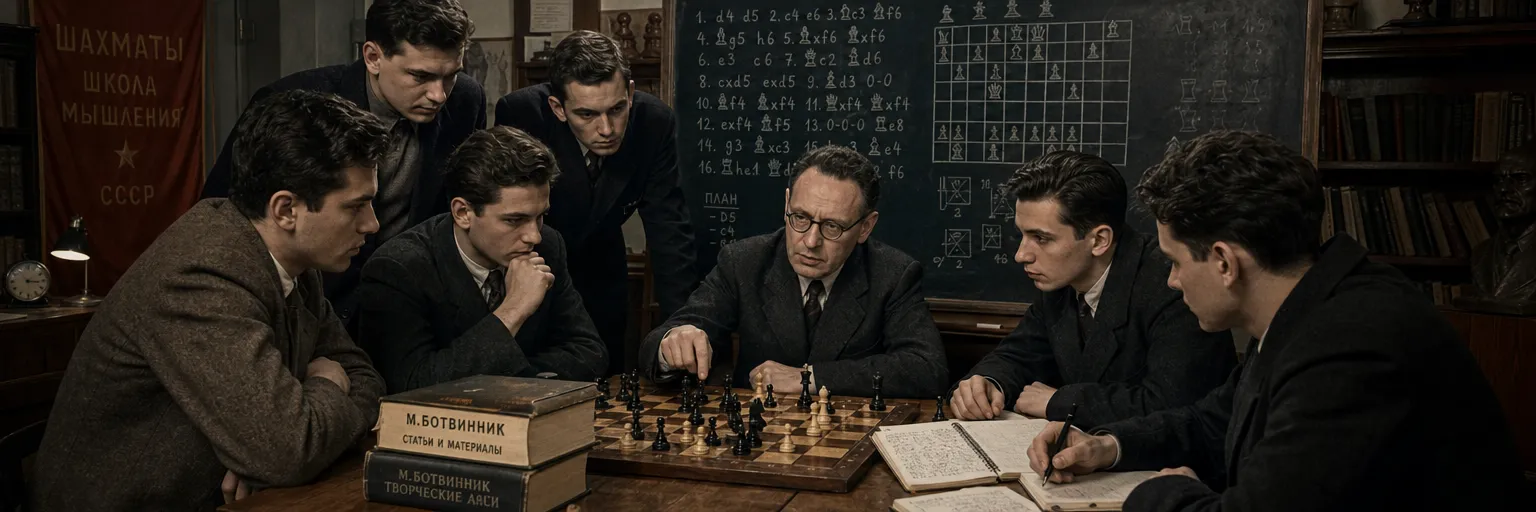
What the Soviet school of chess owes to Botvinnik
In the history of the game, few champions have done so much to structure an entire culture of performance. By turning chess into a field of systematic study, Botvinnik gave the Soviet school of chess an intellectual, educational, and competitive foundation that left a lasting mark on the 20th century.
A scientific vision of the game
One of Mikhail Botvinnik’s major contributions lies in his way of treating every game as an object of analysis. Opening preparation, critical examination of mistakes, study of pawn structures, and long-term planning: this methodical approach helped define the identity of the Soviet school. Under his influence, chess was no longer based solely on inspiration, but on rigorous, almost experimental work.
A training method for future generations
The model championed by Botvinnik also transformed learning. He insisted on discipline, regular training, personal analysis, and a deep understanding of positions. This high standard became a benchmark in clubs, schools, and training centers across the USSR. In this sense, he was not only a world champion, but also a true architect of the transmission of chess knowledge.
A framework that fostered the emergence of champions
Botvinnik’s influence can also be measured through the players trained in his wake. His school and principles supported the rise of future greats, including Anatoly Karpov, Garry Kasparov, and Vladimir Kramnik. Each developed his own style, but all inherited, in one way or another, this culture of preparation and seriousness rooted in the Soviet tradition.
A legacy beyond the Soviet Union
What we now associate with the modern top level — targeted preparation, analytical work, strategic construction of a repertoire — owes much to Botvinnik’s legacy. His influence extends far beyond the USSR: it helped shape contemporary chess practice, where methodical thinking and structured training remain at the heart of success.
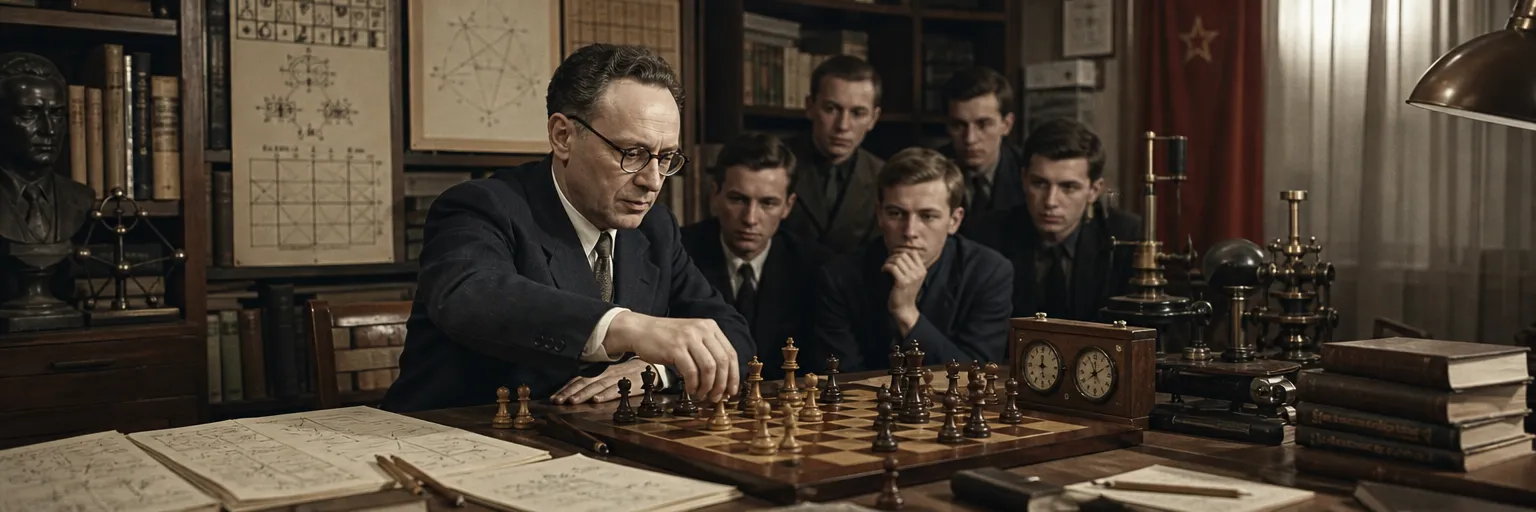
Botvinnik, between science, strategy, and the transmission of chess knowledge
More than a world champion, Botvinnik embodies a way of thinking about chess as a complete field of study, where intuition must be supported by analysis, experience, and discipline. This vision helped make Mikhail Botvinnik a leading reference in chess strategy, but also a transmitter of ideas whose influence extends far beyond his own tournament results.
A scientific approach to the game
Trained as an engineer, Botvinnik applied to the chessboard a logic akin to scientific research. He recorded his analyses, studied pawn structures, compared typical plans, and sought to identify general laws of positional struggle. This method gave rise to a form of preparation that was particularly modern for its time, based on observation, repetition, and the verification of hypotheses. From this perspective, Soviet chess became a field of intellectual experimentation as much as a high-level sport.
Strategic sense at the heart of his identity
Botvinnik’s strength lay not only in tactical calculation, but in his ability to understand the deep logic of a position. He excelled in long-term plans, the gradual improvement of his pieces, and the methodical conversion of a small advantage into a concrete win. His style perfectly illustrates the importance of chess preparation and strategic consistency, two pillars that left a lasting mark on the Soviet school of chess. For him, every decision was part of an overall structure, which explains the remarkable solidity of his play.
A mentor for future generations
The other essential dimension of his legacy lies in his role as an educator. Botvinnik did not merely pass on variations or tournament formulas: he taught a way of working, of correcting one’s weaknesses, and of building independent thinking. His school influenced several future grandmasters, including Anatoly Karpov, Garry Kasparov, and Vladimir Kramnik, all marked, directly or indirectly, by this culture of high standards. Through this work of instruction, Botvinnik established himself as a central figure in the transmission of chess knowledge.
A modernity that spans the ages
What keeps his legacy relevant today is how applicable his principles remain to contemporary chess. Serious opening study, critical analysis of one’s own games, rational management of effort, and the importance placed on structures are still at the heart of modern training. In this sense, Mikhail Botvinnik belongs not only to history: he continues to illuminate how players understand competition, progress, and learning in the world of chess.
Mikhail Botvinnik profoundly influenced several generations of players through his scientific approach to chess and his foundational role in the Soviet school. Long before this dominance by the USSR, France had already seen the rise of one of the first great champions of international renown: Louis-Charles Mahé de La Bourdonnais: the first great French chess master, considered one of the best players in the world in the 19th century.
From 19th-century France to modern world champions, the history of chess is full of fascinating personalities. Discover them all in our feature dedicated to the greatest players who have left their mark on this timeless game: Famous chess players: legends, champions, and modern stars.