 France
 English
 Deutsch
 Español
 Italiano
 Nederlands
 Polski
 Português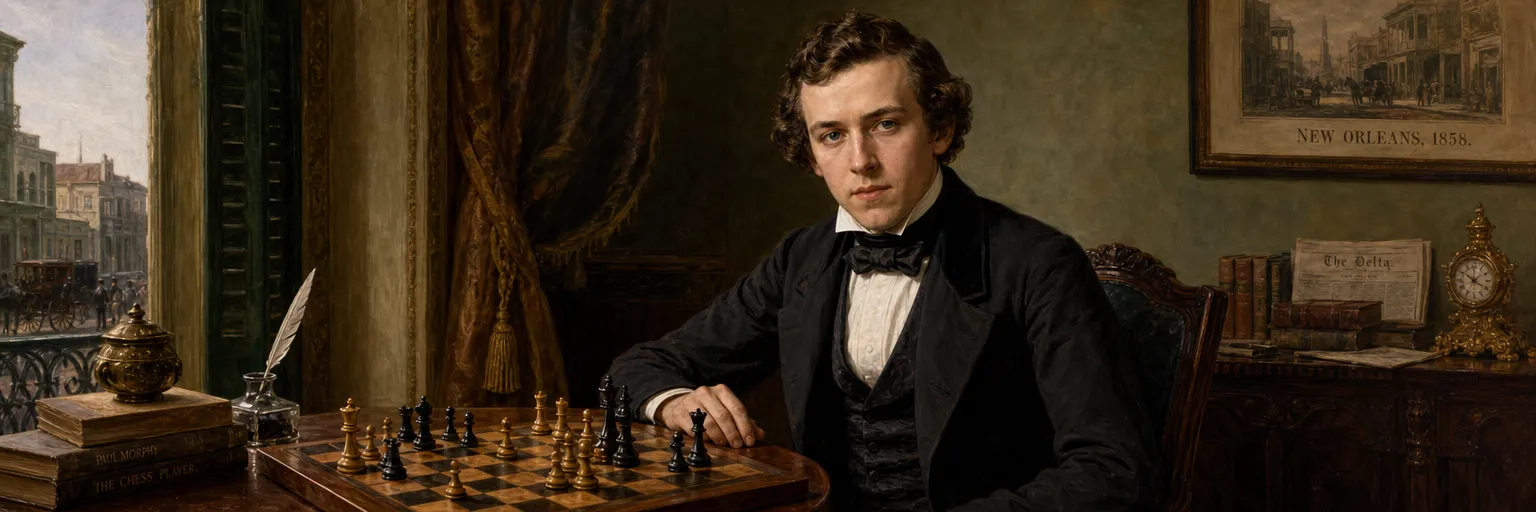
Who was Paul Morphy, American chess prodigy?
Paul Morphy is often regarded as the first great champion from the United States and as one of the most brilliant talents in the entire history of chess. Born in New Orleans in 1837, he learned from a very young age by observing the games played by the adults around him, before revealing exceptional abilities. His memory, speed of calculation, and instinctive understanding of positions made him a unique figure in the world of sixty-four squares.
A gifted child from New Orleans
From childhood, Morphy impressed people with his ability to absorb the rules and principles of the game without any real academic training. In a cultured family environment, he developed a remarkable sense of attack and piece coordination. Very early on, the name Paul Morphy circulated among discerning enthusiasts, as his style seemed far ahead of its time. This American chess prodigy stood out not only for his victories, but also for the natural elegance of his play.
An offensive style that became legendary
What makes Morphy so fascinating is his way of seeking the initiative with every move. He favored rapid development, control of the center, and the opening of lines against the opposing king. Long before these ideas were fully theorized, he applied them with astonishing clarity. Even today, Paul Morphy’s games are studied for their educational value, as they perfectly illustrate the foundations of the American chess genius of the 19th century.
A meteoric rise on the international stage
In the 1850s, Morphy quickly dominated the best players in his country, then went to Europe to face the elite of the time. His time on the Old Continent made a lasting impression: he defeated many renowned masters with disconcerting ease. This series of successes fueled his reputation as a phenomenon and made him a central figure in the history of American chess. In a very short time, he established himself as a world reference.
Why his name remains essential
Although Morphy’s competitive career was relatively brief, his influence remains immense. He embodies precocity, creativity, and strategic modernity all at once. For many historians, he could have reigned even longer if he had chosen to devote his entire life to the game. His legacy goes beyond mere results: even today, Paul Morphy symbolizes the image of the visionary player, capable of transforming a game into a work of art.
The origins and youth of Paul Morphy in New Orleans
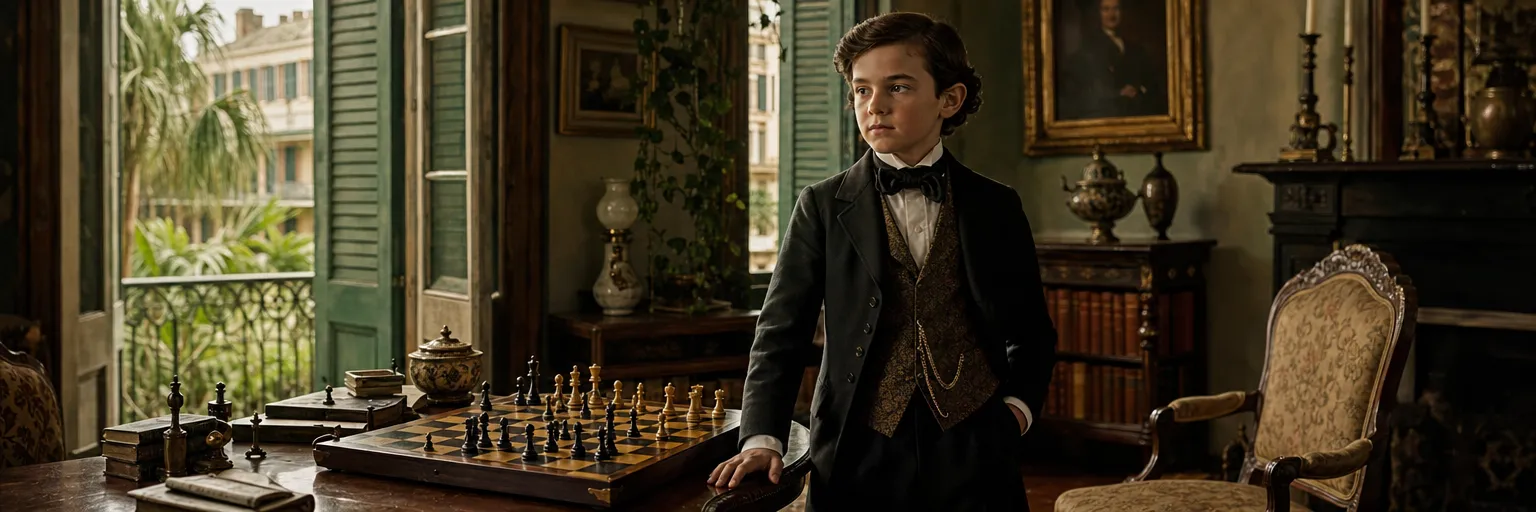
Born on June 22, 1837, in New Orleans, Paul Morphy grew up in a cultivated, affluent environment deeply shaped by the cultural blending of 19th-century Louisiana. His childhood unfolded in a cosmopolitan city where French, Spanish, Creole, and American influences converged, an environment that helped shape his intellectual sharpness from a very early age. Even before he was known as a future chess master, he already stood out as a child with an exceptional memory, capable of observing, understanding, and retaining information with remarkable ease.
An educated and influential family
Young Morphy belonged to a respected family in New Orleans. His father, Alonzo Morphy, was a lawyer, a Louisiana state legislator, and later a judge on the Louisiana Supreme Court, while his mother, Louise Thérèse Félicité Thelcide Le Carpentier, came from a cultivated Creole family. Within this family setting, intellectual discussions, music, law, and the leisure pursuits of the elite held an important place. It was also in this domestic circle that the future prodigy discovered the game of chess, not through strict instruction, but by watching the adults play.
A lightning-fast apprenticeship through observation
Paul Morphy’s youth is often recounted through an anecdote that has become famous : as a child, he is said to have learned the rules simply by watching his father and uncle play against each other. Very quickly, he did not merely follow the games ; he spotted mistakes, anticipated moves, and astonished his elders with the accuracy of his remarks. This extraordinary ability to absorb information fueled his reputation as a precocious genius. At a time when learning came mainly through practice and the study of a few specialized works, his natural talent immediately impressed those around him.
New Orleans, cradle of a prodigy
Growing up in New Orleans was no minor detail in Paul Morphy’s journey. At the time, the city was one of the most refined centers in the American South, with a lively social life, cultivated salons, and a genuine interest in games of the mind. In this world, chess held a place of intellectual distinction. Morphy thus benefited from a setting favorable to the flourishing of his gifts, even if nothing yet suggested the scale of his future international renown.
Intellectual abilities far beyond the game
While chess quickly revealed his genius, it alone does not sum up his education. Paul Morphy also stood out for his academic abilities and his general precocity. He showed great ease in his studies, particularly in languages and law, fields that reflected the rigor of his mind. This versatility helps explain why his talent on the chessboard seemed so natural : in his case, quick thinking, memory, and a sense of logic appeared very early in several disciplines.
The first demonstrations of his talent
During his adolescence, Morphy began facing more experienced players, often with disconcerting ease. Those close to him then understood that they were not dealing with simply a gifted child, but with a rare phenomenon. His early local performances helped build his emerging legend, long before his exploits on the international stage. This brilliant youth, rooted in the refined environment of New Orleans, formed the foundation of a path that would soon make him one of the greatest names in chess history.
How Paul Morphy became a chess virtuoso in just a few years
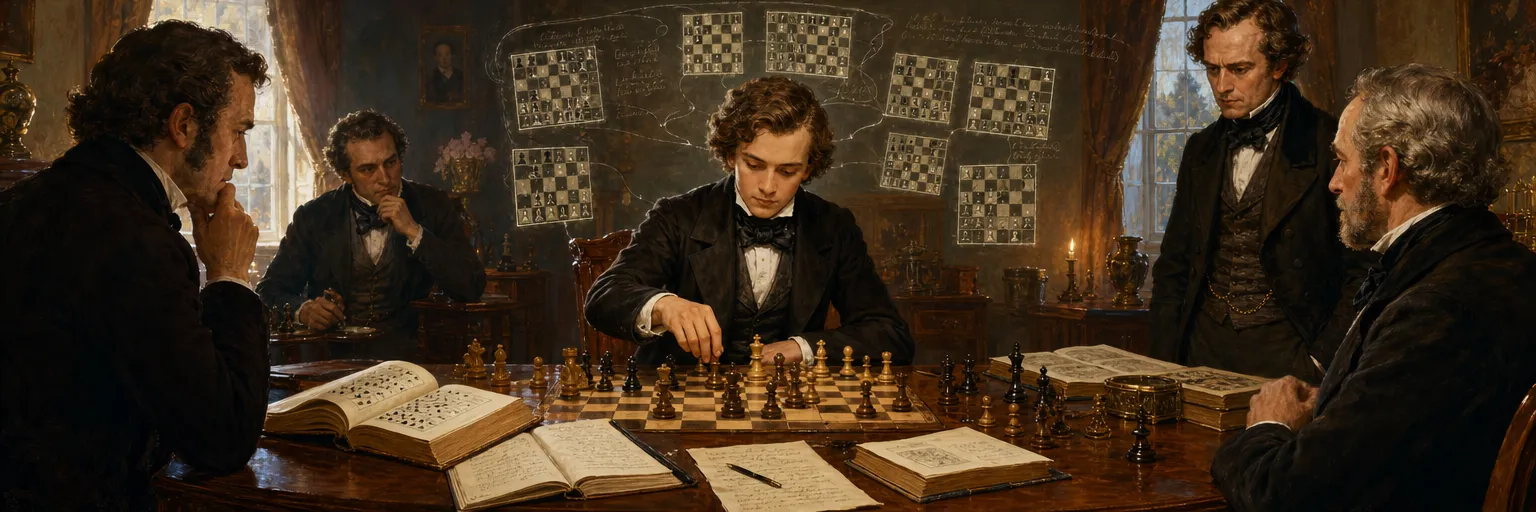
For Paul Morphy, the rise was as meteoric as it was exceptional. In a very short time, the young American went from being a talented observer to a player capable of dominating the best masters of his time. This rapid progression can be explained by a rare combination of memory, intuitive understanding of the game, and an extraordinary ability to absorb the principles of chess.
An almost instinctive learning process
Unlike many players trained through methodical practice from childhood, Paul Morphy developed his talent in a largely spontaneous way. By watching the adults around him play, he absorbed the rules, tactical patterns, and positional logic at a very early age. This way of learning, based on observation and mental repetition, accelerated his mastery of the game and very quickly revealed his status as an American chess genius.
A superior understanding of the principles of the game
What set Morphy apart was not only his ability to calculate quickly, but above all his deep understanding of development, control of the center, and piece activity. At a time when many players favored brilliant attacks without real strategic preparation, he knew how to combine speed, precision, and initiative. This early maturity allowed Paul Morphy to gain the upper hand over opponents who were nonetheless more experienced.
From local opponents to major encounters
By playing more and more games in the circles of New Orleans and then beyond, Morphy quickly built an impressive reputation. Each encounter seemed to confirm that he possessed a level superior to that of his American contemporaries. His journey took on a national dimension when he triumphed at the 1857 American Chess Congress, a success that truly launched Paul Morphy’s career onto the international stage.
Speed of execution in the service of genius
One of the most striking features of his style was his ability to find the best moves with astonishing speed. Where others hesitated at length, Morphy immediately saw weaknesses, attacking lines, and winning combinations. This ease gave the impression of a player ahead of his time, capable of turning a simple initiative into a decisive attack with remarkable clarity. It is also for this reason that his name remains associated with the image of a chess virtuoso.
Natural talent strengthened by a favorable environment
His cultivated family environment, his early access to high-level games, and the quality of the opponents he faced also contributed to his rapid development. But these conditions alone are not enough to explain such a phenomenon. What made Paul Morphy unique was his ability to surpass a great number of seasoned masters in just a few years, to the point of enduringly embodying the model of the prodigy in chess history.
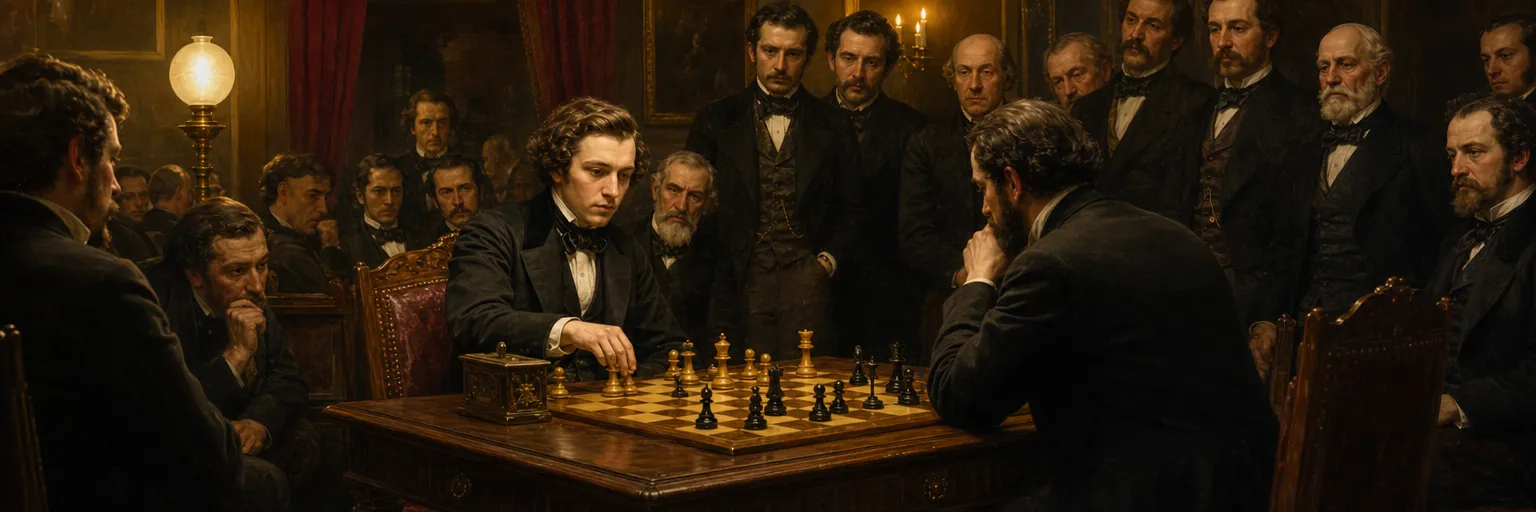
Paul Morphy’s most famous matchups
Some duels were enough to build Paul Morphy’s legend, so clearly did they reveal the speed of his calculation, the precision of his tactical sense, and his spectacular way of punishing the slightest delay in development. Through these games, which have remained famous, one understands why the American master left a lasting mark on chess history.
The triumph over Adolf Anderssen
Among the most commented-on encounters are those played against Adolf Anderssen, then considered one of the most formidable players in Europe. In 1858, Morphy won their match convincingly, confirming that he could dominate the greatest representatives of the Romantic school. This face-off is essential, because it pits two attacking styles against each other, but above all shows Morphy’s superiority in the art of coordinating his pieces with remarkable efficiency.
Against Anderssen, Paul Morphy did not merely attack: he developed quickly, opened lines at the right moment, and turned every initiative into a concrete threat. These games perfectly illustrate his positional genius in the service of attack, a combination that still explains today his unique place in the pantheon of chess.
The famous Opera Game
If there were only one demonstration of Morphy’s talent to remember, many would cite the Opera Game, played in Paris in 1858 against the Duke of Brunswick and Count Isouard. This encounter became legendary because of its pedagogical clarity: Morphy sacrificed material, accelerated his development, and finished with a devastating attack against the opposing king.
This game is often studied by beginners and experienced players alike because it shows fundamental principles with rare clarity: bringing out the pieces quickly, controlling the center, avoiding loss of time, and exploiting a king left in the middle of the board. In just a few moves, Paul Morphy delivers a timeless lesson in attacking logic.
The matches against Daniel Harrwitz and the European masters
Before facing Anderssen, Morphy had already prevailed against Daniel Harrwitz, another leading opponent during his stay in Europe. This match strengthened his international reputation, as he demonstrated remarkable maturity against an experienced player known for his solidity. Even when he encountered more technical resistance, Morphy managed to create decisive imbalances.
His encounters with the European masters helped forge the image of a champion who was almost irresistible. In a short time, he defeated the best players available, often by an impressive margin. This series of performances fueled the perception of an American chess genius, capable of asserting himself far from his home country and redefining the standards of top-level play.
Games that shaped his legacy
If these encounters have remained so vivid in the collective memory, it is because they condense everything that makes Morphy unique: combinational vision, a sense of initiative, and an exceptional understanding of the relationship between development and attack. His most famous victories are not only spectacular; they also continue to be useful for learning how to play better.
Even today, enthusiasts revisit these duels to understand how Paul Morphy transformed a development advantage into a winning offensive. His most famous encounters therefore are not merely historical anecdotes: they constitute a living legacy within chess culture.
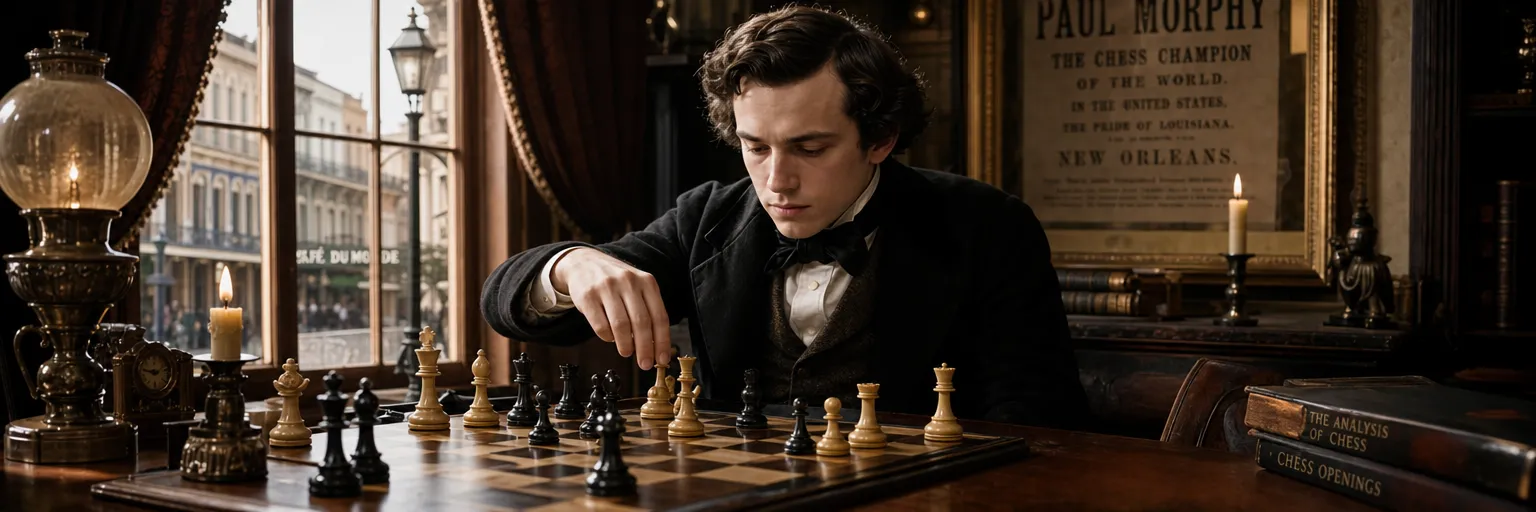
Paul Morphy's playing style: attack, initiative, and elegance
What immediately stands out in Paul Morphy's games is the clarity of his ideas. His play was not based on an accumulation of artificial complications, but on formidable attacking logic : develop quickly, open lines, activate the pieces, and exploit the slightest weakness in the opponent's position without delay. This approach shaped the image of a chess genius capable of turning a slight developmental edge into a decisive attack.
Absolute priority to development
Morphy understood, long before many others, that the opening should not be a waiting phase. Every move had to improve the army's overall coordination, prepare castling, control the center, and put the pieces in a position to act. When an opponent wasted time with unnecessary maneuvers or premature queen sorties, he responded with remarkable energy. It is this mastery of fundamental principles that still makes Paul Morphy an educational reference for understanding initiative-based play.
Attack as the consequence of a positional advantage
Morphy is sometimes reduced to a spectacular player, fond of brilliant sacrifices. In reality, his attacks very often arose from a concrete superiority : better mobilization, open files, active diagonals, and an insufficiently protected opposing king. His combinations were not gambles, but the natural outcome of a dominant position. In the history of 19th-century chess, this ability to unite simple principles and tactical violence goes a long way toward explaining the lasting admiration he inspires.
Elegance rooted in simplicity
Morphy's elegance also comes from his refusal of the superfluous. Where others might have sought complex continuations, he often found the most direct, harmonious, and convincing line. His games create an impression of almost musical inevitability : the pieces come into play at the right moment, exchanges serve a clear plan, and checkmate appears as the logical conclusion of the entire sequence. This purity of execution helps make him a great American chess player and a major figure of chess Romanticism.
Why his style remains modern
Despite the historical distance, Morphy's style remains strikingly modern. Modern engines often confirm the soundness of his intuitions : accelerated development, control of the center, sustained initiative, and immediate punishment of strategic mistakes. His games are still studied not only for their beauty, but also for their instructional value. Through them, Paul Morphy appears as far more than an old prodigy : a master whose dynamic understanding of the game already foreshadows certain principles of the champions to come.
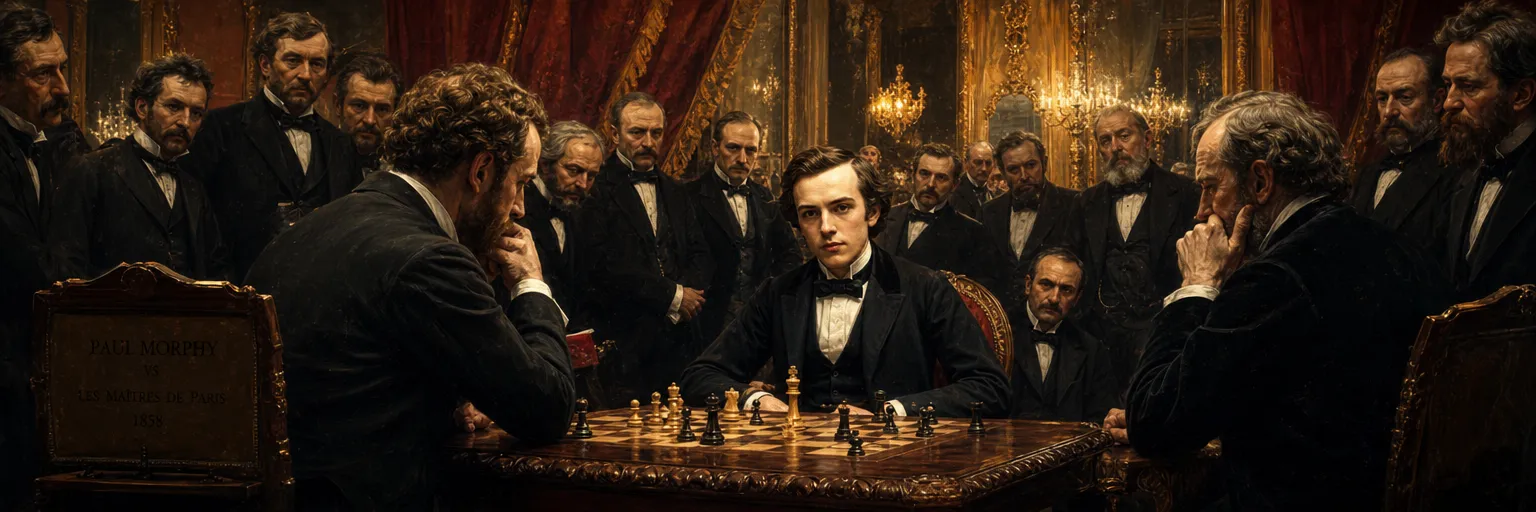
Paul Morphy facing the greatest European players of the 19th century
Paul Morphy's European journey marks a decisive turning point in his career. By leaving the United States to face the elite of the Old Continent, he is not merely seeking to confirm his reputation : he wants to measure himself against the absolute benchmarks of chess in his time. In just a few months, the young American prodigy established a superiority that astonished specialist circles in London and Paris, to the point that many considered him the strongest player in the world.
A challenge launched at the heart of the European scene
In the middle of the 19th century, Europe was home to the most influential clubs, masters, and enthusiasts. For an American player, making his mark there was a true test of legitimacy. Morphy quickly understood that his fame would only be complete after victories against the great European figures. His time in London, then in Paris, thus placed him at the center of international chess life, where every game became as much a test of prestige as a sporting contest.
This confrontation between the young talent from New Orleans and the best European representatives immediately fueled the public's fascination. Morphy did not merely win : he often dominated with remarkable ease, demonstrating an understanding of development, initiative, and piece coordination that seemed ahead of his time.
The landmark duel against Adolf Anderssen
Among all his European opponents, Adolf Anderssen holds a central place. Considered one of the greatest masters of the time, the German was then an essential benchmark. The match between Morphy and Anderssen was therefore seen as a summit clash. By winning convincingly, Morphy sent a clear message to the entire chess community : his genius was not a passing trend, but an undeniable reality.
This victory is all the more significant because Anderssen already enjoys immense prestige thanks to his brilliant games and earlier successes. Opposite him, Morphy combines speed of calculation, tactical flair, and great positional discipline. Where many expect a purely romantic duel, the American shows that he can attack brilliantly while respecting principles of formidable modernity.
The Paris games and international recognition
In Paris, Morphy further strengthens his aura. The Café de la Régence, a legendary venue of European chess, becomes one of the stages of his triumph. There he faces several renowned players, in friendly games, consultation matches, or contests more closely followed by the specialized press. His ability to prevail in a variety of contexts helps build an almost irresistible image.
This Parisian period plays an essential role in shaping his legend. Morphy is no longer just a promising American champion : he becomes an admired, studied, and commented-on international figure. His name circulates in clubs, newspapers, and salons, associated with a form of offensive perfection that impresses even his opponents.
Why his successes in Europe changed his status
Paul Morphy’s performances against the greatest European players of the 19th century profoundly transformed his image. Before this tour, he appeared to be an exceptional phenomenon from the United States. After his victories, he was widely regarded as the finest living representative of chess, far beyond American borders.
This change in status explains why Morphy remains a major figure in the history of the game. By defeating the European masters on their own ground, he not only elevated his personal prestige, but also redefined top-level standards. His games against the continent’s elite show that he was not merely a spectacular player, but a true pioneer in the art of dominating the best.
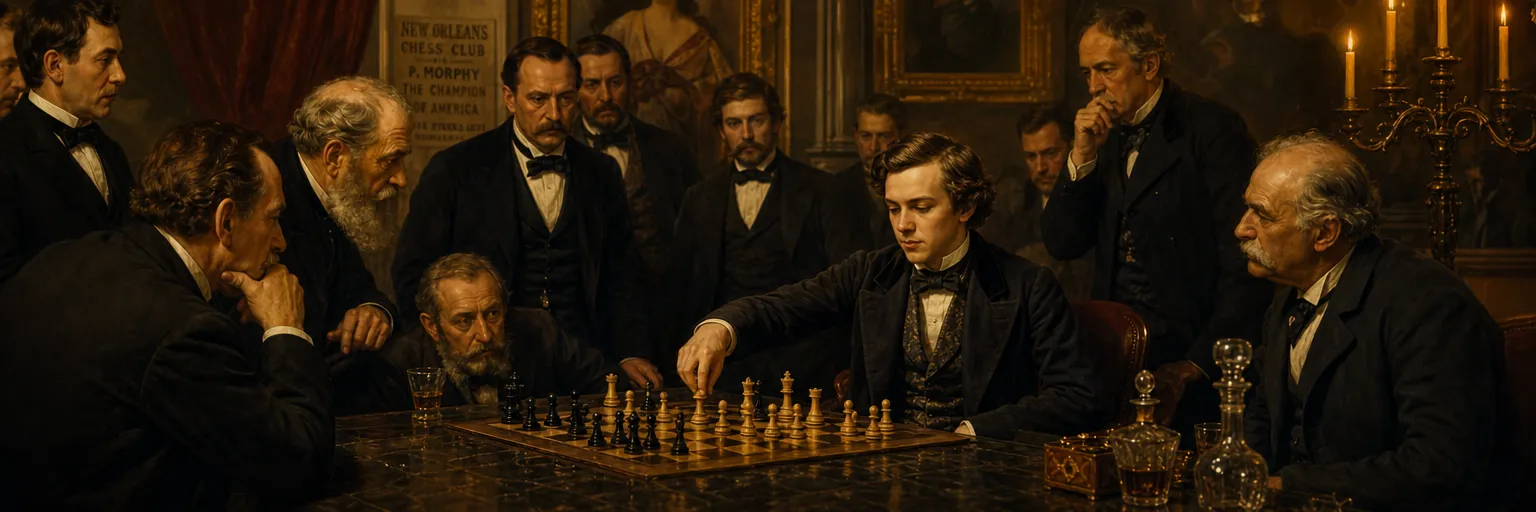
Why Paul Morphy is considered a chess prodigy
Few players have, in such a short time, given the impression of dominating their era with such obviousness. Paul Morphy is considered a prodigy because he demonstrated very early on an understanding of the game far ahead of his contemporaries, combining speed of calculation, strategic vision, and a keen attacking sense.
An extraordinary precocity
From childhood, Paul Morphy impressed those around him with his ability to remember positions, anticipate his opponents’ moves, and instinctively grasp the essential principles of chess. Without following the traditional path of a player shaped by long competitive practice, he quickly absorbed the game’s mechanics and showed exceptional maturity against far more experienced opponents.
Clear superiority against the best players
What turned talent into a true phenomenon was his ability to defeat renowned masters with disconcerting ease. Beyond the results, the manner mattered: Paul Morphy did not merely win, he imposed a pace, a logic, and a precision that made many of his games true demonstrations. This swift domination over the American and then European elite greatly contributed to his image as a chess prodigy.
A sense of the game ahead of his century
Paul Morphy’s genius also lies in the fact that he applied, with remarkable consistency, principles that many 19th-century players had not yet fully mastered: rapid piece development, control of the center, opening lines, and immediate exploitation of the opponent’s weaknesses. Where others relied on attacks that were sometimes improvised, he built his offensives on solid foundations, which makes his legacy an enduring reference in chess history.
Intuition combined with exceptional rigor
Great talents are often portrayed as purely inspired players, but Paul Morphy’s case is more complete. His intuition was accompanied by rare positional discipline, precise calculation, and an ability to turn a small advantage into a decisive attack. This combination of natural elegance and technical accuracy explains why he remains, even today, one of the most fascinating figures of 19th-century chess.
A legend sustained by posterity
If Paul Morphy continues to be described as a precocious genius, it is also because his games remain astonishingly modern. Many historians and enthusiasts see him as a player who foreshadowed the future evolution of the game. His name has thus become established as that of an American chess genius, whose exceptional talent went beyond mere performance to enter legend.
Paul Morphy’s major successes and unofficial distinctions
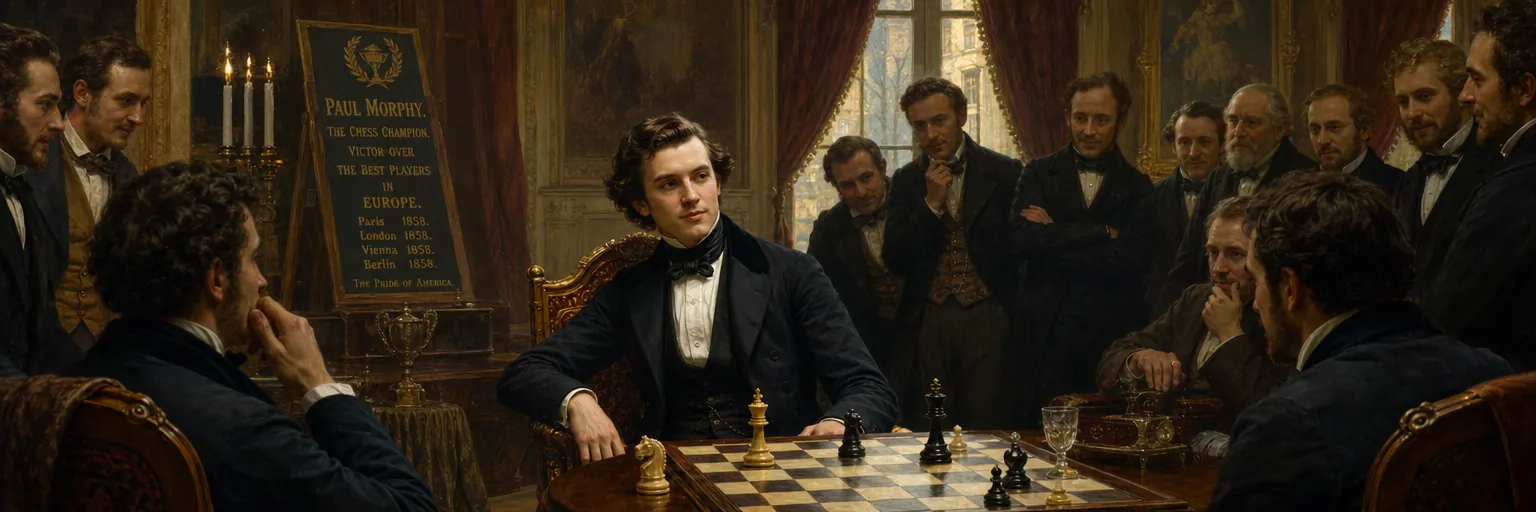
Few careers have produced, in such a short span of time, such a clear impression of superiority. Without holding an official title comparable to those that would be established later, Paul Morphy asserted himself through his results, through the gap he opened up over his rivals, and through the near-unanimous recognition of the chess world. His major successes fueled the idea that he was already, in practice, an unofficial world champion.
The triumph of the 1857 American Congress
One of the key milestones in his rise to fame remains his victory at the first American Chess Congress, held in New York in 1857. This tournament, pivotal in the history of American chess, introduced the general public to a young player capable of combining calculating speed, strategic mastery, and a keen sense of attack. By winning the event with authority, Morphy became the leading national figure in the game and established himself as the most brilliant representative of his generation.
This crowning achievement was not merely a tournament victory: it acted as an early consecration. At a time when international circuits were still limited, dominating an event of this importance was enough to make him the rising benchmark of the American continent.
Dominance confirmed during the European tour
The true measure of his talent, however, became apparent during his stay in Europe. By facing several of the best masters of the time, Paul Morphy amassed remarkable performances and confirmed that his level far exceeded that of a mere national prodigy. His successes against renowned opponents, especially Adolf Anderssen, strengthened his reputation on the international stage.
This European campaign carried major symbolic weight. As Europe was then the intellectual center of nineteenth-century chess, shining there amounted to the highest form of validation. Morphy demonstrated that he could defeat the most respected players with astonishing consistency, often imposing a style that was more modern, more energetic, and more precise.
The status of the world's best player without an official crown
In Paul Morphy’s time, there was still no official world championship as it would later be known. Yet the informal hierarchy of the chess world already functioned through recognition of results and the opinion of the masters. And after his American and then European exploits, many regarded Morphy as the best living player.
This unofficial distinction is all the more striking because it was based not on an institution, but on a consensus. His name circulated as that of the player to beat, and his authority seemed so evident that the idea of Paul Morphy as an unofficial world champion became firmly established in historical accounts. Even without a formal crown, he attained what mattered most at the time: the admiration of his peers and the widespread conviction of his superiority.
Honors built on reputation and legacy
The distinctions associated with Paul Morphy stem less from an official list of titles than from glory earned on the chessboard. His reputation as a genius, his ability to defeat the best representatives of his time, and the brilliance of some of his games give him a unique place. He became a lasting reference, often cited whenever the greatest natural talents in the history of the game are discussed.
With hindsight, his major successes take on even greater significance. They show that even before the formalization of modern titles, a player could rise to legendary status through the sheer strength of his performances alone. That is precisely why Paul Morphy remains, even today, one of the most prestigious names in chess.
Paul Morphy's legacy in chess history
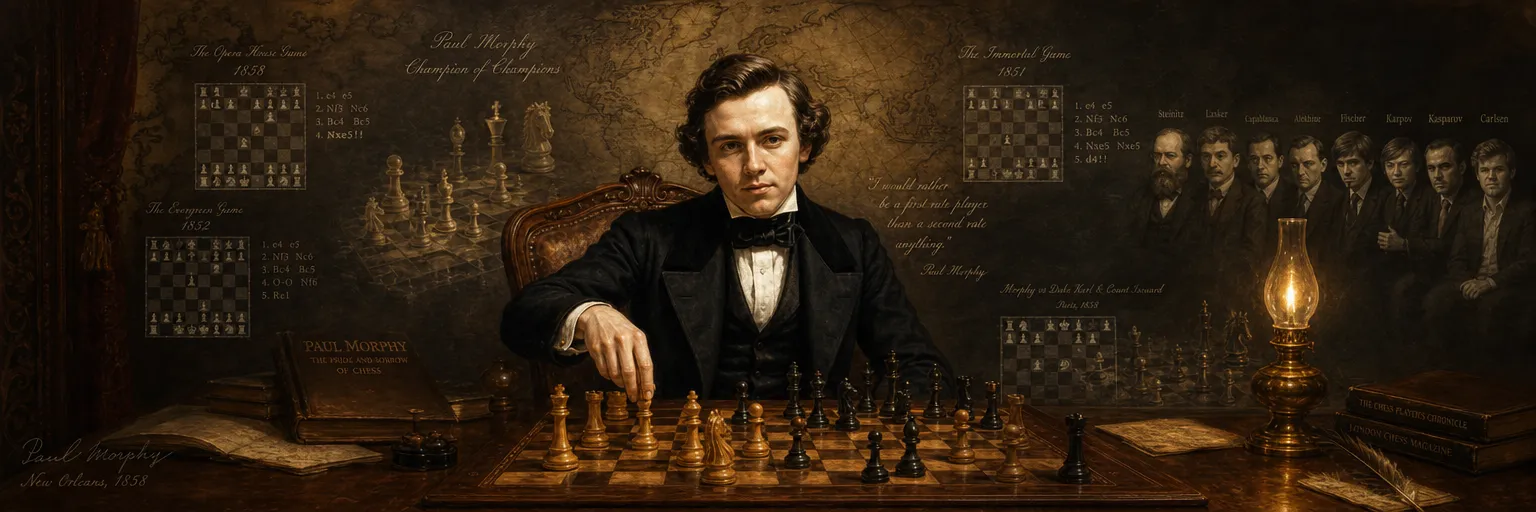
Far beyond his victories, the mark left by Paul Morphy lies in the modernity of his vision of the game. At a time when many encounters still relied on romantic intuition and sometimes excessive attacks, he showed that a brilliant offensive could arise from rapid development, perfect piece coordination, and a remarkable sense of initiative. This combination explains why his name remains essential in the history of chess.
A precursor of modern play
Many historians see Morphy as a player ahead of his time. His games illustrate principles that are now taught at every level: occupying the center, developing pieces quickly, castling without delay, and punishing an opponent's loss of time. In this sense, Paul Morphy did not merely dominate his contemporaries: he also helped advance the strategic understanding of the game.
Games that became learning models
If his spectacular combinations still fascinate, it is also because they retain great educational value. Coaches and enthusiasts still study his best games to understand how to turn a development advantage into a decisive attack. The famous "Opera Game," in particular, perfectly sums up what makes the 19th-century American chess genius so unique: apparent simplicity, tactical precision, and elegance in the finish.
A lasting influence on champions
Several great masters of the following generations acknowledged Morphy’s importance in their chess education. Even as opening theory and positional defense became more sophisticated, his ideas never ceased to be relevant. His sense of piece activity inspired a long line of attacking players, while his logic in attack served as a benchmark well beyond his own century.
A legend still alive
Morphy’s legacy goes far beyond the strict framework of results. His brief career, dazzling talent, and early retirement gave rise to an almost mythical aura. Even today, Paul Morphy embodies for many the figure of the absolute prodigy, capable of leaving a lasting mark on the history of the game through the sheer power of his style. It is this rare combination of performance, beauty, and influence that makes him a major reference in chess memory.
Lessons to learn from Paul Morphy’s games to improve at chess
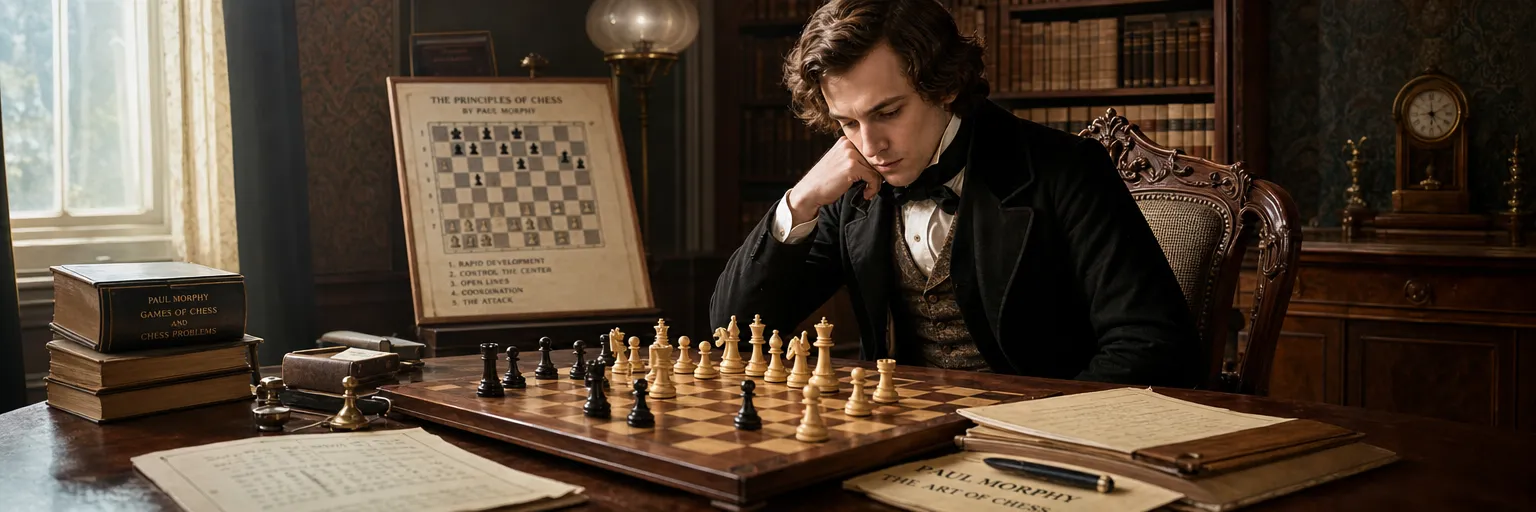
Studying Paul Morphy’s games remains a remarkably effective method for any player who wants to better understand the essential principles of the game. Even in the era of analysis engines, his encounters retain rare educational value, because they show with great clarity how to exploit a lag in development, open lines at the right moment, and turn an activity advantage into a decisive attack. To improve, it is therefore not enough to admire the genius of this 19th-century master: you must observe how his ideas can still enrich a modern approach to chess.
Develop your pieces quickly and harmoniously
One of the most consistent lessons in Morphy’s play concerns speed of mobilization. In his games, the minor pieces come out naturally, the rooks are connected early, and the king is brought to safety without unnecessary delay. This logic is a reminder of how much development is not a mere formality, but the foundation of any sound position. An amateur player often gains more by correcting their opening play than by memorizing long opening variations.
Morphy immediately punished opponents who multiplied pawn moves, brought the queen out too early, or engaged in decorative maneuvers. The lesson is simple: before looking for a brilliant combination, you must activate your forces. In chess, a well-placed piece is often worth more than a complicated plan that has been poorly prepared.
Seize the initiative before launching the attack
With Paul Morphy, the attack almost never appears by chance. It is first born from a lead in development, better control of the center, and superior piece activity. That is why his sacrifices seem so natural: they are not merely a matter of flair, but of sound positional logic. To improve, one must remember that tactics work all the better when the pieces are already ready to cooperate.
A good exercise is to replay his games while asking yourself a question inspired by Morphy: “Who sets the pace?” If the opponent is forced to respond to a series of threats, the initiative has already changed the nature of the position. This ability to play with tempo lies at the heart of the progress of many chess players.
Opening lines at the most favorable moment
Morphy’s combinations often rest on a fundamental principle: opening files, diagonals, and attacking lines when the opposing side is not ready. The idea is not to open up the game systematically, but to do so when it benefits the better-coordinated side. This idea remains crucial for understanding when to exchange, when to sacrifice a pawn, and when to speed up contact between the pieces.
From a learning perspective, his games show that a successful sacrifice is not merely “beautiful”: it serves to reveal a weakness, draw in the opposing king, or destabilize a defense that is already lagging behind. For lovers of tactics, Morphy is therefore an ideal model, because he always connects concrete calculation to a general logic that is easy to remember.
Playing simply when the position requires it
Paul Morphy is sometimes reduced to his dazzling attacks, even though he also excelled in the art of choosing the clearest moves. When a simple continuation was enough, he did not unnecessarily prolong the combination. This restraint is a valuable lesson for improving: in chess, the best move is not necessarily the most spectacular, but the one that preserves the advantage with the least risk.
Many improving players lose winning positions by chasing artificial beauty. Morphy, by contrast, knew how to convert methodically. Learning to simplify at the right moment, to trade into a favorable endgame, or to maintain constant pressure is among the most useful lessons his games still offer today.
Turning the study of Morphy into practical training
To gain real benefit from his games, it is advisable to study them actively rather than skim through them passively. You can first replay the game without comments, then note the moments when the lead in development, the initiative, or the opening of lines become decisive. Then, comparing your own ideas with those of the master helps refine your vision of the game.
Another method consists of selecting a few emblematic games and extracting recurring themes from them: rapid castling, central domination, piece coordination, attack against an unprotected king, conversion of a dynamic advantage. This approach transforms Paul Morphy’s legacy into a genuine tool for improving at chess, far beyond simple historical admiration.
Paul Morphy’s mysterious withdrawal from competition
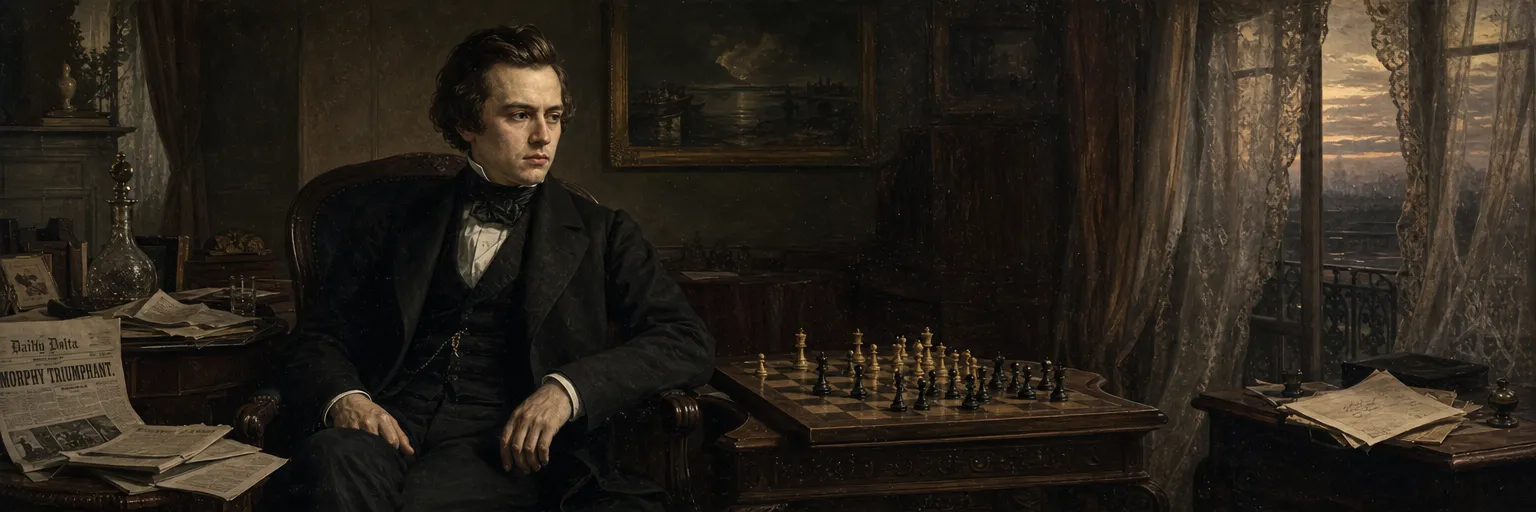
While he seemed to reign over the chess world without any real rival, Paul Morphy chose to step away from tournaments and official matches very early on. This decision, made at the height of his fame, continues to fuel debate around Paul Morphy and reinforces the singular aura of this 19th-century chess master.
A withdrawal as sudden as it was incomprehensible
After his triumphs in the United States and Europe, many expected Paul Morphy to build a long and dominant career. Yet he quickly turned away from serious competition. At a time when the status of a professional player remained ambiguous, he wanted above all to be recognized as a lawyer and a cultivated man, not simply as a chess champion. This personal desire partly explains his retirement, even if it is not enough to dispel the mystery entirely.
The weight of social and personal context
In the society of his time, making a living from chess offered neither the security nor the prestige that the field may have today. For a man from a privileged background like Paul Morphy, dedicating his life to the game could seem secondary, or even poorly aligned with his social ambitions. His return to New Orleans therefore also fits within a form of normalcy expected by those around him, even if that return was far from peaceful.
Between legend, isolation, and questions
The final chapter of Paul Morphy’s life has often been described through accounts blending admiration, sadness, and speculation. His gradual withdrawal from the chess world, his refusal to resume a real competitive career, and certain testimonies about his psychological state all helped shape the image of a genius withdrawn from the world. It is nevertheless important to distinguish established facts from romanticized reconstructions, so extensively was Morphy’s figure surrounded by sometimes excessive interpretations.
An absence that strengthened the myth
By leaving the scene so early, Paul Morphy left behind a fascinating sense of unfinished business. His premature retirement still fuels one of the central questions in chess history: how far could he have pushed his dominance if he had continued to play regularly? This voluntary withdrawal from major competitions paradoxically strengthened his legend, making him not only an exceptional champion, but also one of the most enigmatic figures in the game.
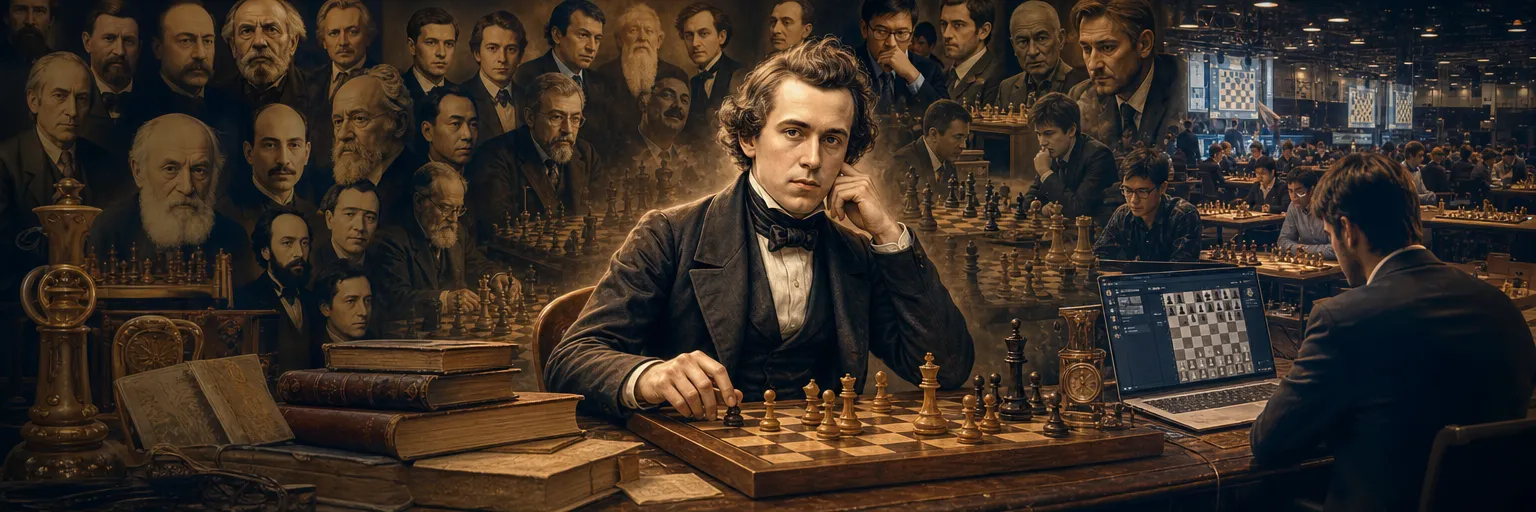
Paul Morphy today: influence, renown, and place in chess culture
More than a century after his death, the name Paul Morphy continues to circulate with rare force in the world of chess. His reputation rests not only on his results, but also on the enduring beauty of his games, often cited as models of coordination, rapid development, and direct attacks against the opposing king. In the age of analysis engines and databases, he remains a living reference point in chess history.
A figure still admired by players
In clubs, introductory books, and grandmaster anthologies alike, Paul Morphy holds a place of his own. His play still captivates because it seems clear without being simplistic: it shows how to turn a development advantage into a concrete initiative, and then into a decisive attack. For this reason, many consider him a forerunner of modern chess, capable of illustrating with remarkable clarity principles that are still taught today.
His renown also spans generations because his combinations remain spectacular and easy to remember. Where other champions impress above all with their strategic depth, Morphy fascinates with an almost instructional obviousness. His games are regularly studied to understand how piece activity can prevail over material accumulation, which has enduringly strengthened his prestige in chess culture.
A symbol of the romantic genius of chess
For many, Paul Morphy embodies the ideal of the prodigy who emerged very early, dominated his contemporaries, and then retired prematurely. This brief, brilliant, and partly enigmatic trajectory helped build his legend. In the collective imagination, he represents as much a champion as a myth: that of a dazzling talent whose mark outlasted the actual length of his career.
This image has strengthened his place in the memory of the game: Morphy is not only studied, he is told about. He appears in historical accounts, documentaries, biographies, and discussions among enthusiasts whenever the greatest names of the 19th century are mentioned. His renown therefore rests both on the technical excellence of his games and on the romantic dimension of his destiny.
An enduring presence in education and specialized media
Coaches and authors continue to rely on his games to teach the fundamentals. When it comes to explaining the importance of development, control of the center, opening lines, or punishing an unsafe king, Morphy provides particularly striking examples. His chess legacy thus remains a valuable tool for beginners and more advanced players alike.
In specialized online content, on YouTube, in analytical articles, or in courses intended for amateurs, his name comes up very often. This constant visibility sustains his influence and allows new audiences to discover his most famous games. Even when measured against today’s standards of top-level play, he retains exceptional appeal, because he makes strategic and tactical ideas immediately clear.
Paul Morphy’s place in the chess pantheon
Ranking Paul Morphy among the greatest players of all time depends on the criteria used, but he is almost always included in debates about the pioneers who changed the understanding of the game. He is often presented as one of the first champions to have expressed the universal principles of chess with such purity, long before their more systematic formalization by later generations.
Today, his place is that of a historical monument as much as an aesthetic model. He belongs to the select circle of figures whose games continue to be replayed not out of simple historical curiosity, but because they still speak to the contemporary player. In this sense, Paul Morphy remains far more than a memory of the past: he endures as an essential reference in the worldwide renown of chess and an indispensable name in chess culture.
Paul Morphy’s brilliant and aggressive playing style left its mark on an entire generation of players and laid the foundations for modern attacking chess. After him, another name would become essential in the history of the game by introducing a much more positional and scientific approach: Wilhelm Steinitz: the first world chess champion, considered the father of modern chess strategy.
If you enjoy discovering the greatest figures who revolutionized the world of chess, also explore our selection dedicated to the champions and legends of the game: Famous chess players: legends, champions, and modern stars.