 France
 English
 Deutsch
 Español
 Italiano
 Nederlands
 Polski
 Português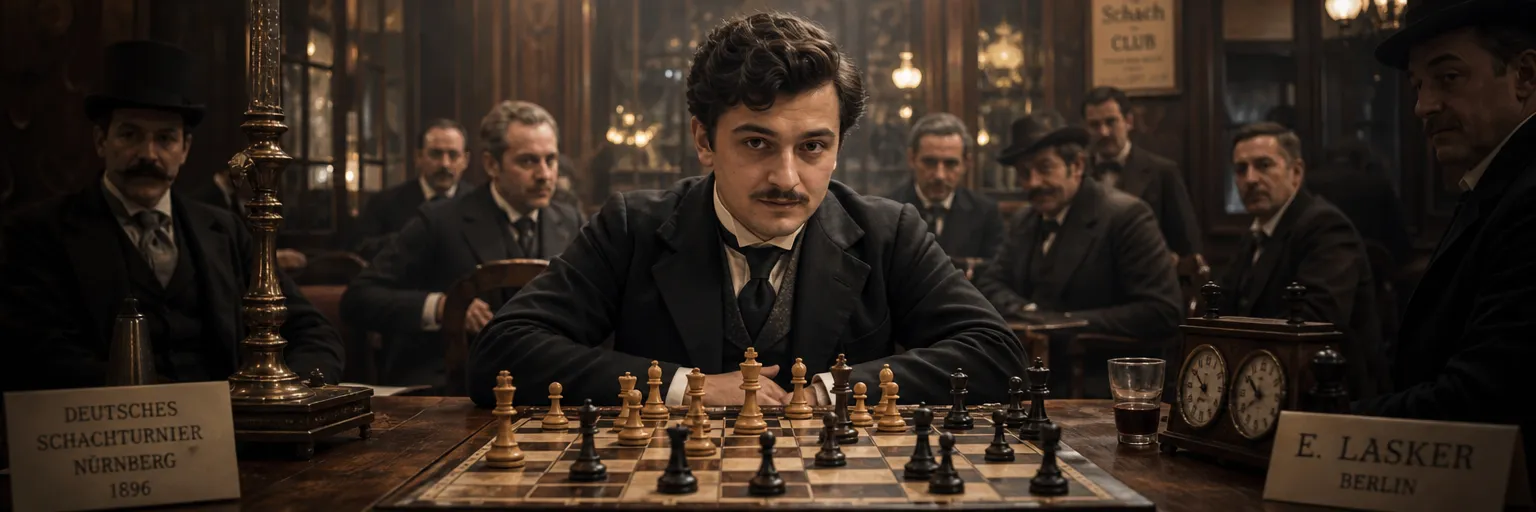
Emanuel Lasker’s early years and his rise in the world of chess
Emanuel Lasker was born on December 24, 1868, in Berlinchen, Prussia, into a modest Jewish family. From an early age, he stood out for his keen intelligence and remarkable analytical ability. It was through his older brother, Berthold Lasker, himself an excellent player, that he discovered chess. This first encounter with the game quickly revealed an exceptional talent, fueled by rare intellectual curiosity and a pronounced taste for strategy.
An education shaped by study and logic
Before becoming a key figure in international competition, Lasker followed a strong academic path. He studied mathematics and philosophy, two disciplines that deeply influenced the way he approached the chessboard. This dual background shaped a distinctive style, grounded as much in rigor as in a psychological understanding of the opponent. From his very first serious games, Emanuel Lasker showed that he was not content with simply seeking the best theoretical moves: he also sought to unsettle his rivals.
His first tournament successes
In the late 1880s, the young prodigy began to make a name for himself in German and then European chess circles. His performances in several tournaments reflected meteoric progress. In particular, he won important matches against established masters, allowing him to build his reputation quickly. His play, at once precise, combative, and unpredictable, impressed his contemporaries as much as it worried them. This period marked the beginning of the rise of a future world champion.
The conquest of the international summit
By racking up victories against top-level opponents, Lasker gradually established himself as the most serious contender for the highest title. His ambition, mental endurance, and deep understanding of positions gave him a decisive edge. When he faced Wilhelm Steinitz in 1894, he was already regarded as one of the most formidable players of his time. That crowning achievement ushered in one of the longest and most impressive periods of dominance in the history of chess.
A style already unique from his earliest years
What set Emanuel Lasker apart from the very beginning was his ability to adapt to all types of positions and all kinds of opponents. Where others relied primarily on theory, he often favored flexibility and practical efficiency. This innovative approach played a major role in his rapid rise in the chess world. Long before reigning for 27 years, Emanuel Lasker had already laid the foundations of his legend thanks to a deeply modern vision of the game.
How Emanuel Lasker won the world chess championship title
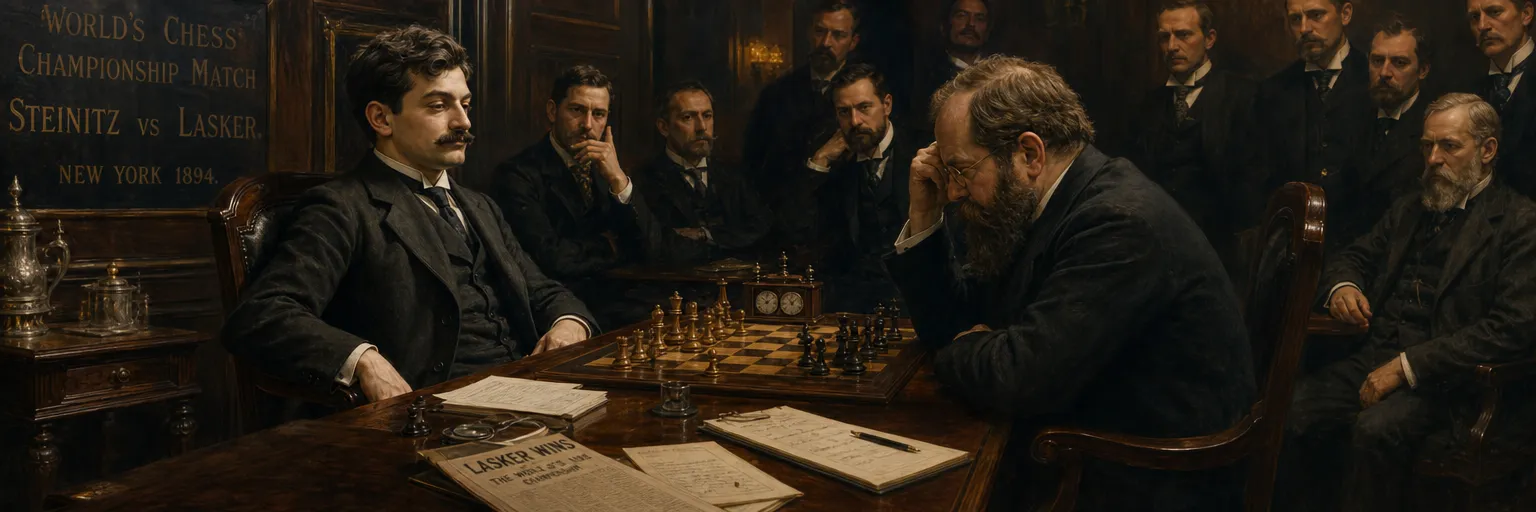
At the beginning of the 1890s, Emanuel Lasker established himself as one of the most feared players on the international circuit. After a string of convincing successes in tournaments and matches, he earned the right to face Wilhelm Steinitz, then the holder of the world title. This clash marked a major turning point in chess history, as it pitted the founder of the modern positional school against a younger, more pragmatic, and psychologically formidable competitor.
A steady rise before the title match
Before reaching the top, Lasker built his reputation through consistent performances against leading opponents. His style was already distinguished by a remarkable ability to adapt: he did not seek only the most aesthetic moves, but those that posed the most difficult problems to solve on the chessboard. This approach, both concrete and ambitious, quickly made him a serious candidate for the world chess championship.
His victories in several major encounters strengthened his legitimacy. At a time when the organization of the world championship depended largely on private negotiations, it was necessary not only to prove one’s sporting worth, but also to assemble the financial and logistical conditions required to challenge the reigning champion. Lasker succeeded in this double challenge, proof of his determination as much as of his talent.
The duel against Wilhelm Steinitz in 1894
The 1894 match against Wilhelm Steinitz was the decisive stage in his rise. Lasker demonstrated impressive superiority, notably through his composure, sense of timing, and efficiency in critical moments. Facing an experienced opponent and a major theorist of the game, he managed to impose a pace that suited him and exploited his opponent’s weaknesses with precision.
By winning this duel, Emanuel Lasker officially became world champion. This victory was not merely that of a talented player: it also symbolized the emergence of a new way of winning, less dogmatic and more flexible. Where Steinitz defended rigorous strategic principles, Lasker proved capable of adapting his play to each specific situation.
The keys to his victory
Several factors explain this success. First, his preparation was particularly solid for the time. Next, his psychological insight often made the difference: Lasker excelled in the art of steering his opponents into uncomfortable positions. Finally, his fighting spirit allowed him to turn small advantages into decisive wins, an essential quality at the highest level.
This conquest of the title already reveals what would define his greatness for decades: exceptional practical intelligence, outstanding resilience, and a deep understanding of competition. By becoming Emanuel Lasker, the new face of the world crown, he began a reign destined to last 27 years, a record that remains one of the most remarkable in chess history.
The driving forces behind an exceptional 27-year supremacy
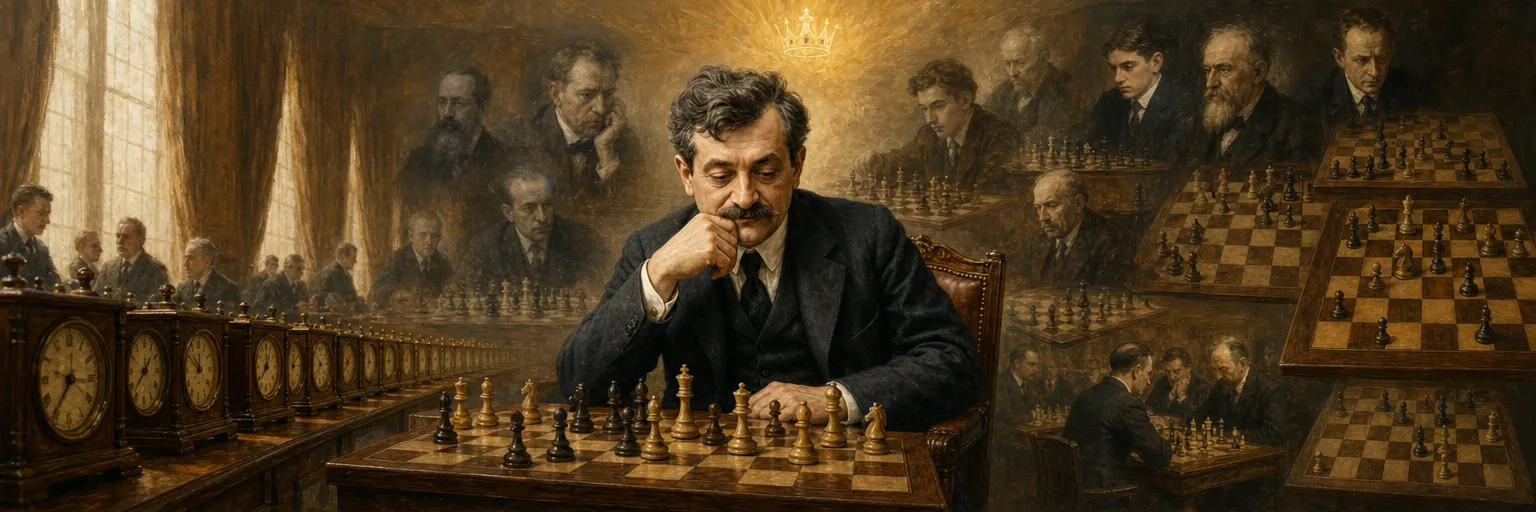
Rarely has a reign seemed as long and as rich as that of Emanuel Lasker. From 1894 to 1921, the world chess champion held on to his crown against several generations of challengers, at a time when theoretical preparation was progressing rapidly and every title match took on an almost historic dimension. This longevity did not rest on a single talent, but on a remarkable combination of practical intelligence, psychological strength, and adaptability.
An understanding of the game ahead of its time
Lasker did not merely apply classical principles: above all, he knew when to depart from them. His vision of the game allowed him to identify imbalanced positions, exploit invisible weaknesses, and turn neutral situations into favorable terrain. This highly personal approach largely explains why Emanuel Lasker was able to remain at the top for so long, even against opponents renowned for their opening knowledge.
Where others sought the most “correct” line, he often preferred the most effective decision against a specific player. This practical sense made him a formidable competitor, capable of going off the beaten path to lead his rival into uncomfortable positions. In this sense, his domination went beyond mere technical mastery: it revealed a deep understanding of the struggle in chess.
Extraordinary psychological strength
Lasker’s reputation was also built on his extraordinary mental resilience. In critical moments, he maintained rare clarity and often managed to turn around compromised games. This fighting spirit fed his legend and wore down his opponents over time, especially in long world championship matches, where mental endurance mattered just as much as the accuracy of the moves.
Many contemporaries highlighted his ability to choose unsettling continuations, not only strategically but also psychologically. He excelled in the art of posing difficult problems, sometimes more human than purely theoretical. This way of playing, very modern in spirit, allowed him to push his opponents into mistakes and maintain a lasting competitive edge.
Constant adaptation to styles and eras
Staying at the highest level for 27 years means surviving the evolution of the game. Lasker managed this because he never remained static. He faced players with very different profiles, from brilliant tacticians to methodical strategists, and constantly adjusted his approach. His career thus demonstrates exceptional flexibility, an essential quality for any chess master aspiring to endure.
This ability to adapt can also be seen in his relationship with theory. Without being a dogmatic theorist, he absorbed useful innovations and refused to be confined by them. His reign therefore stood at the crossroads of two forces: a solid positional foundation and great creative freedom. It is precisely this balance that explains the strength of Emanuel Lasker’s reign.
Decisive matches that strengthened his legend
Lasker’s longevity cannot be separated from his performances against the best players of his time. His victories in the great title clashes confirmed his superiority and strengthened his aura. Each successful title defense added new proof of his exceptional status in chess history.
Over the years, his name became synonymous with stability at the top. Even as the competition grew tougher, he remained the absolute benchmark, the man who had to be beaten to enter posterity. While other champions marked their era with brilliance, few imposed such continuity. That is why Lasker’s dominance remains one of the most impressive ever seen in modern intellectual sport.
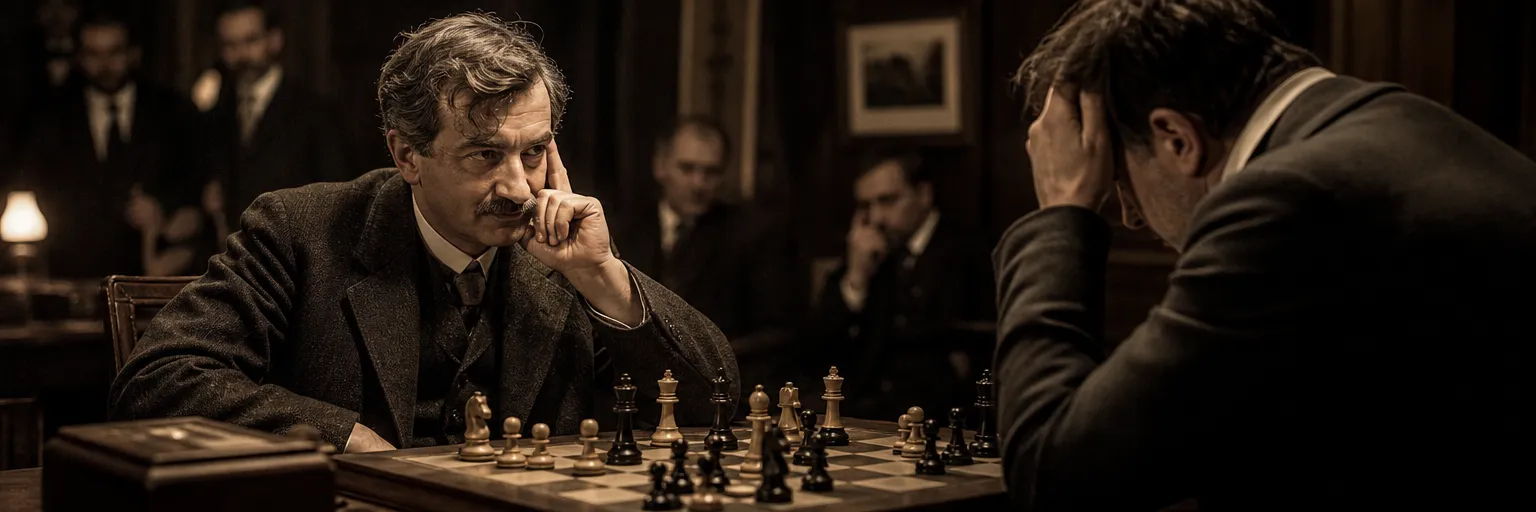
Emanuel Lasker’s playing style between strategy psychology and pragmatism
For Lasker, strength did not lie only in the precision of his moves, but in an overall understanding of the struggle on the chessboard. His approach stands in contrast to the image of a player bound to fixed principles : above all, he sought the most effective solution against the opponent in front of him. This flexibility shaped Emanuel Lasker’s playing style and largely explains why he was able to remain at the top for so long.
A strategy based on adaptation
Lasker was not a dogmatist. Where other champions sought to impose a system, he readily accepted unbalanced, complex, or even slightly inferior positions if they offered practical chances. This ability to turn ordinary situations into favorable battlegrounds made him a master of pragmatism in chess. He understood that a good position has value only if it can be exploited concretely against a real player, with his strengths and weaknesses.
This philosophy allowed him to vary his plans, reject automatism, and surprise opponents who were often better prepared in theoretical terms. In many games, he favored resilience, tension, and flexibility over the immediate pursuit of an aesthetic advantage.
Psychology as a competitive weapon
What also sets Lasker apart is the importance of psychology in chess in his way of playing. He carefully observed the temperament of his rivals and sometimes steered the game toward structures they liked less or handled poorly. His objective was not only to find the best move in the abstract sense, but to pose the most unpleasant problems possible.
This psychological dimension often helped build his legend. Some critics reproached him for straying from classical canons, but that reading is reductive. In reality, Lasker understood before many others that a high-level chess game is also a mental duel, where pressure, doubt, and fatigue directly influence the quality of decisions.
Superior practical sense in complicated positions
One of the German champion’s great strengths lay in his handling of critical moments. In unclear positions, he excelled at preserving hidden resources, complicating matters at the right moment, and prolonging the struggle until he provoked an error. This Emanuel Lasker’s practical sense made him an extremely difficult opponent to finish off, even when the position seemed less favorable for him.
His play thus showed a remarkable ability to prioritize what mattered most : king safety, piece coordination, dynamic potential, and genuine counterplay chances. This concrete reading of the position allowed him to avoid overly rigid judgments and remain dangerous in almost any context.
A legacy between classicism and modernity
Lasker’s genius also lies in the fact that he stood at the crossroads of several eras. He inherited classical principles, yet foreshadowed a more modern vision, centered on the relativity of evaluations and the importance of context. In this respect, Emanuel Lasker appears as a forerunner of many 20th-century champions, capable of blending calculation, strategy, and psychological intuition.
His style was neither purely positional nor solely tactical. It rested on a subtle balance between strategic logic, human understanding, and competitive effectiveness. It is precisely this combination that continues to fascinate historians and enthusiasts alike, giving his body of work a singular depth in the history of chess.
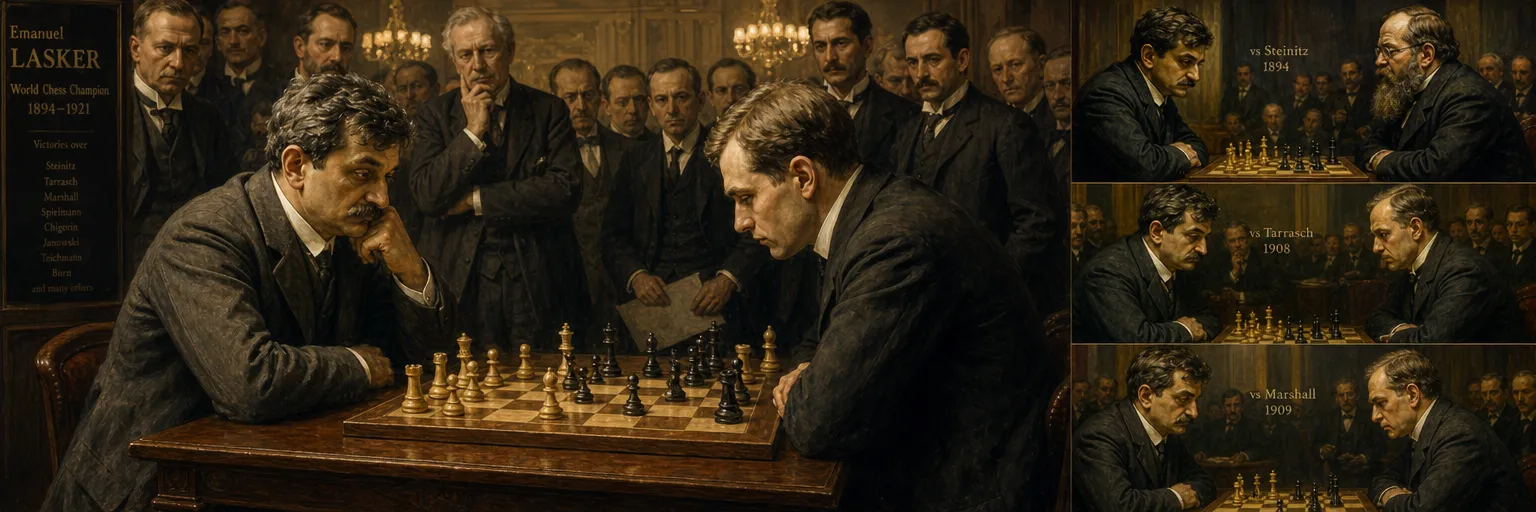
The most significant clashes of Emanuel Lasker’s career
More than a mere accumulation of victories, Emanuel Lasker’s career is best understood through a series of duels that became legendary. Each major match reveals a different facet of the German master : his technical solidity, his sense of adaptation, his composure, and his ability to unsettle the biggest names in world chess.
The defining duel against Wilhelm Steinitz
Among the decisive encounters of his career, the one against Wilhelm Steinitz holds a central place. In 1894, Lasker faced the first official World Chess Champion and defeated him convincingly. This success was not merely a change of reign : it marked the arrival of a player capable of going beyond classical patterns and prevailing in moments of extreme pressure. The rematch of 1896-1897 also confirmed the gap between the two men and firmly established Lasker at the top.
Frank Marshall and the confirmation of his superiority
In 1907, against Frank Marshall, Emanuel Lasker demonstrated the full extent of his mastery in a one-sided match. The American challenger, though renowned for his attacking play and creativity, never truly managed to unsettle the titleholder. This confrontation illustrates Lasker’s ability to neutralize aggressive styles before gaining the upper hand, a major trait of his long domination in the history of the game of chess.
The strategic clash against Siegbert Tarrasch
The 1908 match against Siegbert Tarrasch goes beyond the realm of sport. It pits two visions of the game, two personalities, and two concepts of intellectual superiority on the chessboard against each other. Tarrasch, a towering theoretician, presents himself as a natural rival. Yet Lasker manages to defeat him by exploiting both the positions and the psychological dynamics of the face-off. This duel remains one of the most commented-on in Emanuel Lasker’s career, as it symbolizes both his competitive intelligence and his status as a master of chess.
Carl Schlechter and the scare of 1910
The world championship contested against Carl Schlechter in 1910 was one of the most tense clashes of his reign. Lasker found himself in great difficulty against an opponent of remarkable precision. For a long time, the title seemed as though it might slip away from him. But in a famous surge, he managed to come back and save his crown in the final game. This extreme resilience further strengthened his reputation as an extraordinary fighter and shows why Emanuel Lasker remains a key figure in the history of world champions.
José Raúl Capablanca, the end of a historic reign
In 1921, the confrontation with José Raúl Capablanca marked a turning point. Younger, brilliant, and with exceptional technical clarity, the Cuban embodied the new generation. After twenty-seven years of reign, Lasker was unable to reverse the trend and ultimately surrendered his title. Even in defeat, this match remains significant, because it brought to a close one of the longest periods of dominance ever seen among grandmasters. It also reminds us that Lasker’s legacy is not measured solely by his titles, but by the quality of the opponents he faced throughout his career.
Rivalries that shaped his legend
Steinitz, Tarrasch, Marshall, Schlechter, or Capablanca : each of these names sheds light on a key moment in Lasker’s journey. Together, these encounters explain why his reign continues to fascinate chess history enthusiasts. They show a player capable of winning in multiple ways, absorbing pressure, and reinventing himself against the very best. It is precisely in these great duels that the enduring legend of Emanuel Lasker was forged.
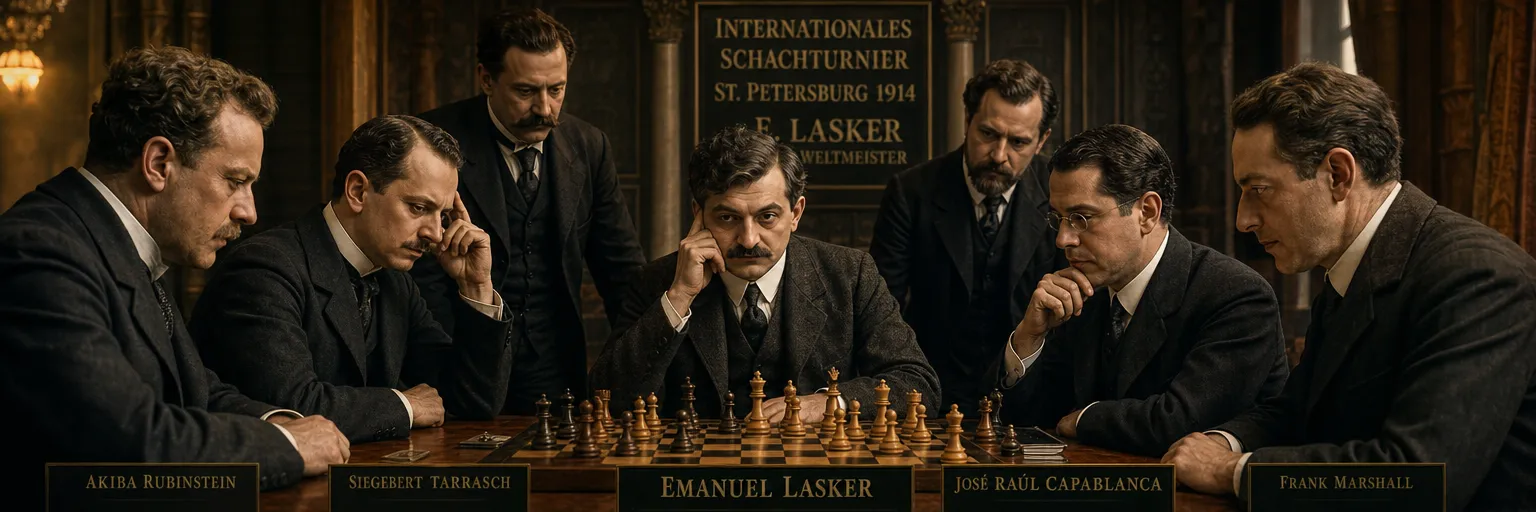
Emanuel Lasker’s main opponents on the chessboard
Every reign of such length is measured by the quality of the opposition faced, and Emanuel Lasker’s was no exception. Over nearly three decades, the German champion had to contend with several generations of masters, from the leading figures of the late 19th century to representatives of the hypermodern school. This diversity of opponents shows just how much his dominance was built against the absolute elite of world chess.
Wilhelm Steinitz, the dethroned champion
Lasker’s first great rival was naturally Wilhelm Steinitz, the first official world champion in history. In 1894, their match marked a major turning point: Lasker prevailed and ushered in a new era. Steinitz was then an essential theoretical benchmark, with a deeply innovative positional style. By defeating him, Emanuel Lasker did more than merely take a title; he demonstrated that he could surpass the man who had redefined the modern foundations of the game.
The rematch of 1896-1897 confirmed this ascendancy. Against an aging yet still feared opponent, Lasker imposed his strategic and psychological mastery. This duel with Steinitz remains essential to understanding the beginning of the Lasker dynasty.
Siegbert Tarrasch, a rivalry of chess philosophies
Among the most famous challengers was also Siegbert Tarrasch, often presented as one of the most brilliant players of his time. Between the two men, the rivalry went beyond the simple sporting framework: it pitted two visions of the game against each other. Tarrasch defended strict, almost doctrinal principles, while Lasker favored adaptation, flexibility, and practical effectiveness.
Their 1908 match is particularly revealing. Lasker dominated an opponent who was nevertheless regarded as a legitimate contender for the top. This confrontation left a lasting mark on chess history, as it set Tarrasch’s classical rigor against the sometimes disconcerting pragmatism of the titleholder.
Frank Marshall and David Janowski, explosive attackers
Frank Marshall and David Janowski were also among Emanuel Lasker’s major opponents. Both were renowned for their attacking spirit and their ability to create sharp positions. Marshall, in particular, embodied the tradition of spectacular attacking play, capable of turning a game around through initiative and tactical combinations.
Yet in their 1907 title match, Lasker neutralized that aggression with remarkable composure. As for Janowski, he faced Lasker several times, notably in the 1909 match and then again in 1910. Once again, the world champion showcased his experience, defensive solidity, and keen sense for his opponents’ weaknesses. These victories show that even the most dangerous players in tactical chaos struggled to unsettle his superiority.
Carl Schlechter, the rival who came closest to the feat
Carl Schlechter holds a special place among Lasker’s challengers. Less flamboyant than some of his contemporaries, he stood out for his exceptional technical precision and great positional mastery. Their 1910 match remains one of the most debated episodes in chess history.
Schlechter indeed came very close to toppling Lasker. At the end of an extremely tight duel, the champion managed to save his title under circumstances that have become famous. More than any other, this encounter illustrates Lasker’s occasional vulnerability against a methodical, calm player of tremendous accuracy.
José Raúl Capablanca, the expected heir
With José Raúl Capablanca, Lasker faced a new kind of opponent. The Cuban impressed with his natural ease, technical purity, and apparent lack of effort at the chessboard. As early as the 1910s, many saw him as the future master of world chess.
Their rivalry symbolized the passing of one generation to the next. After long negotiations and several missed opportunities, the title match finally took place in 1921. This time, Lasker surrendered his crown to Capablanca, bringing a 27-year reign to an end. Even in defeat, the German’s stature remained immense: losing to such a prodigy in no way diminishes the scale of his career as world champion.
Akiba Rubinstein and the other threats of the early 20th century
Other names also deserve mention among Emanuel Lasker’s main rivals, starting with Akiba Rubinstein. Considered one of the greatest players never to have won the world title, Rubinstein represented a serious threat before the First World War. His understanding of endgames, his sense of piece coordination, and his strategic rigor made him a credible rival, even if a title match against Lasker never came to fruition.
Through Steinitz, Tarrasch, Marshall, Janowski, Schlechter, Rubinstein, and Capablanca, we can appreciate the exceptional depth of competition Lasker survived. That is also what makes his reign so unique in chess history: he withstood not just one great rival, but a continuous succession of top-tier challengers.
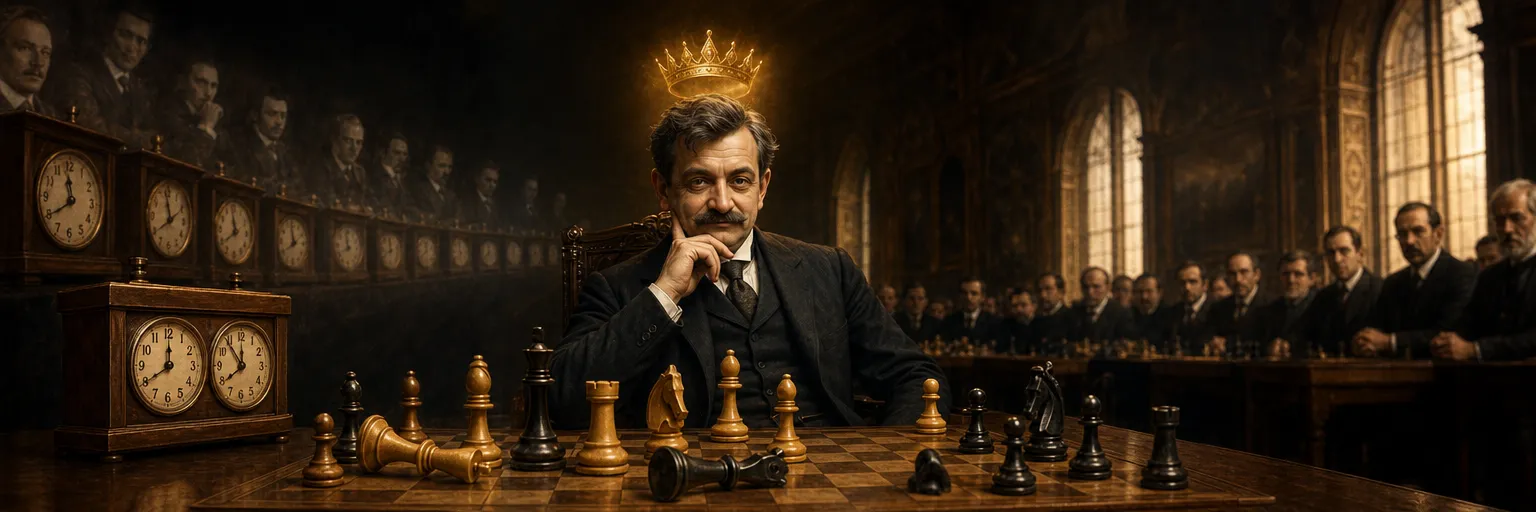
Why Emanuel Lasker transformed the history of the world championship
With Emanuel Lasker, the world title reached a whole new level. His reign cannot be summed up simply by its exceptional length : it redefined what it meant to be world chess champion, establishing a sporting, intellectual, and symbolic authority that left a lasting mark on the history of the game. Through his title defenses, longevity, and theoretical influence, Lasker helped make the world championship a central benchmark in the world of chess.
A reign that set a new standard
By keeping the crown for 27 years, Lasker set a standard that was almost impossible to reach. Before him, the highest title already existed, but it had not yet acquired the institutional aura it gained under his influence. His consistency against the greatest masters of his time gave the world title incomparable legitimacy. From then on, maintaining lasting dominance over the elite became the essential criterion for embodying the true number one.
A more modern vision of the champion
Lasker did not only transform the sporting hierarchy : he also changed the very image of the crown holder. A philosopher, mathematician, and formidable competitor, he embodied a complete figure, far beyond that of a simple tactician. This stature enhanced the prestige of the world champion, seen not only as the best player, but as a personality capable of advancing the understanding of chess in all its dimensions.
Matches that strengthened the prestige of the title
The matches Lasker played against Steinitz, Marshall, Tarrasch, Schlechter, and Janowski gave major battles for the crown new visibility. Each title defense reinforced the idea that the World Chess Championship represented the ultimate test. Even when negotiations surrounding the matches remained complex, the attention generated by these confrontations helped firmly establish the world championship as the pinnacle of the discipline.
A lasting legacy in chess history
Lasker’s influence extended far beyond his own era. His reign became a benchmark for all his successors, from Capablanca to Kasparov. By showing that a champion could endure, adapt, and continue to win despite changing styles, he opened a new era in the history of chess. In this sense, Emanuel Lasker transformed the history of the world championship : he made it a lasting, demanding, and universally recognized pinnacle.
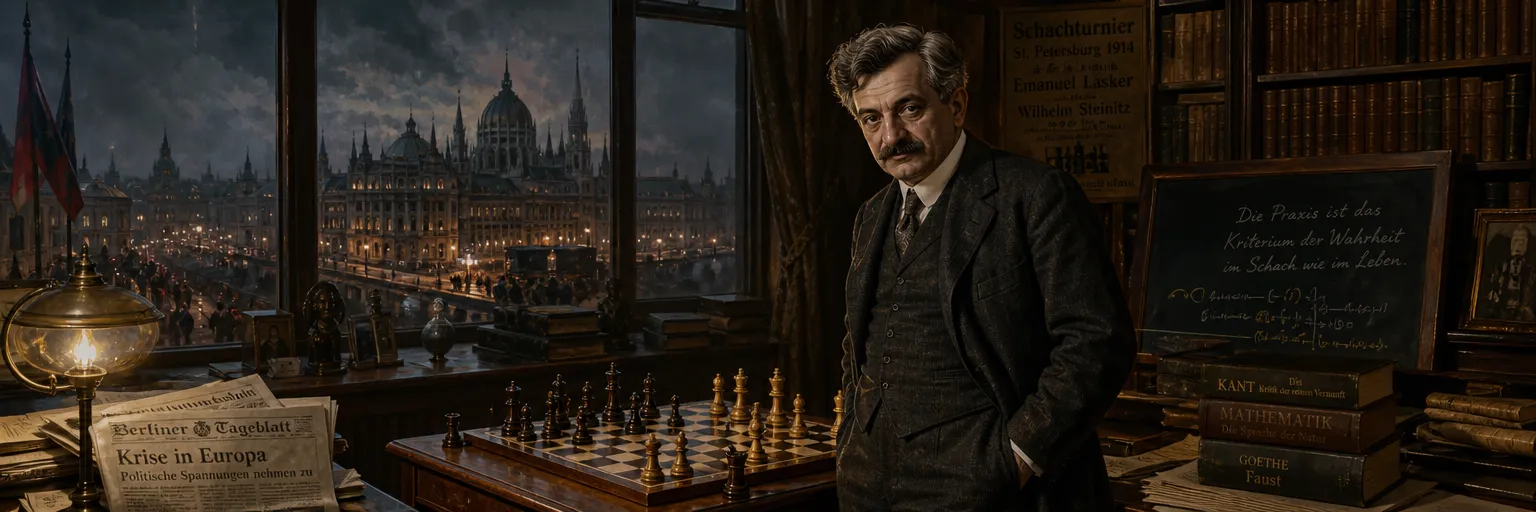
Emanuel Lasker in the face of the political and cultural upheavals of his time
It is impossible to separate Emanuel Lasker’s trajectory from the unstable world in which he lived. His path unfolded between the end of the 19th century, European national tensions, the First World War, the rise of antisemitism, and the profound intellectual transformations of the early 20th century. In this crisis-ridden environment, the German champion was not merely a master of the sixty-four squares: he also embodied the figure of a cosmopolitan intellectual, forced to adapt his life and career to often brutal historical circumstances.
A champion at the heart of a changing Europe
In Lasker’s time, chess was played in a Europe where rivalries between powers were intensifying. The great international tournaments reflected a cultural space that was still open, where players, ideas, and innovations circulated. Emanuel Lasker took full advantage of this dynamic: he traveled, faced the continent’s best masters, and built his reputation in several intellectual capitals. But this mobility, essential to the career of a world chess champion, became more fragile as political tensions worsened.
His identity as a German Jew adds a particular dimension to his destiny. In a Europe where nationalism was gaining ground, Lasker belonged to a generation of intellectuals for whom culture transcended borders, even as societies were gradually closing in on themselves. This situation sheds light on part of his singularity: his chess, philosophical, and mathematical work belongs to a world that was still international, but already threatened by ideological divisions.
War and its repercussions on his career
When the First World War broke out, the world of competition was profoundly disrupted. Travel became difficult, international encounters grew rarer, and exchanges between masters were disturbed. For Emanuel Lasker, this period did not merely mean a sporting slowdown: it permanently altered the conditions for competing at the highest level. The prestige of the title remained intact, but the context had changed, and with it the very economics of professional play.
This historical rupture helps explain why the end of Lasker’s reign came at a turning point. In 1921, when he yielded his title to Capablanca, the chess world entered a new era. The transition was not only generational: it also accompanied a broader upheaval, that of a continent transformed by war, the collapse of certain old certainties, and the emergence of new cultural powers.
An intellectual beyond the chessboard
Reducing Lasker to his results alone would mean overlooking a personality of remarkable richness. He was interested in mathematics, philosophy, and the analysis of human behavior, which shaped his view of the game as a confrontation between minds. This dimension partly explains why Emanuel Lasker holds such a singular place in the history of chess: he belongs to that tradition of thinkers for whom the chessboard is also a laboratory of ideas.
His era still valued the figure of the versatile scholar, capable of moving between several disciplines. In this respect, Lasker reflects a very particular cultural moment, when the boundaries between sporting practice, theoretical research, and philosophical reflection remained porous. His legacy therefore goes far beyond the question of titles alone: it bears witness to an ambitious and deeply modern conception of intellectual activity.
Exile and the end of a world
The 1930s considerably darkened Lasker’s situation. The rise of Nazism and the persecution of Jews in Germany made his continued presence in Europe increasingly precarious. Like many Jewish intellectuals of his time, he was forced to leave a cultural sphere to which he had nevertheless contributed greatly. This exile gives his biography a broader historical significance: that of a grandmaster caught up in the political violence of the century.
The end of his life, marked by displacement and uncertainty, contrasts with the image of the sovereign of the chessboard that he had embodied for decades. Yet this ordeal also highlights the depth of his legacy. Lasker remains one of the major symbols of the meeting point between chess history, European culture, and the tragedies of the 20th century. His journey is a reminder that champions never live outside their time: they also bear its tensions, hopes, and fractures.
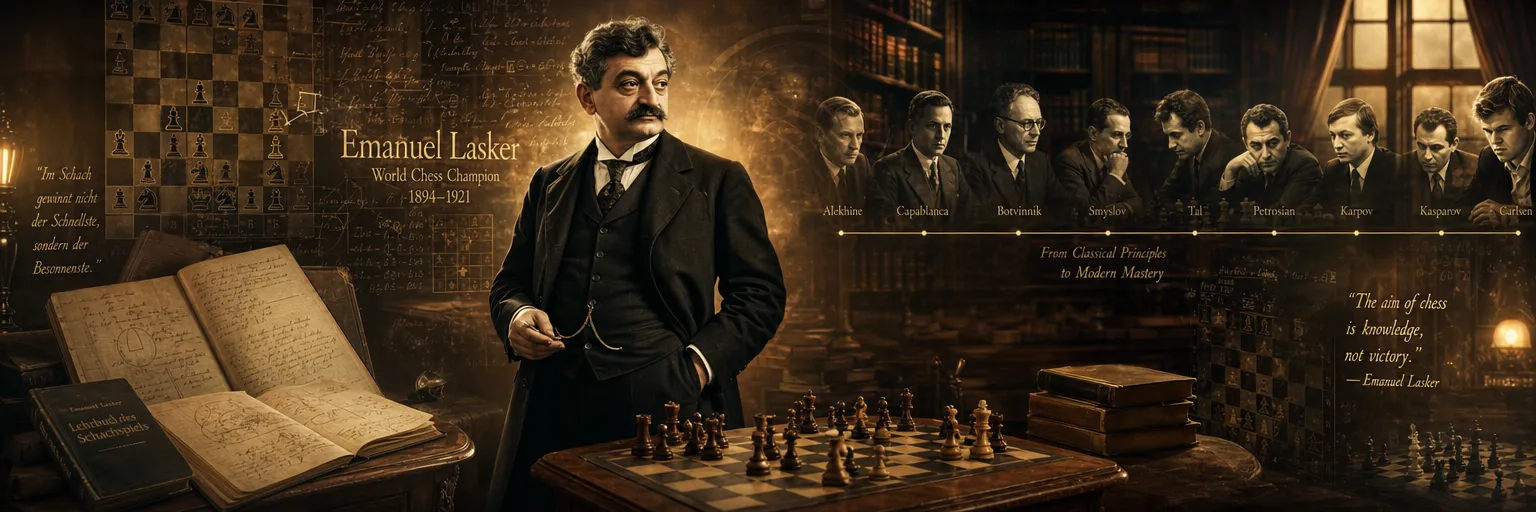
Emanuel Lasker’s legacy in the evolution of modern chess
Far beyond his record of achievements, Emanuel Lasker left a lasting mark on the way chess is understood, played, and taught. His influence can be seen both in the preparation of grandmasters and in the modern vision of chess struggle, where technique, adaptability, and the human dimension matter just as much as pure theory.
A philosophy of the game focused on adaptation
Lasker helped shape the evolution of modern chesstoward a less rigid and more concrete approach. At a time when many were seeking absolute principles, he showed that a position should first be judged according to its context, the forces at play, and the profile of the opponent. This intellectual flexibility heralds an essential part of contemporary chess strategy, based on dynamic evaluation rather than immutable formulas.
Psychology as a central dimension
One of Lasker's major contributions lies in the importance he attached to psychology. He did not play only against positions, but against players, with their habits, preferences, and weaknesses. This reading of the balance of power profoundly shaped the history of chess, because it paved the way for a more complete conception of top-level competition. Even today, managing stress, tempo, and practical choices echoes the deep intuition of the German world chess champion.
A bridge between the classical schools and modernity
Through his style, Lasker occupies a pivotal place between the classical masters of the 19th century and the more modern thinkers of positional play. He rejected neither attack nor defense, neither strategic logic nor practical opportunism. This ability to combine several registers influenced many players after him, from Capablanca to Botvinnik, including the generations that shaped the World Chess Championship in the 20th century.
A lasting legacy in study and competition
Lasker's games continue to be studied for their instructive richness. They show how to convert small advantages, hold difficult positions, or complicate a situation at exactly the right moment. This legacy remains invaluable for understanding what mastery in chess really means: not merely finding the best moves in theory, but making the best decisions under real conditions. This is why Emanuel Lasker's legacy remains alive in today's chess culture.
What today's players can learn from Emanuel Lasker
For modern competitors, Lasker's example remains strikingly relevant. His career is a reminder that in chess, superiority comes not only from theory or raw calculation, but from the ability to choose the right plan, at the right time, against the right opponent. This lesson speaks as much to ambitious amateurs as to professionals engaged in modern chess.
Adapting rather than repeating
One of Lasker’s great strengths was his refusal to play mechanically. He knew how to adjust his approach according to his opponent’s style, the dynamics of the match, and the concrete demands of the position. Today’s players can see in this an essential rule: knowing opening patterns is useful, but knowing how to break out of a predictable framework is just as important. In a world where computer preparation is everywhere, this flexibility remains a decisive weapon.
Understanding the psychological dimension
Lasker showed that every game is also a human duel. He observed his rivals’ preferences, hesitations, and areas of discomfort in order to push them toward difficult decisions. Without falling into caricature, today’s players can take away that a game is also won through the management of stress, tempo, and confidence. This attention to psychology in chess remains crucial in tournament play, especially when the technical level of the opponents is very close.
Prioritizing efficiency over aesthetics
Contrary to a romantic view of the game, Lasker sought above all the most useful move, not necessarily the most spectacular one. He embraced complex positions, stubborn defenses, and unpleasant endgames if they increased his practical chances. This form of pragmatism is a valuable lesson: to improve, you must learn to score points in imperfect positions rather than wait for an ideal game. This is a major hallmark of Emanuel Lasker’s playing style.
Developing an overall vision of the game
For Lasker, the opening, middlegame, and endgame formed a coherent whole. He did not separate tactics from strategy, nor technique from competitive instinct. Contemporary players would do well to follow this path by working as much on understanding structures as on calculation, and as much on endgames as on typical plans. This complete approach partly explains why Emanuel Lasker’s legacy remains so vibrant.
Building competitive longevity
Finally, Lasker teaches that a great career is built over time. His exceptional reign is not explained by a brief peak, but by an ability to evolve, to question himself, and to remain dangerous against several generations of opponents. For today’s players, true improvement therefore does not consist only in gaining strength quickly, but in building a sustainable, clear-headed, and adaptable working method.
With a 27-year reign at the top of the chess world, Emanuel Lasker left a lasting mark on history through his strategic brilliance and his ability to adapt against the best players of his era. Several decades later, another champion would assert his dominance with an explosive style and formidable preparation: Garry Kasparov: biography, achievements, and legendary games, considered by many to be one of the greatest players of all time.
Also explore our complete collection dedicated to the masters and champions who shaped the world of modern and classical chess: Famous chess players: legends, champions, and modern stars.