 France
 English
 Deutsch
 Español
 Italiano
 Nederlands
 Polski
 Português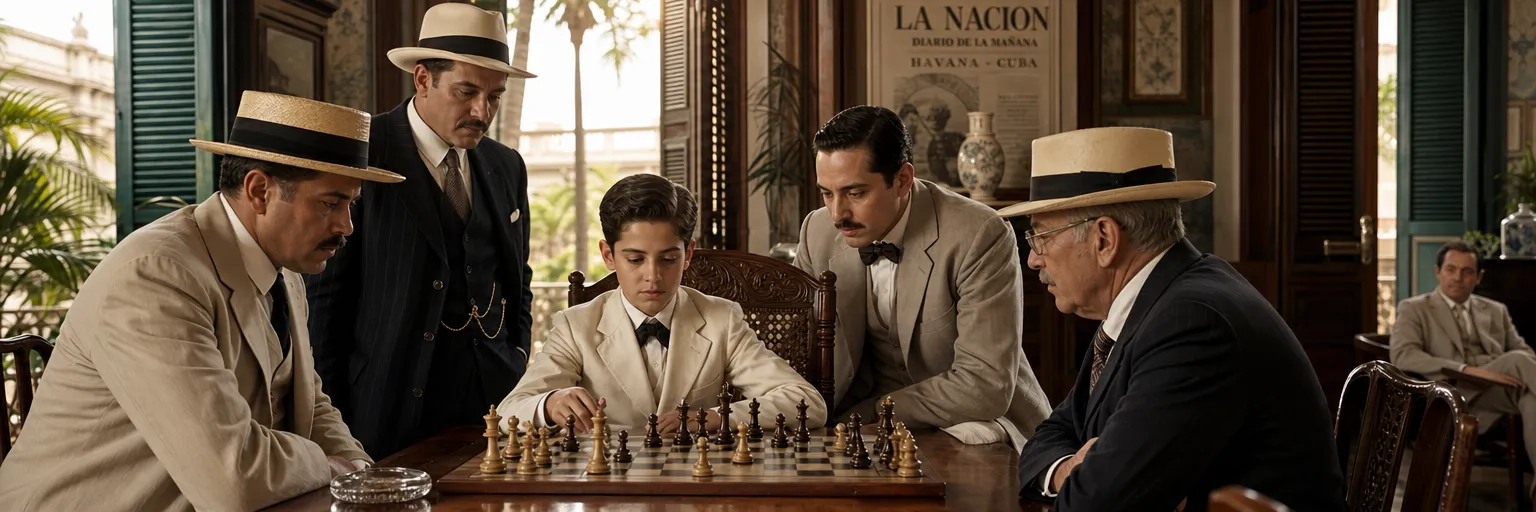
The beginnings of José Raúl Capablanca in Cuba
Born in Havana on November 19, 1888, José Raúl Capablanca grew up in a cultured and privileged environment that nurtured the early emergence of his talent. His father, an officer in the Spanish army, introduced him to chess while he was still just a child. Legend has it that the future champion learned the rules simply by watching games, before correcting a mistaken move made by his father. This episode already illustrates the exceptional precocity of the man who would become one of the greatest names in the history of the game.
A talent revealed from childhood
In Cuba, the young Capablanca quickly stood out for his instinctive understanding of the game. Where other children memorized moves, he seemed to naturally grasp the logic of positions, the activity of the pieces, and the importance of tempo. This remarkable ease allowed him to compete at a very early age with far more experienced players. His style, already fluid and precise, foreshadowed what would later become his worldwide reputation: an apparent simplicity that concealed a profound strategic mastery.
The Cuban setting and the birth of a prodigy
At the end of the 19th century, Havana held an important place in the chess culture of the Caribbean. The city’s circles and clubs offered the young prodigy an ideal setting in which to test himself against serious opposition. It was notably at the Havana Chess Club that José Raúl Capablanca refined his game and developed his confidence. In this context, the future master benefited from a stimulating environment where chess was both an intellectual pastime and a true social marker.
The first notable performances
At a very young age, Capablanca faced renowned opponents in Cuba and impressed them with his composure. His rise took a decisive turn when he defeated the Cuban champion Juan Corzo in a match in 1901, when he was only thirteen years old. This early victory made José Raúl Capablanca a rising figure in the game in his country. Above all, it confirmed that he was not simply a gifted child, but a competitor already capable of dominating established players.
A solid foundation before the international stage
The years spent in Cuba were essential in Capablanca’s development. They shaped his sense of observation, his endgame technique, and his taste for clear positions, all elements that would become his signature. Long before conquering the world, the future world champion thus built the foundations of his legend in Havana. His Cuban beginnings show how natural talent, supported by a favorable environment, can give birth to a lasting genius of chess.
A child prodigy passionate about chess
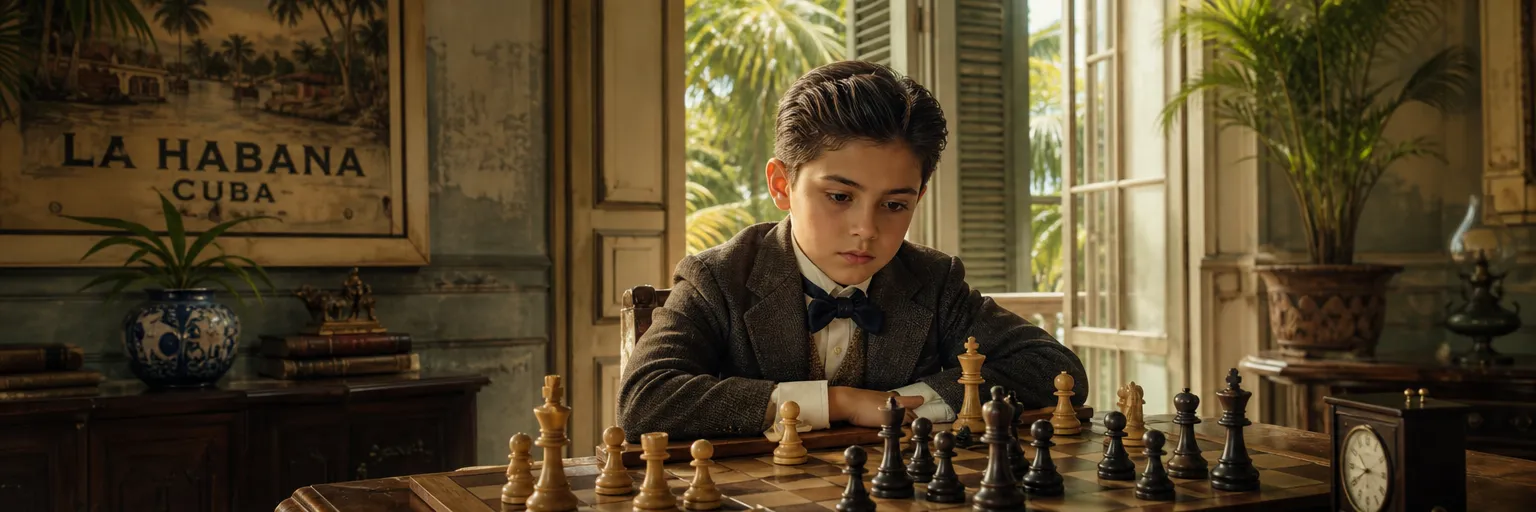
From his earliest years, José Raúl Capablanca fascinated those around him with an exceptional ease at the chessboard. Without rigorous academic training at first, he absorbed the rules, watched adults play, and instinctively understood the mechanisms of the game. This rare precocity quickly made him a true phenomenon, often cited as a child prodigy in chess history.
A talent revealed very early
Legend has it that he learned to play by watching his father play a game, even before mastering all the principles taught to beginners. At a very young age, he spotted mistakes, memorized positions, and developed a natural understanding of strategy. This extraordinary sense of observation fueled his reputation as a young chess prodigy, capable of competing with far more experienced players.
A passion fueled by instinct and practice
For Capablanca, his passion for the game was far more than a simple pastime. He took pleasure in analyzing, anticipating, and simplifying positions with an elegance that was already remarkable. This almost intuitive relationship with the chessboard partly explains why the Cuban chess genius so quickly established himself as a figure apart. His style of play, fluid and precise, already hinted at the future champion he would become.
Qualities that foretold an extraordinary destiny
What also set the young Capablanca apart was his composure, his speed of understanding, and his natural confidence in the face of adversity. Where others learned through accumulating variations, he seemed to grasp the very essence of the game. This early maturity helped shape the image of an exceptional talent, destined for a brilliant future in the world of international competition.
The meteoric rise of an extraordinary talent
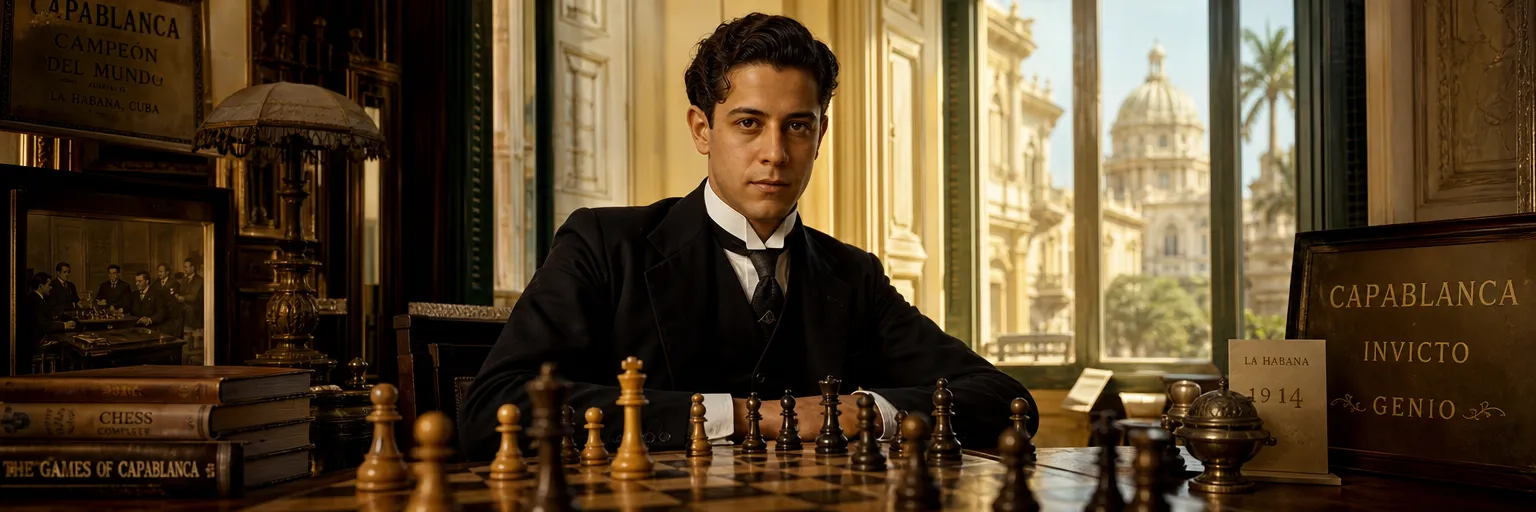
Hardly into his teenage years, José Raúl Capablanca was already impressing the best players of his time with a rare, almost instinctive mastery of the game. His progress did not follow an ordinary pace : it seemed to accelerate with every tournament, driven by a crystal-clear understanding of positions, remarkable technical precision, and a cool-headedness that unsettled even his most experienced opponents.
Early successes against the elite
Very early on, the future Cuban champion tested himself against renowned masters and achieved results that drew the attention of the entire world. His victory over Juan Corzo, then champion of Cuba, marked a decisive turning point in his path. This triumph confirmed that José Raúl Capablanca was not merely a promising young talent, but already a competitor capable of challenging the international benchmarks of the game of chess.
During his first appearances on the world stage, he impressed as much with his efficiency as with the apparent simplicity of his style. Where others sought complications, he favored clear plans, precise endgames, and an exceptional sense of piece coordination. This approach helped forge his reputation as a natural chess genius.
A clear style and formidably effective
What set Capablanca apart was his ability to make the difficult seem almost obvious. His play was based on deep logic, rapid reading of positions, and a rare ability to exploit the slightest weakness in his opponent’s game. This strategic sobriety, combined with impeccable technique, made him a singular figure in the history of the World Chess Championship.
Many observers highlighted his unique talent for endgames, an area in which he excelled with an ease that was almost instructional. This technical superiority reinforced the image of a complete player, capable of dominating without spectacular effects, solely through the accuracy of his decisions. It was this mastery that firmly established Capablanca among the greatest names in the game of chess.
International recognition before the summit
As his performances multiplied, his fame spread far beyond the borders of Cuba. His results in the major international tournaments gradually imposed the idea that a new master was redefining the standards of excellence. Even before conquering the ultimate crown, José Raúl Capablanca already appeared as a natural contender for the world title.
His meteoric rise rested as much on his victories as on the lasting impression he left on his contemporaries. Few players have so early given the impression of such clear superiority. In just a few years, the Cuban prodigy went from the status of revelation to that of an essential reference in the world of chess.
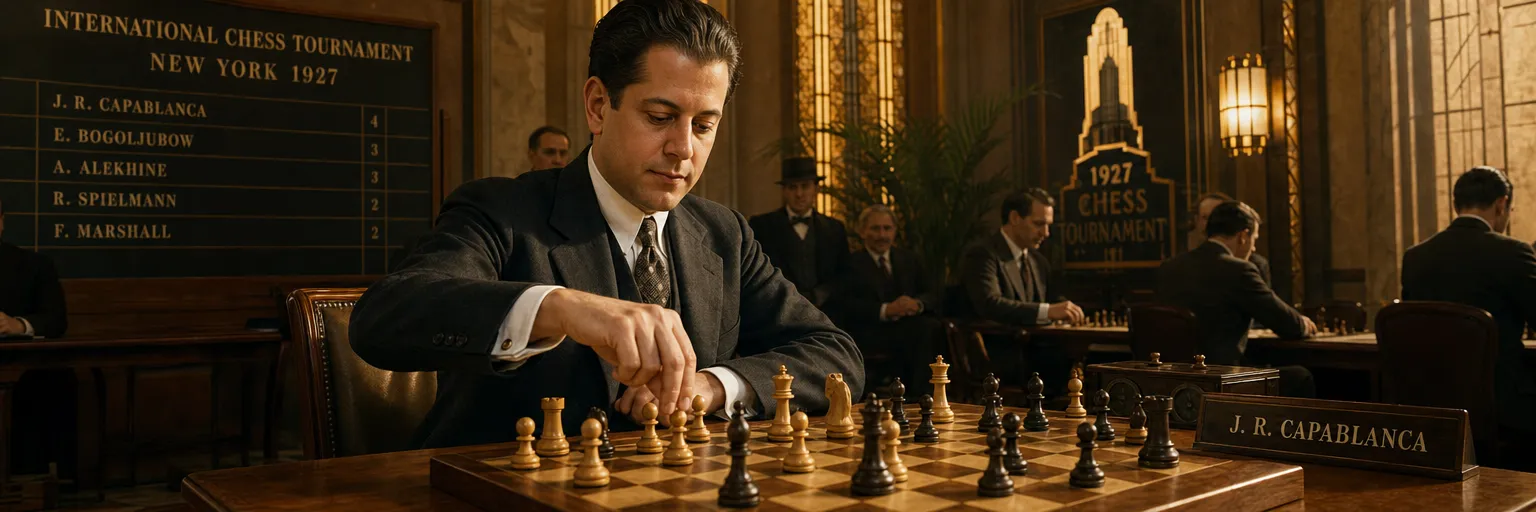
Capablanca's singular playing style
With José Raúl Capablanca, everything seemed simple at first glance, even though every decision rested on a deep understanding of the chessboard. His approach stood out for its remarkable clarity, an almost disarming economy of means, and a rare ability to turn small advantages into clear victories. This refinement shaped the image of a champion with a playing style that was fluid, precise, and fearsomely effective.
An apparent simplicity of formidable effectiveness
Capablanca avoided unnecessary complications and favored natural moves, those that improve the position without creating weaknesses. This way of playing sometimes gave the impression that he won effortlessly, so harmonious did his games appear. In reality, this restraint was the expression of an exceptional sense of piece coordination, initiative, and timing. His playing style relied less on spectacular effect than on absolute accuracy.
An undisputed master of the endgame
If he remains a major reference in the history of chess, it is also thanks to his dominance in endgames. Capablanca possessed a rare talent for simplifying positions at the right moment, then exploiting the slightest favorable detail with clinical precision. Many of his opponents lost in positions that still seemed balanced, so superior was his technique in chess endgames. This mastery helped make him a model for generations of players and analysts.
Exceptional positional intuition
Beyond pure calculation, the Cuban champion shone through an almost unique intuition. He very quickly perceived the imbalances in a position, identifying strong squares, weak pawns, and favorable exchanges with disconcerting ease. This intuitive reading of the game allowed him to build clear and coherent plans, often before his opponents even grasped the danger. Capablanca’s chess strategy thus remains associated with elegance, logic, and mastery.
A lasting influence on subsequent generations
Capablanca’s genius is not limited to his results: he also profoundly influenced the way chess is taught and understood. His preference for sound positions, his art of simplification, and his technical precision inspired many champions after him. Even today, his games are studied to learn clarity of planning, quality of piece placement, and the methodical conversion of an advantage. Through this legacy, José Raúl Capablanca remains one of the most admired figures in the game of chess.
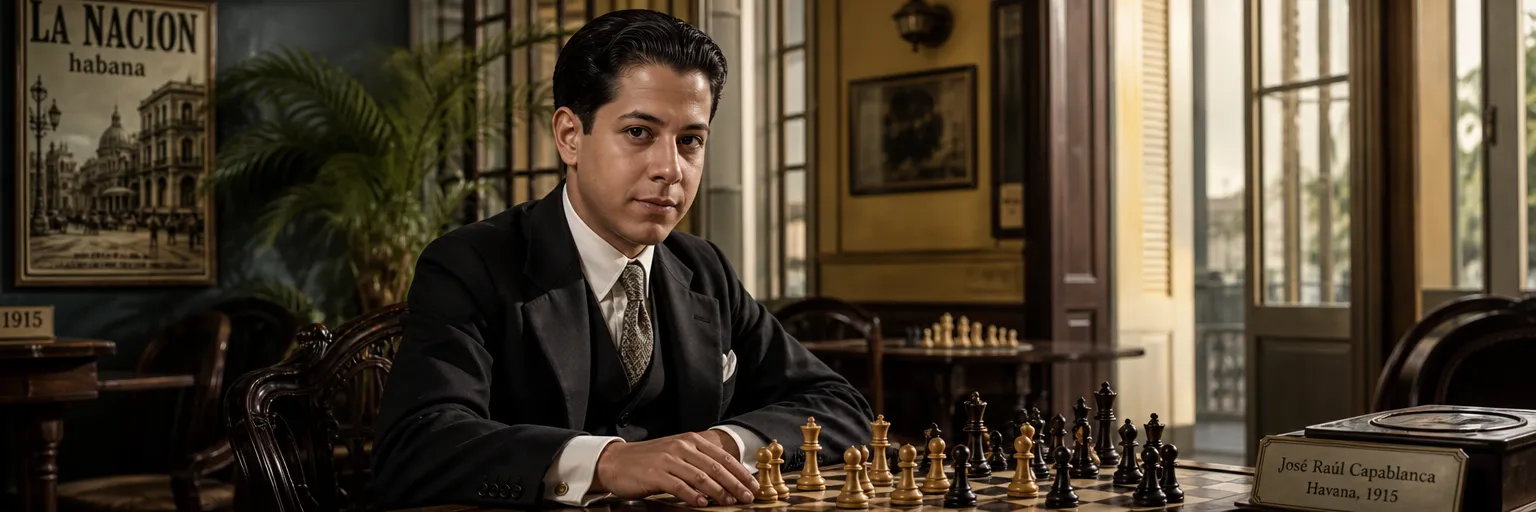
Why Capablanca Was Considered a Natural Genius
Few champions have conveyed such a striking impression of ease as José Raúl Capablanca. Where others built their victories on painstaking preparation, the Cuban seemed to see positions with disconcerting clarity. This ability to choose the right move almost every time, without any apparent effort, fueled his reputation as a natural genius of chess.
An instinctive understanding of the chessboard
Capablanca was admired for his innate sense of harmony between the pieces, strong squares, and transitions into the endgame. He did not merely have excellent tactical vision: above all, he possessed an immediate reading of positional imbalances. This intelligence for the game gave the impression that he did not need to calculate as much as his rivals, so superior did his intuitive understanding of positions seem.
A simplicity that concealed immense depth
What further reinforced the myth was his limpid style. Capablanca often avoided unnecessary complications and preferred restrained, precise, and logical moves. Yet behind this apparent simplicity lay an exceptional mastery of detail. His play relied on remarkable technical precision, capable of gradually suffocating the opponent without spectacular effects, but with formidable efficiency.
Exceptional talent in the endgame
The endgame contributed greatly to his legend. Capablanca excelled there with an almost unreal ease, turning small advantages into clear victories. Many contemporaries saw in this domination the proof of a rare gift, because he knew how to simplify at the right moment and exploit the slightest weakness with relentless accuracy. His name thus remains associated with an mastery of the endgame that has left a lasting mark on chess history.
A lasting impression on his contemporaries
The great players of his time praised not only his results, but also the way he achieved his successes. Capablanca seemed to play with natural fluidity, as if the best continuations appeared to him spontaneously. This image of effortless clarity, combined with constant composure and rare elegance on the chessboard, made him the very embodiment of pure talent, a model often cited when discussing the greatest prodigies of the game.
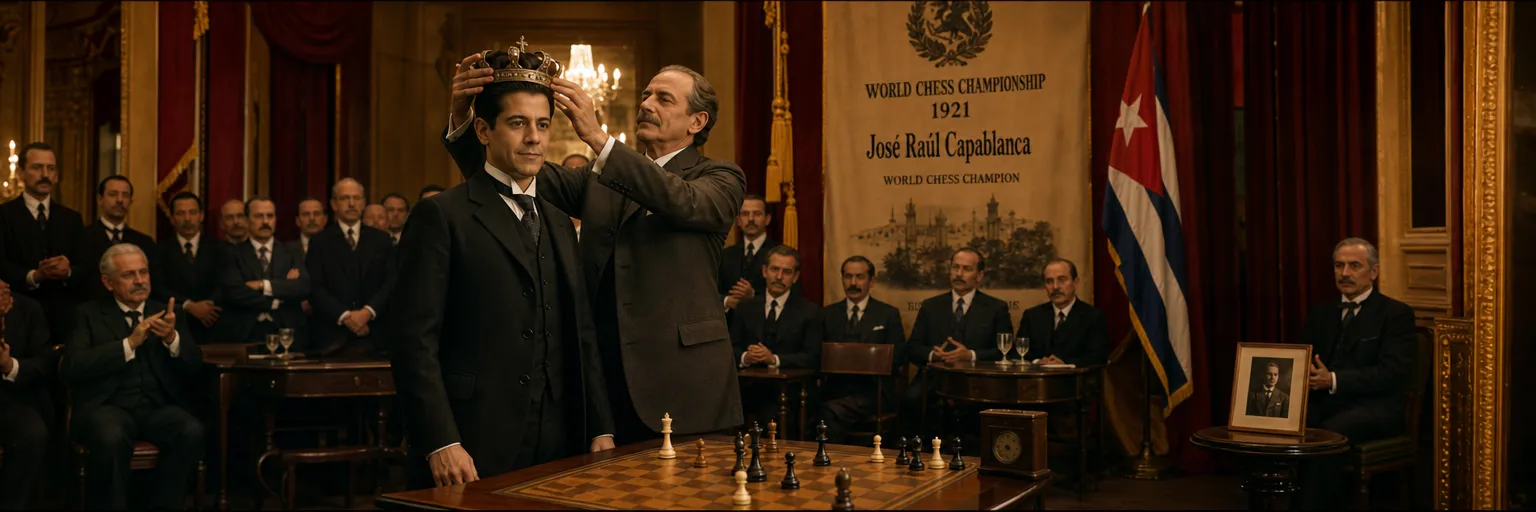
The crowning of José Raúl Capablanca as world champion
After years of dominating major international tournaments and building a reputation for invincibility, José Raúl Capablanca finally reached the pinnacle in 1921. His triumph over Emanuel Lasker marked a major turning point in chess history, symbolizing the transition between two eras and the rise of a master whose style was exceptionally clear.
A long-awaited match
Long before the official encounter, many already saw Capablanca as the natural successor to the German champion. His results against the world elite, his technical precision, and his composure made him a credible contender for the highest title. Yet organizing a world championship match proved long and complex, particularly because of the financial and diplomatic conditions of the time.
When the match was finally scheduled in Havana, the event took on considerable importance. Playing in Cuba gave Capablanca a clear moral advantage, but also brought immense pressure: he represented an entire country and carried the hopes of a public convinced it was witnessing the birth of its greatest sporting hero.
The victory over Emanuel Lasker
The 1921 duel pitted two conceptions of the game against each other. On one side was Emanuel Lasker, world champion for nearly three decades, a formidable strategist and exceptional psychologist. On the other was Capablanca, the embodiment of clear, fluid, and fearsomely effective play. As the games went on, the Cuban gradually imposed his positional mastery and his extraordinary sense of endgames.
Physically weakened by the heat and put under pressure on the board, Lasker ultimately resigned the match. This outcome officially crowned José Raúl Capablanca world champion and confirmed what many observers had suspected for years: the Cuban prodigy had become the new king of chess.
A world champion admired for his simplicity
Capablanca’s crowning was not based solely on a sporting victory. He also fascinated people by the way he claimed the title, without unnecessary spectacular effects, but with a constant impression of control. His ability to turn slight advantages into decisive successes reinforced his image as an almost infallible player.
This triumph helped firmly establish the legend of the Cuban world chess champion. For many, Capablanca then became the model of the natural player, capable of making the most complex positions seem disarmingly simple. His reign, though relatively short, left a deep mark on the history of the game.
The historical impact of this crowning
The 1921 victory extends far beyond Capablanca’s personal journey. It brought new visibility to chess in Latin America and made Cuba a country now associated with chess excellence. This historic moment also strengthened the international prestige of a player who embodied elegance, rigor, and modernity.
By becoming world champion in 1921, José Raúl Capablanca secured his place in the pantheon of the greatest masters. His coronation remains one of the most striking episodes of the first half of the 20th century, as it combines sporting achievement, symbolic significance, and the unanimous admiration of the chess world.
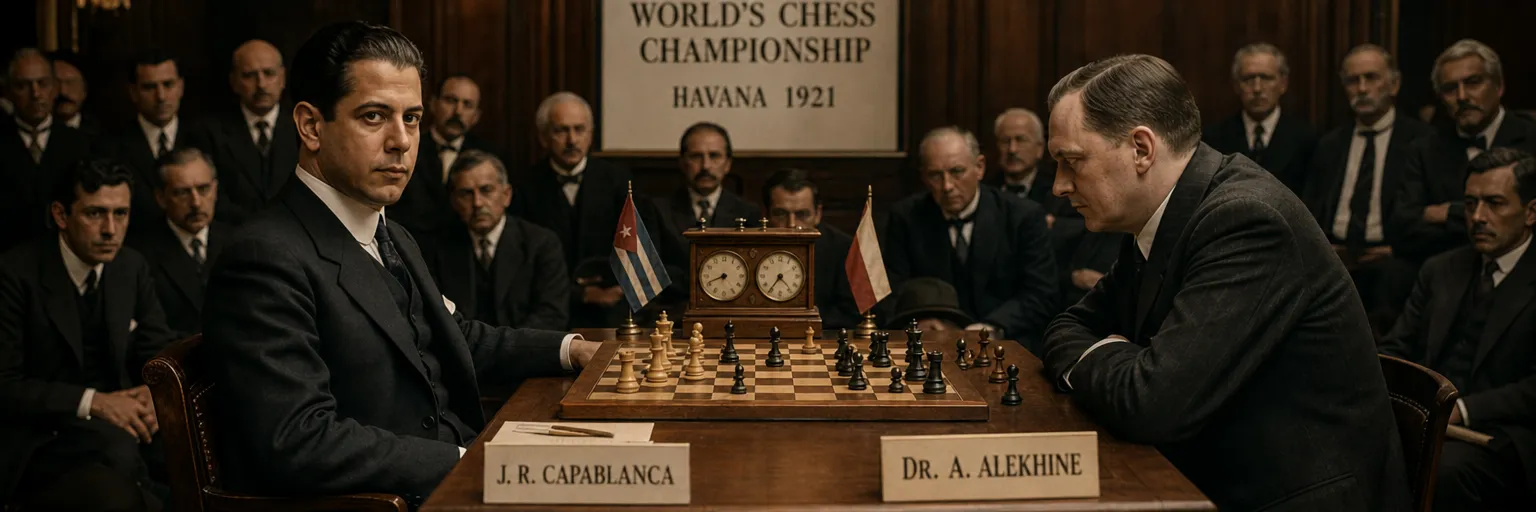
The most notable matches of his career
Certain encounters alone capture the greatness of José Raúl Capablanca. Through the precision of his choices, his remarkable composure, and his ability to turn a slight edge into a clear victory, the Cuban master produced several games that have become essential in chess history. These games perfectly illustrate why José Raúl Capablanca remains one of the most admired figures in the game.
The victorious duel against Frank Marshall
The match played in 1909 against Frank Marshall was one of the first major turning points in his career. Facing the American champion, Capablanca won convincingly and demonstrated that he could dominate a player already recognized on the international stage. This performance struck observers with its strategic maturity and heralded the emergence of a future world champion.
Beyond the score, this confrontation revealed an essential quality of his play: incredible clarity in complex positions. Where others sought spectacular complications, Capablanca preferred efficiency, which made his victories particularly impressive.
The world title match against Emanuel Lasker
In 1921, the face-off against Emanuel Lasker remains undoubtedly the most iconic of his career. Up against a legendary champion, Capablanca delivered a masterful match and claimed the world crown without losing a single game. This success marked the pinnacle of his journey and confirmed his status as an absolute benchmark in the world of chess.
This match is often cited as a model of restraint and technical dominance. Capablanca imposed his sense of timing, his excellence in the endgame, and his ability to neutralize his opponents’ initiatives. For many historians, this victory symbolizes Capablanca’s entry into the very exclusive circle of the greatest players of all time.
The decisive rivalry with Alexander Alekhine
The 1927 match against Alexander Alekhine holds a special place among the most famous games of his career. This time, Capablanca was no longer the conqueror, but the titleholder. Considered the favorite by a large part of the chess world, he came up against an opponent of formidable preparation and exceptional fighting spirit.
His defeat in this encounter was a major shock. Yet this setback in no way erases his legacy. On the contrary, it highlights the importance of this duel in the history of chess, so powerfully did it pit two brilliant conceptions of battle on the chessboard against one another: Capablanca’s intuitive fluidity versus Alekhine’s analytical energy.
Immortal games in major tournaments
Beyond championship matches, several of his tournament performances also left a lasting impression. His games in San Sebastián in 1911, in New York in 1918, and in New York in 1927 show a player capable of outclassing the world elite with apparent simplicity. In these major events, José Raúl Capablanca produced technical masterpieces that are still studied today.
These encounters remain invaluable for understanding his genius: few unnecessary moves, perfect coordination of the pieces, and an endgame mastery that was nearly unmatched. It is in these landmark matches that the full modernity of his style is revealed, capable of leaving a lasting influence on the history of chess.
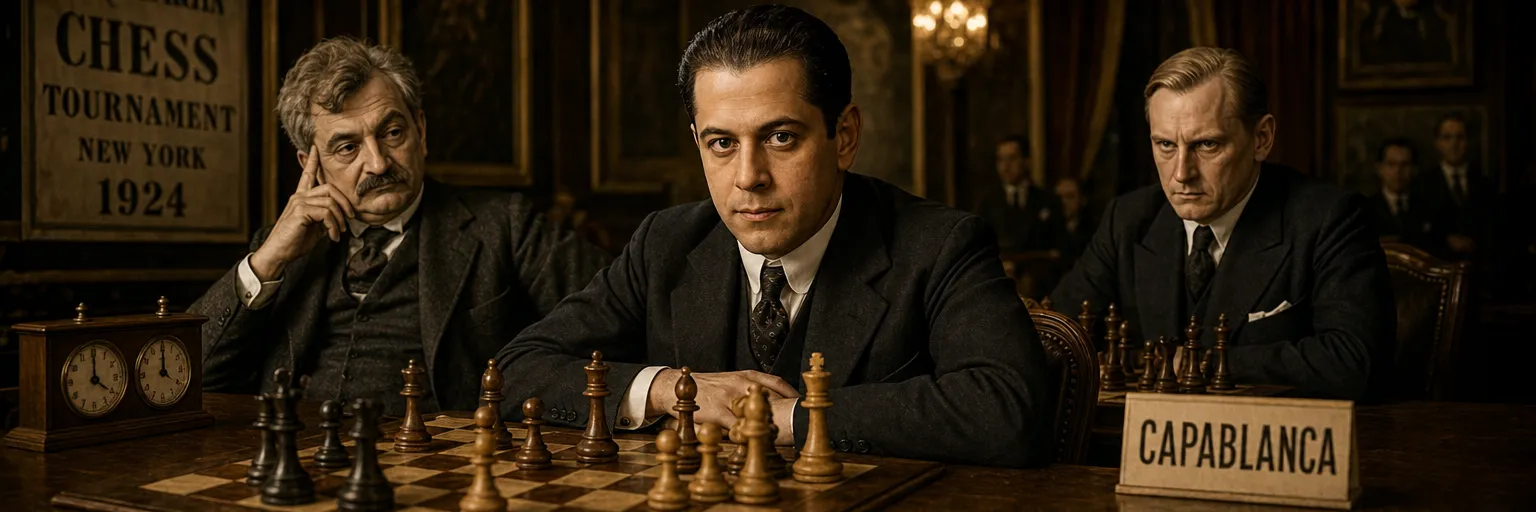
Capablanca against Emanuel Lasker and Alexander Alekhine
Among the rivalries that shaped the legend of José Raúl Capablanca, those opposing him first to Emanuel Lasker and then to Alexander Alekhine hold a central place. They reveal both the Cuban champion’s confidence, the precision of his play, and the limits that two opponents with very different temperaments were able to exploit. These confrontations deeply marked the history of chess and helped define the enduring image of José Raúl Capablanca.
The long-awaited duel against Emanuel Lasker
When Capablanca faced Emanuel Lasker for the world title in 1921, the encounter symbolized a true passing of the torch. Lasker, world champion since 1894, embodied experience, psychological resilience, and an incomparable fighting science. Opposite him, Capablanca appeared as the master of positional clarity, composure, and economy of means.
The match, played in Havana, turns in the Cuban’s favor. Lasker, physically weakened and hindered by the playing conditions, is unable to reverse the momentum. Capablanca prevails without losing a single game, a feat that reinforces his status as an exceptional world champion. This victory also confirms his reputation as an almost untouchable player, capable of neutralizing complications before converting even the slightest advantage with remarkable precision.
A domination built on simplicity and control
Against Lasker, Capablanca does not seek spectacular effect. Instead, he imposes a style based on logic, structure, and endgame mastery. Where others might have forced risky attacks, he prefers to improve his pieces slowly, reduce his opponents’ counterplay, and exploit weaknesses with cold elegance. This approach makes him one of the greatest technicians in the history of chess.
This success against Lasker also carries major symbolic significance. It is not merely an individual conquest, but a moment when José Raúl Capablanca becomes the absolute benchmark of positional play. His triumph then seems to herald a lasting reign, so natural does his superiority appear.
The psychological shock against Alexander Alekhine
A few years later, the scenario changes radically with Alexander Alekhine. In 1927, Capablanca defends his world title against an opponent who is more combative, more unpredictable, and above all perfectly prepared to challenge his authority. Where Lasker had suffered under the Cuban’s mastery, Alekhine chooses to introduce constant tension, complicate the positions, and take the match onto more unstable psychological ground.
Many observers then considered Capablanca the favorite. His natural talent, technique, and experience seemed sufficient to retain the crown. Yet Alekhine defies the predictions. Thanks to meticulous preparation and fierce determination, he manages to disrupt the rhythm of the Cuban world champion. Capablanca’s defeat stands as one of the greatest upsets in the history of the game.
Why Alekhine succeeded where so many others had failed
Alekhine’s success rests on several factors. First, he refuses to submit to the clear logic imposed by Capablanca and creates positions that are more complex, sharper, and less favorable to purely intuitive handling. Then, he exploits a certain confidence in the Cuban master, sometimes judged excessive, especially in his specific preparation for the match.
This confrontation highlights a fascinating contrast between two geniuses. On one side, José Raúl Capablanca embodies fluidity, harmony, and natural precision. On the other, Alekhine represents energy, analytical ambition, and relentless fighting spirit. Their clash goes beyond the simple framework of a chess match: it pits two visions of excellence against each other, two ways of dominating a chessboard and an opponent.
A legacy strengthened by these great rivalries
Capablanca’s encounters with Lasker and Alekhine largely shaped his legacy. His victory over Lasker places him among the greatest names of all time, while his defeat to Alekhine humanizes his journey without diminishing his greatness. On the contrary, it reminds us that even the purest talents must face the evolution of the game, modern preparation, and the pressure of major events.
By revisiting these major duels, we better understand why Capablanca remains an essential figure in the global history of chess. His path against Emanuel Lasker and Alexander Alekhine alone captures the beauty of top-level chess: intelligence, style, rivalry, and the constant shifting of balance.
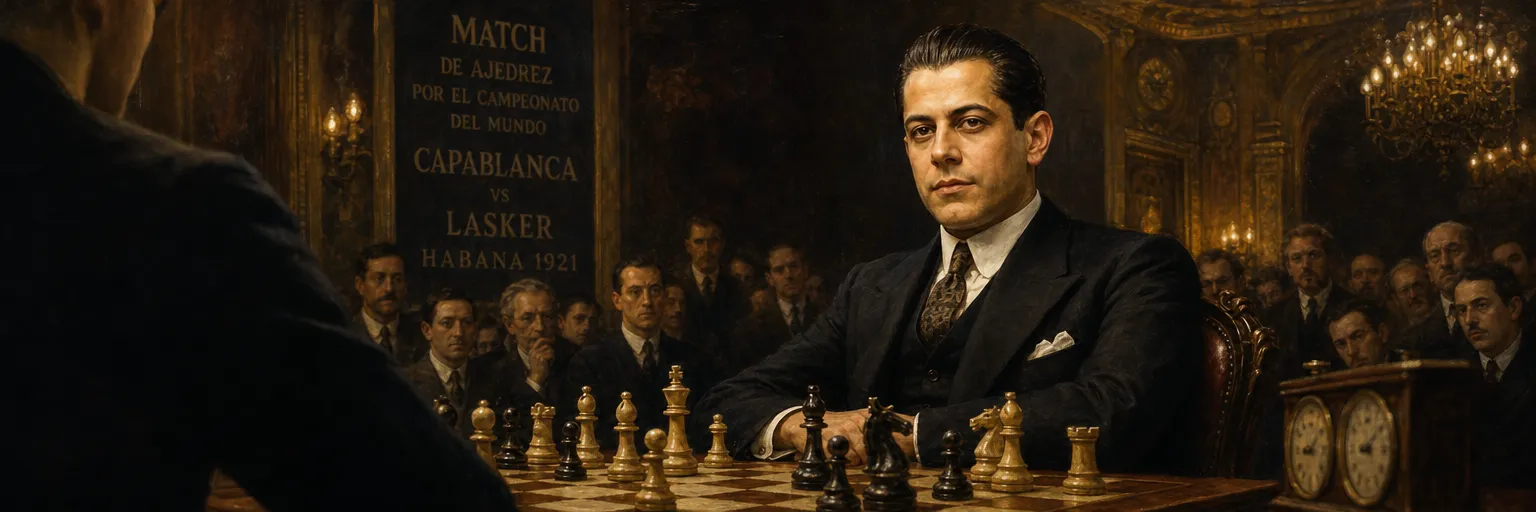
The duels that shaped his legend
Throughout the major international competitions, José Raúl Capablanca built his reputation in confrontations where prestige, psychological tension, and technical mastery came together. Each major rival revealed a facet of his immense talent, whether in his endgame precision, his composure, or his almost intuitive sense of the best squares. These duels played a major role in making him an essential figure in the history of chess.
The decisive test against Emanuel Lasker
The head-to-head with Emanuel Lasker marks a major turning point in the Cuban master’s career. By defeating the reigning world champion in the 1921 match, Capablanca did more than win a crown: he imposed a new vision of the game, clearer, more economical, and formidably effective. This success against such an experienced opponent strengthened his image as a natural world champion, capable of dominating without seeking spectacular effect.
This duel perfectly illustrates José Raúl Capablanca’s strength: a rare ability to neutralize his opponent’s resources before converting a slight advantage into an unquestionable victory. In the world of chess, few confrontations have had such a strong impact on the perception of a player at the height of his art.
The intense rivalry with Alexander Alekhine
While Lasker symbolizes the conquest of the title, Alexander Alekhine represents the opponent who profoundly shaped the next chapter of his legend. Their 1927 match remains one of the most discussed in chess history, so much did it pit two conceptions of the game against each other. On one side, Capablanca favored clarity, apparent simplicity, and positional mastery; on the other, Alekhine relied on complexity, tactical energy, and constant pressure.
Capablanca’s defeat to Alekhine surprised the entire world, as many considered him almost invincible. Yet this setback did not diminish his aura; in a way, it even strengthened it. A great sporting myth is also nourished by its flaws, and this duel gave the Cuban prodigy’s trajectory an added depth. The rivalry between the two men remains one of the most fascinating in the game of chess.
Clashes that revealed his genius
Beyond the famous names, Capablanca’s great duels reveal a constant: his ability to make the very difficult seem almost obvious. Against the best players of his time, he often gave the impression of controlling the rhythm of the game with disconcerting calm. This mastery fed his legend far beyond his results alone.
By revisiting these major encounters, we better understand why José Raúl Capablanca remains associated with the idea of classical perfection. His confrontations with Lasker and Alekhine, in particular, forged the lasting image of a Cuban genius whose name continues to hold a special place in the memory of chess enthusiasts.
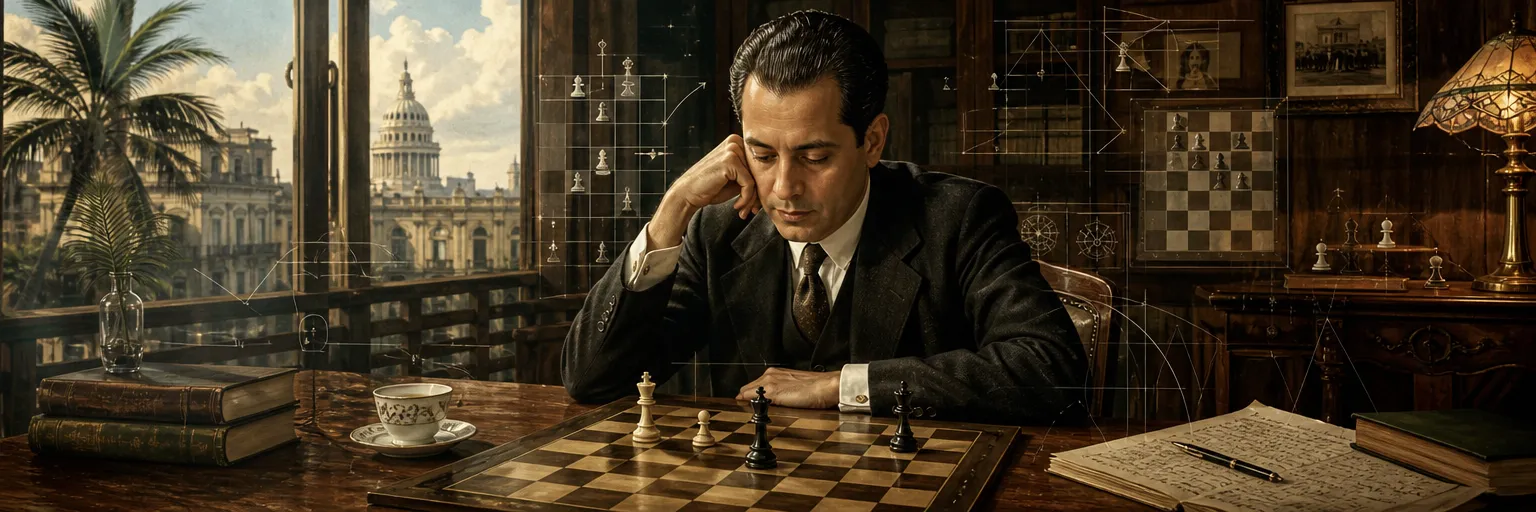
Capablanca’s contribution to chess theory
Beyond his victories and his aura as a champion, José Raúl Capablanca profoundly influenced the way the game is understood. His theoretical legacy is not based on an accumulation of complicated variations, but on a crystal-clear vision of positions, piece activity, and the conversion of small advantages. This approach left a lasting mark on chess theory and continues to inspire both amateurs and grandmasters alike.
A vision grounded in positional clarity
Capablanca showed that an apparently simple position could contain immense strategic richness. He excelled in the art of placing his pieces harmoniously, avoiding unnecessary weaknesses, and anticipating endgames from the middlegame onward. This way of playing reinforced the idea that a good understanding of pawn structures and coordination is often enough to dominate without resorting to excessive complications. In the history of chess strategy, his name thus remains associated with elegance and efficiency.
An absolute master of the endgame
One of Capablanca’s most enduring contributions concerns the endgame, a field in which he served as a benchmark for generations. His precision in rook, pawn, and minor-piece endgames helped advance the methodical study of these positions. By demonstrating that even the slightest improvement in piece placement could decide the outcome of a game, he enriched the understanding of the chess endgame as a domain for the expression of technical genius. Many of his games are still studied to learn how to convert the smallest advantage with almost perfect rigor.
A lasting influence on openings
Although Capablanca is not chiefly famous for having created long-standing opening schools bearing his name, he left a significant mark on several systems. His natural handling of development, his preference for sound positions, and his sense of timing helped popularize a restrained and solid approach to the chess opening. The Orthodox Defense in the Queen’s Gambit, certain Ruy Lopez lines, and exchange-based setups all bear the imprint of his style: obtain a sound position, activate the pieces, then apply relentless pressure.
A model for modern teaching
Coaches and instructors often cite Capablanca when explaining the essential foundations of the game. His games are ideal for illustrating fundamental principles: centralization, timely simplification, the superiority of an active piece over a passive one, and the methodical exploitation of weak squares. In this respect, he remains a major figure in positional understanding. His famous book Chess Fundamentals also helped spread a clear and structured way of thinking, accessible without sacrificing depth.
A legacy still alive among top players
Many champions of the 20th and 21st centuries have acknowledged Capablanca’s influence on their own development. His art of simplifying without impoverishing, of calculating with restraint, and of letting the logic of the game speak still resonates in the practice of today’s best players. In this sense, Capablanca’s legacy goes beyond his era: he helped define a form of classicism in chess theory, in which technical precision and strategic purity occupy a central place.
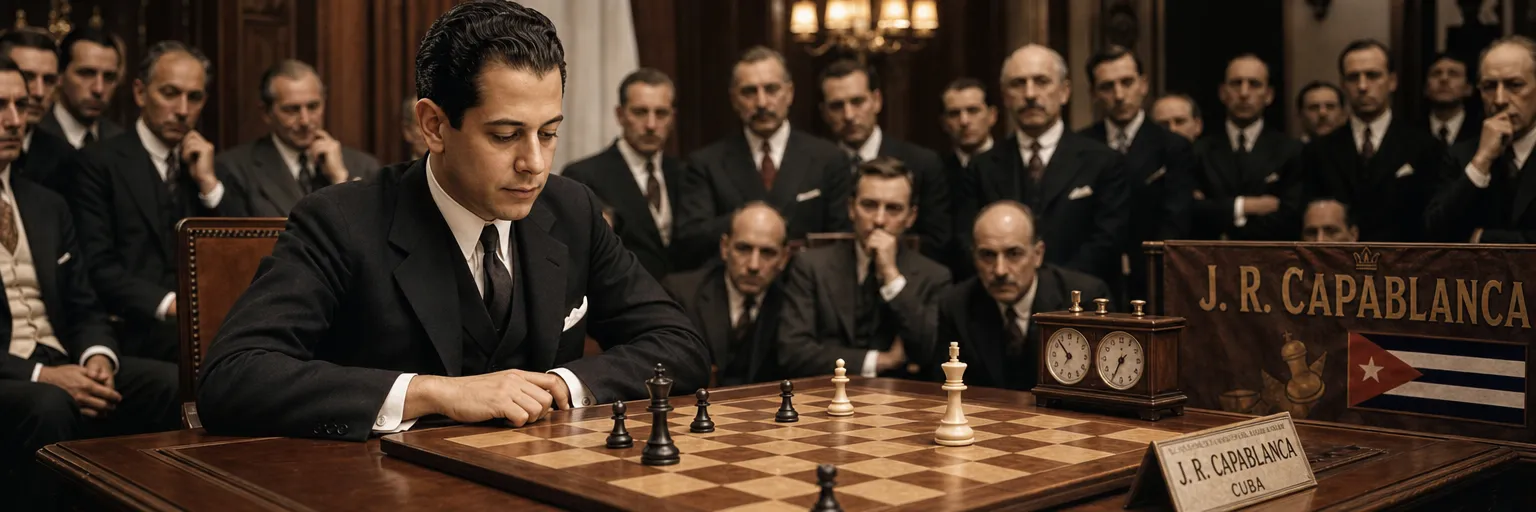
Capablanca’s famous games to know
Observing José Raúl Capablanca’s finest victories makes it immediately clear what earned him worldwide renown: cold precision, an exceptional sense of positioning, and a rare ability to turn a slight advantage into a clean win. Several Capablanca famous gamesare still studied today, as they illustrate both his strategic elegance and his extraordinary mastery of endgames.
The strategic lesson against Frank Marshall
Among the most frequently cited encounters is his game against Frank Marshall in New York in 1918. Marshall launched an ambitious attack in the opening that would later become famous under the name of the Marshall Gambit. Capablanca, far from giving in to panic, absorbed the pressure with impressive calm, neutralized the threats, and then gradually took control of the position. This game has become a reference point for understanding how a great champion can respond to aggressive theoretical preparation without ever losing sight of his plan.
A demonstration of technique against Tartakower
His victory against Savielly Tartakower at the New York 1924 tournament is often presented as a model of positional domination. In this game, Capablanca improved his pieces with relentless logic, limited his opponent’s counterplay, and exploited every weakness with remarkable restraint. It is one of the best examples of Capablanca’s playing style: no unnecessary spectacular effects, but an accumulation of small advantages that ultimately makes defense impossible.
The classic against Janowski
Against Dawid Janowski, Capablanca also recorded several notable successes, especially in positions where his sense of coordination stood out brilliantly. These games show just how much the Cuban champion excelled in seemingly simple setups. Where other players sought complications, he found the ideal square, the right exchange, and the perfect transition into a winning endgame. For many enthusiasts, these encounters rank among the best chess games of the early twentieth century in terms of strategic clarity.
The masterpiece against Yates
His game against Frederick Yates, played at Hastings in 1930, also remains essential. In it, Capablanca delivers a true lesson in piece activity, gradually imposing positional superiority that seems almost natural. This impression of simplicity is deceptive: behind every move lies a very subtle reading of the imbalances. This game is often recommended to those who want to discover a Capablanca game that is accessible to analysis, yet rich in lessons on the harmony of the pieces.
Why these games are still studied
If these works continue to fascinate players, coaches, and historians, it is because they reveal the quintessence of a champion capable of making the game crystal clear. Capablanca’s famous games are appealing not only for their historical value: they still serve as teaching material for learning how to convert advantages, restrict the opponent’s pieces, and master the subtle art of endgames. By studying them, one understands why José Raúl Capablanca remains one of the most admired figures in chess history.
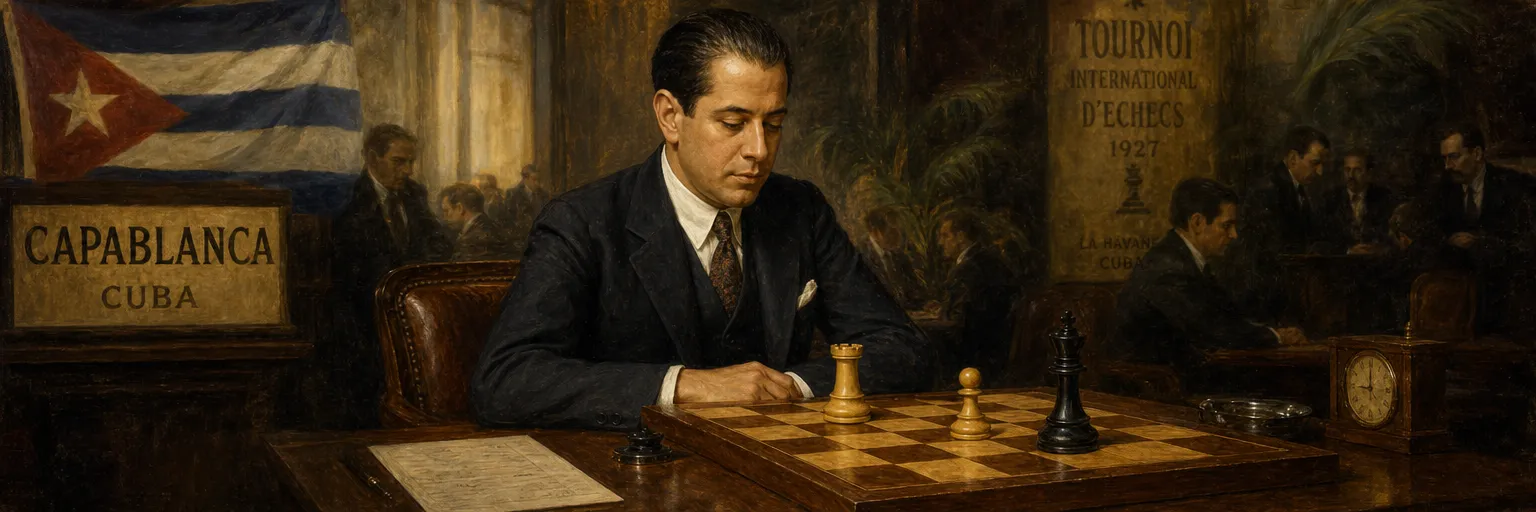
Capablanca and chess endgames: exceptional mastery
In simplified positions, José Raúl Capablanca perhaps revealed the depth of his talent more than anywhere else. Where many players saw a technical and austere phase, he recognized an ideal ground for imposing his logic, precision, and sense of the slightest detail. His reputation in chess endgames was built on this rare ability to turn small advantages into almost inevitable victories.
A natural understanding of streamlined positions
Capablanca excelled in endgames because he possessed an exceptional grasp of piece activity, pawn structure, and the role of the king. He knew exactly when to centralize, exchange, or wait, never forcing the position unnecessarily. This science of balance made him an absolute master of chess technique, capable of making what was in reality highly subtle appear simple.
His opponents often found themselves in positions that seemed equal, only to discover too late that every key square was controlled, every weakness methodically targeted, and every maneuver prepared with a formidable economy of means. This form of silent domination became one of the hallmarks of the Cuban champion.
The art of turning a minimal advantage into a certain win
One of Capablanca’s most admired traits lay in his ability to exploit an almost invisible detail: an isolated pawn, a weak square, a slightly less active piece. From there, he built a clear plan, without rushing, until the opponent’s defense became untenable. In endgames, this strategic patience made all the difference.
He did not necessarily seek spectacular combinations. His strength came rather from his sense of perfect coordination and his extraordinary precision. Many of his victories seem to unfold smoothly, as if the outcome naturally arose from the position. It is precisely this impression of ease that still fuels fascination with his play today.
Endgames that became learning models
Capablanca’s games are still studied by players of all levels because they offer remarkable examples of clarity. His rook, minor-piece, and queen endgames illustrate fundamental principles with rare elegance: king activation, creating a passed pawn, controlling an open file, or progressively restricting the opponent’s counterplay.
For this reason, his name remains closely associated with endgame mastery. Coaches and teachers regularly cite his games to show that true strength lies not only in attack, but also in the ability to understand a position through to its conclusion. For José Raúl Capablanca, endgames were not just a mere phase of the game: they were the purest expression of his genius.
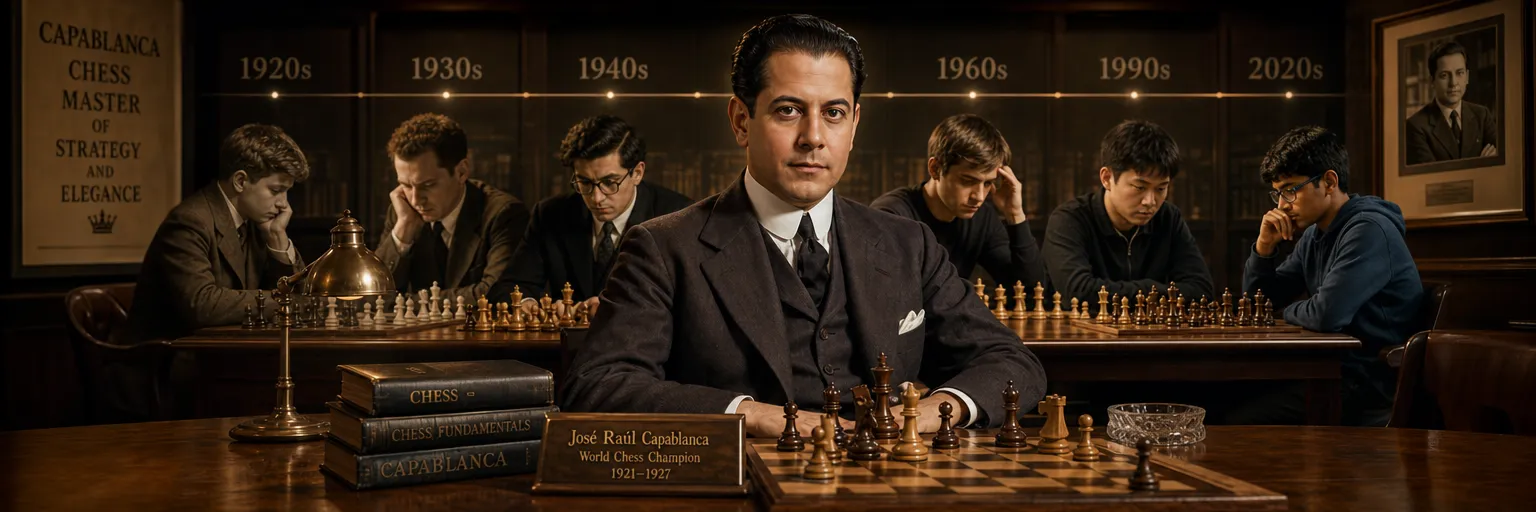
José Raúl Capablanca’s influence on later generations
Far beyond his list of achievements, José Raúl Capablanca left a lasting mark on the history of the game by serving as a model for entire generations of players. His way of handling positions with clarity, economy of means, and composure profoundly shaped chess instruction, from amateur clubs to the highest levels of competition.
A model of simplicity and efficiency
Capablanca inspired many champions through his rejection of unnecessary complication. Where others sought spectacular combinations, he often favored the right square, the timely exchange, and the soundest structure. This approach helped change the way chess was perceived: beauty lies not only in attack, but also in positional precision and strategic logic.
Players such as Anatoly Karpov, Bobby Fischer, and Vladimir Kramnik have often been linked to this legacy, so much does their style at times display that same formidable sobriety. Capablanca’s influence can thus be seen in a line of masters for whom domination is born first and foremost from understanding.
An essential reference in learning
Capablanca’s games still hold a central place today in the training of young talents. His victories are regularly studied to illustrate fundamental principles: harmonious development, control of the center, piece coordination, and the technical conversion of a slight advantage. For many coaches, he remains essential reading in the study of classical chess.
His books, particularly those devoted to strategic fundamentals and endgames, also strengthened his educational influence. They convey a clear vision of chess, accessible without being simplistic, which explains why his teaching remains relevant in the modern era.
A living legacy in endgames and positional play
If Capablanca still fascinates so much, it is also because his mastery of endgames continues to be cited as an absolute benchmark. His ability to turn a slight advantage into victory shaped the way later generations approached simplified positions. In this field, his name has become almost synonymous with technical purity in chess.
Even with the rise of analysis engines, many of his decisions remain striking for their natural accuracy. This explains why José Raúl Capablanca remains an admired figure not only as a former champion, but also as a lasting source of inspiration for all those seeking to understand the essence of chess.
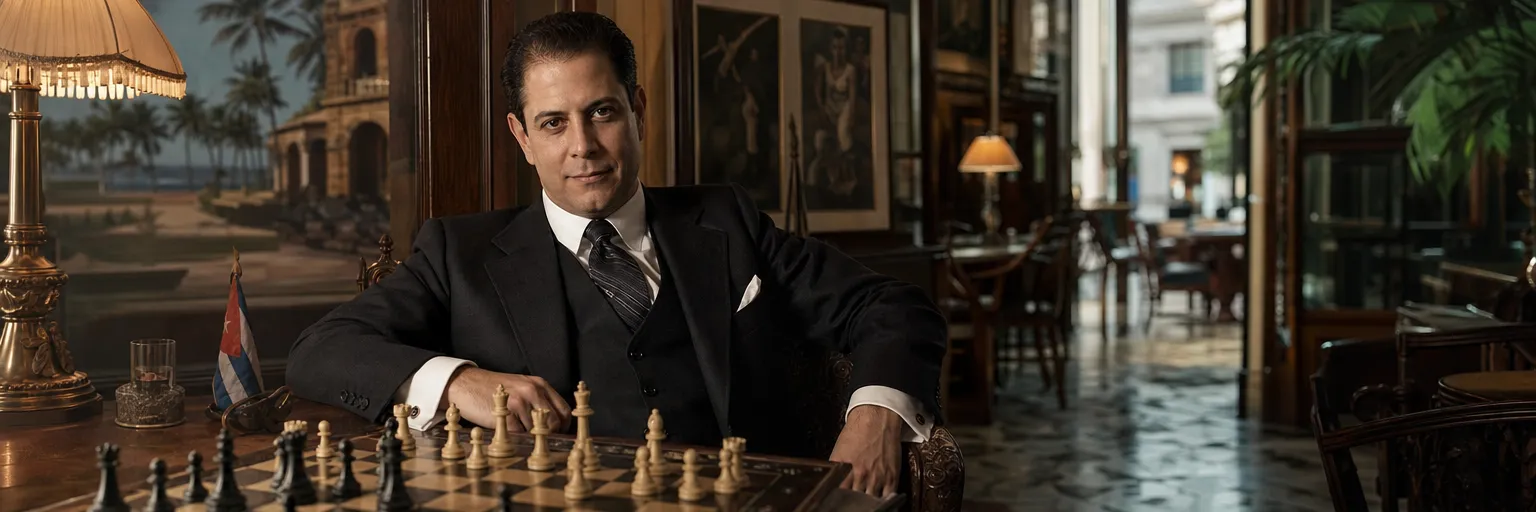
The personality, elegance, and charisma of the Cuban champion
On and off the chessboard, José Raúl Capablanca carried a rare presence, marked by distinction, confidence, and natural poise. His refined appearance, his measured way of speaking, and his almost unshakable calm all helped shape the image of a champion who was as brilliant as he was fascinating. In his case, talent was never displayed ostentatiously: it revealed itself through restraint, self-mastery, and an elegance that left a lasting mark on the world of chess.
A presence that went beyond the game itself
Capablanca was admired not only for his results, but also for his demeanor. Always impeccably presented, he embodied a kind of refinement that enhanced his international reputation. This natural elegance, often emphasized by his contemporaries, gave him a singular aura in tournaments as well as in social circles. He seemed both approachable and impressive, capable of captivating an audience without ever trying too hard.
A calm and self-assured temperament
What also stood out about the Cuban champion was his composure. Even in tense situations, he kept an impassive face and a relaxed attitude. This self-assurance fed his charisma and reinforced the idea of a player fully in control of himself in every circumstance. Some saw it as pride, but many above all admired this quiet confidence, a reflection of exceptional intelligence and an instinctive understanding of the game.
A worldly and admired figure
In the great capitals where he appeared, José Raúl Capablanca drew attention far beyond chess enthusiasts. His personal charm, culture, and social ease made him a true ambassador of the game. He embodied the modern, cosmopolitan, and brilliant Cuban champion, capable of making chess shine in a wide variety of circles. This public dimension played a major role in building his legend, making him a personality admired as much for his style as for his victories.
The lasting image of a gentleman of chess
Over time, Capablanca has remained in people’s memories as one of the greatest symbols of distinction in the chess world. His name evokes not only technical precision and genius, but also a way of being. This combination of talent, restraint, and presence shaped the legacy of the Cuban chess prodigy, whose image continues to captivate both history enthusiasts and today’s players.
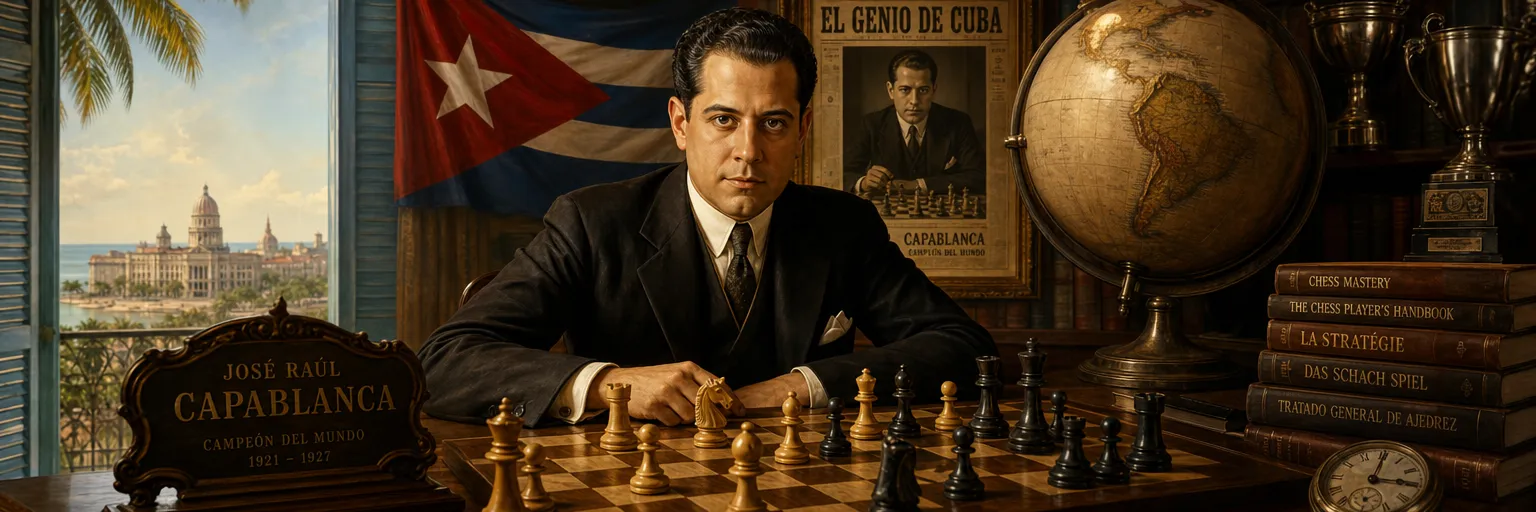
Why José Raúl Capablanca remains an icon of world chess
More than a century after his greatest exploits, José Raúl Capablanca continues to hold a special place in the collective memory of chess enthusiasts. His name evokes both the beauty of the game, strategic efficiency, and a nearly artistic sense of obviousness in the way he conducted a game. This lasting aura explains why he remains one of the most admired figures in chess history.
A model of simplicity and perfection
What still strikes people about Capablanca today is the clarity of his decisions. Where other champions impress through complexity or tactical violence, he fascinated through clarity. This approach shaped his image as an exceptional world champion, capable of dominating without ever seeming to force the issue. For many players, he embodies the ideal of a pure, logical, and harmonious game.
An influence that goes beyond his era
José Raúl Capablanca’s prestige is not based solely on his record of achievements. His legacy is also reflected in the way later generations studied his games, especially his endgames and positional plans. His sense of piece placement, technique, and intuition continue to shape manuals, lessons, and analyses devoted to the history of chess. In this respect, he remains a major reference point for understanding the evolution of the modern game.
A legend shaped by his style and personality
The Capablanca icon was also built around his natural elegance, calm demeanor, and confidence. He embodied a rare form of mastery, both intellectual and personal. This combination of talent, charisma, and distinction strengthened his international stature and helped make José Raúl Capablanca far more than just a great player: a true legend of world chess.
An enduring fascination
If Capablanca remains so present in people’s minds, it is because his games still convey a sense of modernity. His play seems timeless, accessible in its apparent simplicity yet deeply instructive in its precision. For enthusiasts and masters alike, he remains a symbol of excellence, naturalness, and positional intelligence, which explains why his name retains a unique brilliance in the world of chess.
José Raúl Capablanca remained famous for his fluid style, his incredible sense of simplicity, and his mastery of the endgame. However, his reign at the top of chess would come to an end against a formidable opponent, renowned for his tactical imagination and attacking play: Alexander Alekhine: the master of attack in chess, one of the most creative world champions in history.
Want to discover other personalities who left their mark on the world of chess through their talent, style, or achievements? Explore our complete overview of the great names of the game: Famous chess players: legends, champions, and modern stars.