
 France
 English
 Deutsch
 Español
 Italiano
 Nederlands
 Polski
 Português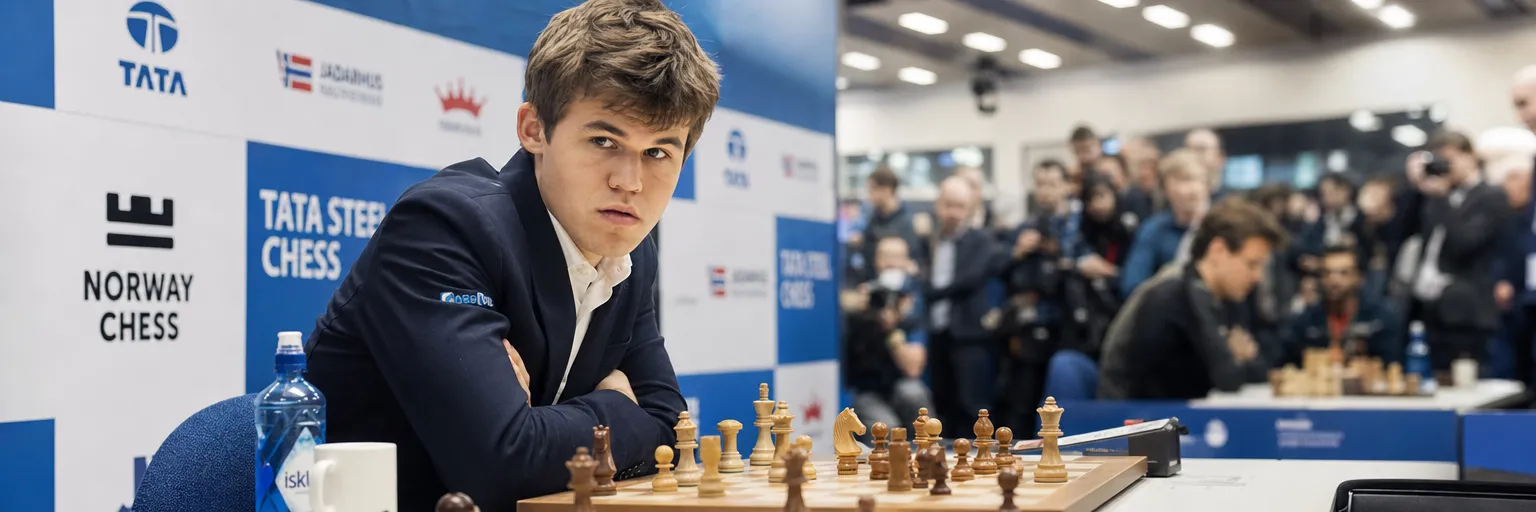
Magnus Carlsen's early years and meteoric rise
Magnus Carlsen was born on November 30, 1990, in Tønsberg, Norway, and showed exceptional intellectual abilities from a very young age. Even before becoming a global chess icon, he was already fascinating people with his memory, concentration, and speed of learning. His family environment played an important role in his development, particularly thanks to his passionate father, who introduced him to the game in childhood.
A precocious talent spotted from childhood
From his earliest years at the chessboard, Magnus Carlsen displayed an exceptional understanding of positions and an instinctive sense of strategy. While many young players learn the basic patterns, he quickly developed an overall vision of the game. This precociousness drew the attention of coaches and observers on the international circuit, who saw in him a future prodigy of modern chess.
At a very young age, he took part in high-level tournaments and stood out for his composure against far more experienced opponents. His style, already ambitious and precise, revealed a rare competitive personality. This ability to withstand pressure became one of the trademarks of the man who would later be regarded as the king of modern chess.
Performances that accelerated his progress
Magnus Carlsen's rise was particularly swift. In 2004, he earned the grandmaster title at just 13 years old, an impressive achievement that immediately placed him among the greatest hopes of the global chess scene. From that moment on, his rise through the international rankings seemed unstoppable.
His results against the elite confirmed that he was not just a passing phenomenon. He delivered one top-level performance after another, defeated established players, and gained maturity at a remarkable pace. This rise to prominence helped build the image of Magnus Carlsen as an essential figure of his generation.
A rise built on hard work and intuition
While his natural talent is impressive, his success also rests on rigorous discipline and a very refined understanding of the subtleties of the game. Magnus Carlsen worked on his endgames, improved his opening repertoire, and developed exceptional mental stamina. He also stood out for his ability to exploit the smallest imbalances, even in positions that appeared equal.
This combination of intuition, technique, and perseverance explains the strength of his journey. In just a few years, he goes from being a young Norwegian prodigy to a serious contender for the top of the world. His meteoric rise thus lays the foundations for a career that will leave a lasting mark on the history of chess.

Why Magnus Carlsen is considered the master of modern chess
Magnus Carlsen has established himself as an essential benchmark thanks to a rare combination of natural talent, competitive discipline, and constant adaptability. Over the years, he has redefined the standards of elite play by showing that a champion can dominate through both strategic precision and psychological resilience.
Dominance built on consistency
What sets Carlsen apart is not only his ability to defeat the best players in the world, but also his capacity to remain at the top over time. In a field as demanding as chess, maintaining such a level against global competition that is always better prepared confirms his status as a major figure in modern chess. His longevity, exceptional ranking, and performances in the most prestigious tournaments illustrate a consistency that few champions have achieved.
A universal and formidably effective style
Unlike some grandmasters associated with a very specific school of play, Magnus Carlsen excels in almost every type of position. He can seize the initiative from the opening, impose positional pressure in the middlegame, and then convert even the slightest advantage in the endgame with remarkable mastery. This versatility makes him a true master of modern chess, capable of adapting to every type of opponent and every time control.
The science of endgames and mental pressure
One of Carlsen’s trademarks lies in his art of turning seemingly balanced positions into patient victories. Where others would accept a draw, he keeps posing concrete problems until he provokes his opponent’s mistake. This competitive endurance, combined with a highly refined understanding of endgames, reinforces his image as a complete champion. His approach shows that superiority in chess does not rest solely on brilliant combinations, but also on the ability to apply constant pressure.
A major influence on contemporary chess
Beyond his titles, Magnus Carlsen has also left his mark on his era through his impact on the way competition is understood. He popularized a more pragmatic, more flexible, and often more human vision of the game, in which energy, precision, and time management matter just as much as pure theory. For many observers, he thus embodies the most accomplished face of the modern champion, one who combines technical excellence, practical intelligence, and international charisma.

Magnus Carlsen's unique playing style
For Magnus Carlsen, strength is not simply about impressive theoretical preparation or exceptional calculating ability. His trademark lies above all in a highly personal way of approaching the chessboard : constant pressure, strategic patience, and precise exploitation of the slightest weakness in the opponent's position. This identity makes him a formidable player in almost every type of position.
Silent but constant pressure
One of the most striking features of his approach is his ability to turn balanced positions into uncomfortable territory for his opponents. Where many would seek an immediate advantage, he often prefers to gradually improve his pieces, control key squares, and push the other side into making mistakes. This sense of attrition explains why Magnus Carlsen excels so much in long endgames and games where psychological tension becomes decisive.
Mastery of the endgame
The Norwegian champion is regularly admired for his talent in endgames, an area of the game where technical precision and deep understanding are essential. Even with only a minimal advantage, he manages to keep posing practical problems until he achieves a breakthrough. This ability to « squeeze » a position has contributed greatly to his status as world chess champion and to his reputation as a player who is almost impossible to neutralize over time.
Rare adaptability
Another essential aspect of his style is his incredible flexibility. Unlike players confined to a rigid repertoire, he readily adapts his choices to the context, the time control, and the opponent’s profile. He can enter complex lines, but also opt for calmer setups in order to leave theory quickly. This strategic freedom reinforces his image as the king of modern chess, capable of shining in classical, rapid, and blitz alike.
The weight of mentality in his game
Carlsen’s style is also built on immense mental resilience. He embraces long games, defends difficult positions without panicking, and remains dangerous even in seemingly neutral situations. This competitive endurance allows him to maintain a very high level of intensity right up to the final moves. More than just a virtuoso of calculation, Magnus Carlsen embodies a form of complete domination, where technique, psychology, and practical sense combine with remarkable consistency.
Magnus Carlsen’s greatest triumphs in competition
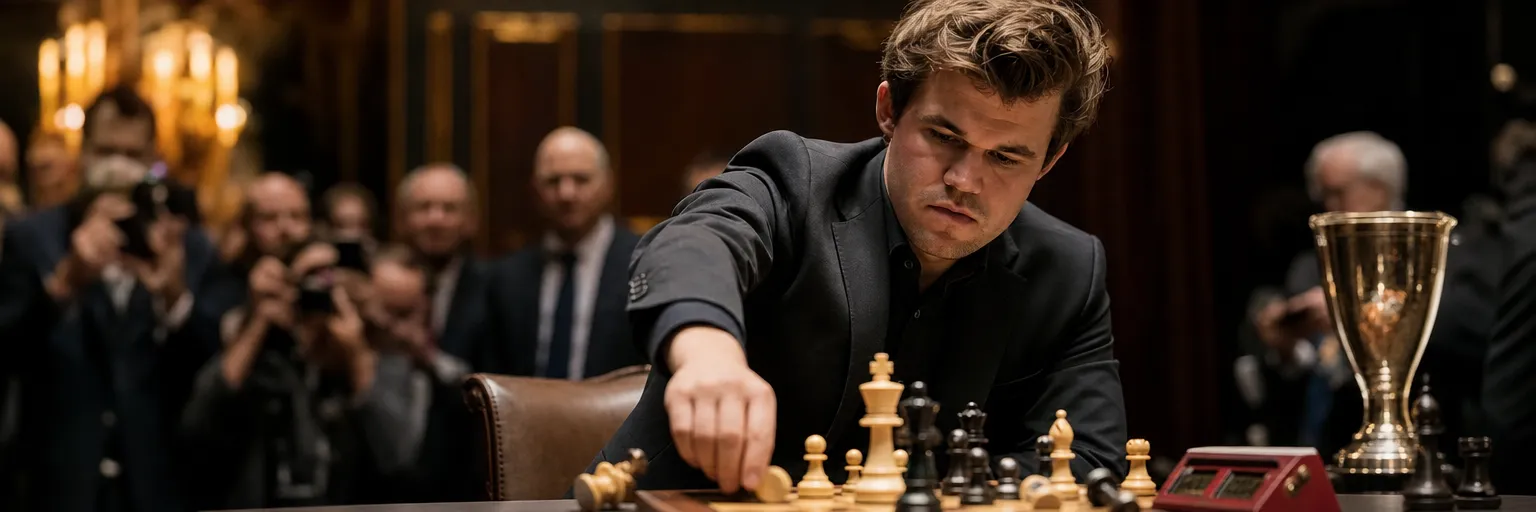
Few champions have amassed so many major achievements with such consistency. Over more than a decade, Magnus Carlsen has turned the biggest events into a conquering ground, stringing together world titles, victories in the toughest tournaments, and remarkable feats against the international elite.
The 2013 world title against Viswanathan Anand
The first truly towering peak of his career came in 2013, when he claimed the world champion title by defeating Viswanathan Anand in Chennai. This success marked a historic turning point in the world of chess: Carlsen did not simply become the new king of the discipline, he also embodied a new generation capable of imposing a more universal, patient, and ruthlessly effective style of play. This victory ushered in the Magnus Carlsen era at the highest level.
Title defenses that strengthened his legend
Winning a world championship is one thing; keeping it against ever better-prepared challengers is another. Carlsen confirmed his dominance by successfully defending his crown against Anand in 2014, then against Sergey Karjakin in 2016, Fabiano Caruana in 2018, and Ian Nepomniachtchi in 2021. Each of these campaigns illustrated his mental toughness, strategic sense, and ability to make the difference in decisive moments, especially in the rapid tiebreaks where his status as world champion came fully into its own.
Rare dominance in rapid and blitz games
Beyond the classical format, the Norwegian has also built an exceptional record in rapid and blitz time controls. He has won several world titles in these disciplines, confirming that he excels both in strategic depth and in split-second decision-making. This versatility makes him one of the most complete players in the history of modern chess, capable of adapting to every pace and every tournament setting.
Victories in the most prestigious tournaments
Carlsen’s triumphs are not limited to World Championship matches. He has also distinguished himself in the biggest international tournaments, such as Wijk aan Zee, Stavanger, London, and Shamkir. By regularly prevailing against the best grandmasters of his generation, he has built exceptional longevity at the top. This accumulation of successes in very high-level competitions reinforces his image as the king of chess and highlights the remarkable consistency of his performances.
Records that accompany his successes
His competitive triumphs take on even greater significance when associated with his records, notably his historic Elo rating and his impressive unbeaten streak in classical games. These achievements are not merely flattering statistics: they reflect sustained dominance, something rare in elite sport. Thanks to this accumulation of titles, records, and exceptional performances, Magnus Carlsen has established himself as a central figure in the contemporary history of the game.
Magnus Carlsen world champion: a historic reign
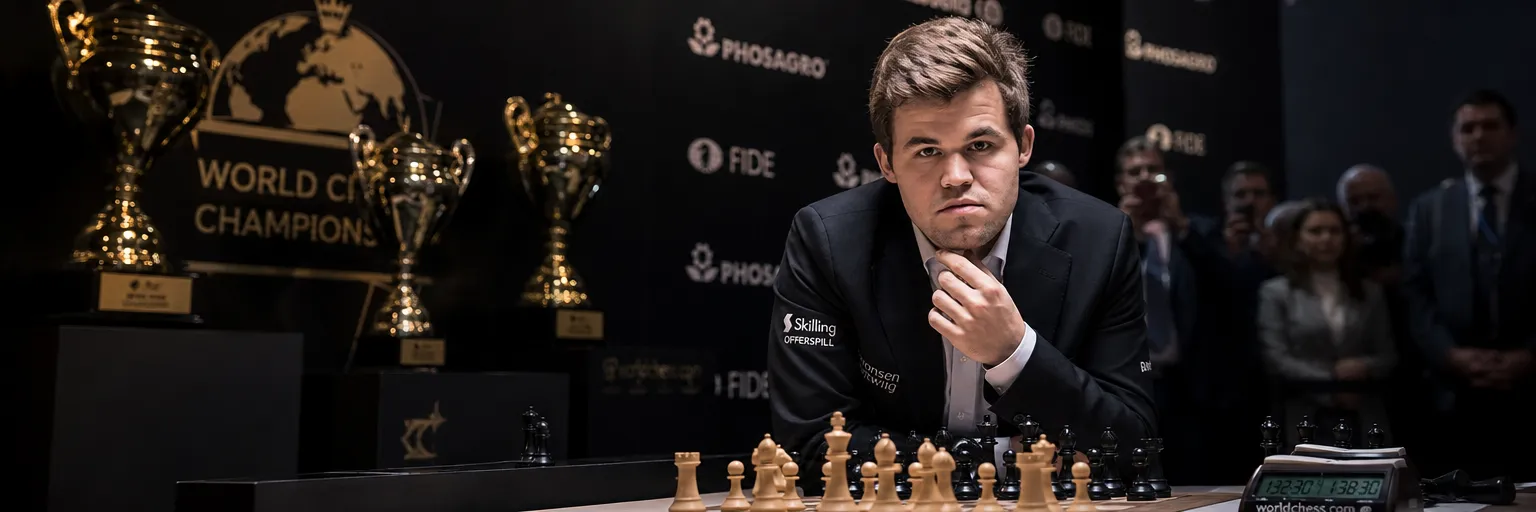
With his coronation in 2013 against Viswanathan Anand, Magnus Carlsen ushered in a new era at the top of the chess world. This world champion title not only marks the culmination of an exceptional journey: it also symbolizes the transition to enduring leadership, built on consistency, precision, and psychological mastery rarely seen in the history of the game.
A crowning achievement that reshapes the world hierarchy
By becoming world chess champion, the Norwegian confirmed what the Elo rating had already suggested for several years. His success against Anand was based on a pragmatic approach, excellent endgame management, and an ability to apply constant pressure, even in seemingly balanced positions. This victory firmly established Magnus Carlsen at the center of the international stage.
Title defenses that strengthen his legend
Magnus Carlsen’s reign takes on a historic dimension thanks to his successful defenses of the world title. Against Anand in 2014, then Sergey Karjakin in 2016, Fabiano Caruana in 2018, and Ian Nepomniachtchi in 2021, he demonstrated a remarkable ability to adapt. Each match illustrates a different facet of his genius: resilience under pressure, strategic preparation, composure in decisive moments, and dominance in rapid tiebreaks.
Dominance beyond the World Championship alone
What makes this reign so remarkable is that it is not limited to the classical format. Alongside his world champion title, Magnus Carlsen also establishes himself as a benchmark in rapid and blitz. This versatility strengthens his status as a leading figure in modern chess, capable of staying at the top across all time controls and against the best players of his generation.
The legacy of a king of modern chess
When Magnus Carlsen chose not to defend his classical world title after 2021, his mark was already immense. His historic reign redefined the standards of performance, mental endurance, and competitive rigor. For many observers, he remains the symbol of the king of modern chess, a player whose influence extends far beyond his list of achievements and continues to inspire new generations.
Magnus Carlsen's impressive records
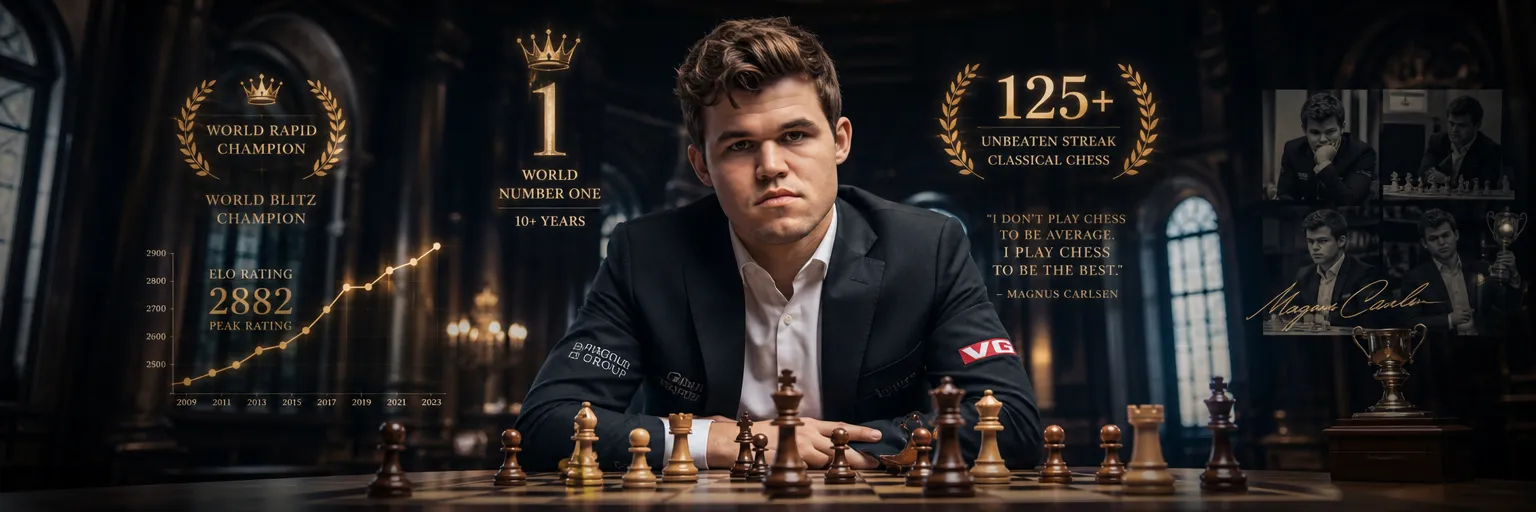
Over the years, Magnus Carlsen has amassed performances that have placed him in a category of his own in chess history. His name is associated with striking numbers, exceptional consistency at the highest level, and a dominance that goes beyond the simple framework of major titles.
An Elo rating that entered legend
One of the Norwegian prodigy's most famous records remains his peak in the world rankings. By reaching 2882 Elo points in 2014, Magnus Carlsen set an unprecedented benchmark in modern chess. This total illustrates not only his talent, but also his ability to perform consistently against the best grandmasters on the planet.
Holding the highest Elo rating in history is not a one-time feat: it is the reflection of superiority maintained over several seasons. In such a competitive world, preserving such a lead requires technical precision, mental endurance, and almost flawless consistency.
Exceptional longevity at the top
Beyond his peak rating, the Norwegian champion marked his era through his continuous presence at the top of the international circuit. Remaining world number one for such a long period is a record that reinforces his status as the ultimate benchmark. Where many champions experience shorter cycles, Magnus Carlsen imposed lasting dominance.
This longevity is explained by his versatility. He has managed to win in classical, rapid, and blitz time controls, while adapting to the evolution of the overall level. This ability to stay ahead of an entire generation of competitors makes him a major figure in the history of chess.
Remarkable unbeaten streaks
Among the most impressive statistics, his long unbeaten streaks hold a special place. In classical chess, Magnus Carlsen put together dozens of games without losing, an exceptionally rare feat at this level. This resilience shows just how difficult he is to beat, even when his opponents meticulously prepare every detail.
These unbeaten runs are not based solely on caution. They also reflect his ability to put pressure on his opponents in balanced positions, then turn slight advantages into victories. It is precisely this skill that shaped his reputation as a results machine.
A record-breaking list of achievements across several formats
Magnus Carlsen’s reign was not limited to the classical world championship. He also collected world titles in rapid and blitz, confirming an extremely rare kind of multi-format dominance. Few players in history have managed to rule with such authority over several time controls at the same time.
This collection of records highlights the full scope of his game: strategic depth in classical, responsiveness in rapid, instinct and precision in blitz. By bringing all these qualities together, Magnus Carlsen redefined the standards of the very highest level and cemented his image as the undisputed king of modern chess.
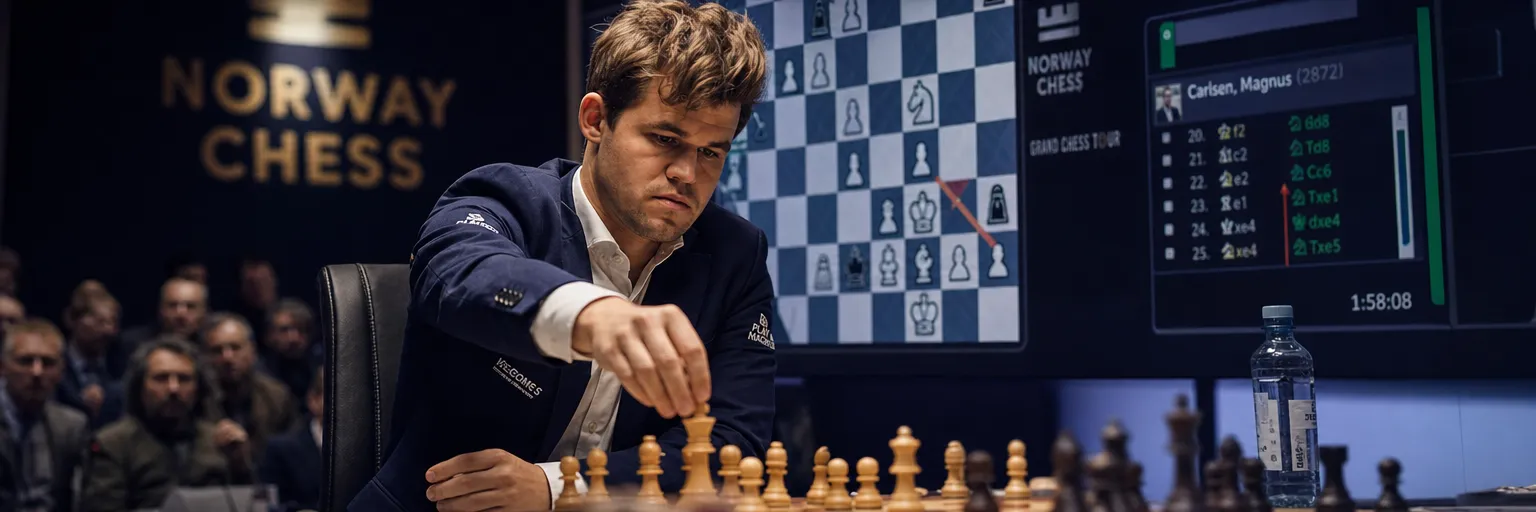
Magnus Carlsen’s impact on contemporary chess
Beyond his achievements, Magnus Carlsen has profoundly transformed the way chess is played, followed, and perceived around the world. His influence can be seen both in the strategic choices of grandmasters and in the media and digital growth of the discipline. By setting exceptionally high standards, he redefined what it means to dominate modern chess.
A new benchmark for the world elite
The Norwegian pushed his opponents to rethink their preparation and their practical approach to positions. Where some champions stood out mainly through their opening repertoire, Magnus Carlsen showed that exceptional mastery of endgames, technique, and patience could make the difference at the highest level. This vision influenced an entire generation of players, who are now more attentive to versatility than to theoretical memorization alone.
His ability to apply pressure for a long time in equal positions also changed competitive habits. Many professionals now seek to reproduce this ability to “play until the very end,” convinced that in contemporary chess, psychological resilience matters just as much as tactical precision.
A driving force behind the popularity of online chess
Magnus Carlsen’s impact extends far beyond the realm of traditional tournaments. His presence in rapid competitions, blitz, and digital platforms has helped bring chess closer to a broader, younger, and more connected audience. By appearing regularly in dynamic formats, he has helped modernize the image of a game sometimes seen as too austere.
This visibility has strengthened interest in live games, instant analysis, and educational content shared online. In this context, Magnus Carlsen has become one of the leading faces of the democratization of modern chess, appealing to both dedicated enthusiasts and the simply curious alike.
A lasting influence on future generations
For many young talents, Magnus Carlsen represents a model of consistency, ambition, and adaptability. His career proves that it is possible to stay at the top by constantly evolving, by working on every phase of the game, and by embracing the changes in elite-level chess. This ability to evolve inspires coaches, academies, and developing players.
His legacy is therefore measured as much in his titles as in the mark he leaves on chess culture. By influencing training methods, competition formats, and public perception, Magnus Carlsen stands out as a central figure in the recent history and future of contemporary chess.
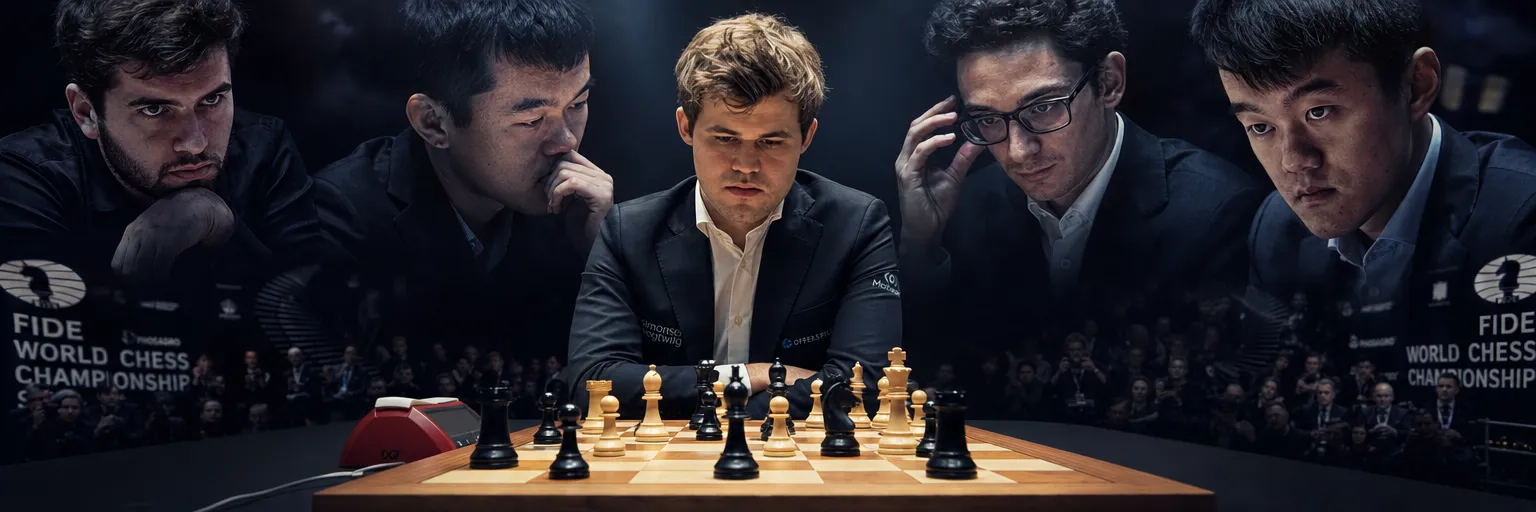
Magnus Carlsen against his most formidable opponents
The greatness of a champion is also measured by the quality of the opposition he faces, and Magnus Carlsen built his legend by dominating several generations of exceptional players. From former world champions to the most aggressive prodigies on the circuit, he has constantly had to adjust his game, his mindset, and his preparation to remain at the top of chess.
Viswanathan Anand, the champion he dethroned
The duel against Viswanathan Anand remains one of the major turning points in Magnus Carlsen’s career. In 2013, the Norwegian captured the world title against an opponent renowned for his opening knowledge, calculating speed, and immense experience. This head-to-head symbolizes the passing of the torch between two eras of chess, with Carlsen able to wear Anand down in long, technical, and psychologically demanding positions.
Their rematch in 2014 confirmed that superiority. Anand managed to pose more problems, but Magnus Carlsen kept the edge thanks to his solidity and his ability to turn small imbalances into decisive victories.
Fabiano Caruana, the closest rival to the throne
Among Magnus Carlsen’s most dangerous opponents, Fabiano Caruana holds a special place. Exceptionally precise and armed with formidable opening preparation, the American has often been regarded as the most serious contender for the world title. Their 2018 World Championship match perfectly illustrates this top-level rivalry.
After a string of draws in the classical games, Magnus Carlsen made the difference in the rapid tiebreaks, an area where his intuition and time management become major weapons. Against Caruana, he showed that he could withstand extreme strategic pressure while maintaining a competitive edge in the decisive moments.
Hikaru Nakamura and the battle of faster time controls
While classical encounters are important, the clashes against Hikaru Nakamura have also left their mark on the modern era of chess, especially in blitz and rapid. The American player, famous for his tactical sense, creativity, and speed of execution, is one of the few grandmasters capable of putting Magnus Carlsen under constant pressure in tense formats.
Their rivalry became even more visible with the rise of online competitions. In these spectacular duels, Carlsen stands out for his impressive consistency, exceptional endgame understanding, and rare ability to remain clear-headed even in chaos.
Ian Nepomniachtchi and the pressure of world championship matches
Ian Nepomniachtchi is another particularly formidable opponent. Highly dynamic, unpredictable, and capable of producing lightning-fast attacking sequences, the Russian pushed Magnus Carlsen to maximum concentration during the 2021 World Championship. After an even start, the famous sixth game changed the complexion of the match.
This marathon victory by Magnus Carlsen highlighted an essential quality of his play: his ability to mentally wear down his rivals without ever easing the pressure. Against Nepomniachtchi, he managed to turn a closely contested battle into a display of endurance, precision, and psychological mastery.
The new generation, a constant challenge
Beyond the most widely publicized names, Magnus Carlsen must also contend with an ambitious new generation led by players such as Alireza Firouzja, Ding Liren, and Wesley So. Each presents a different challenge: tactical creativity, positional rigor, computer-assisted preparation, or exceptional endgame resilience.
It is precisely against this diversity of opposition that the Norwegian champion has strengthened his status as the absolute benchmark. By facing the most varied profiles on the circuit, Magnus Carlsen has proven that his reign was built not only on talent, but on constant adaptation to the changes in modern chess.
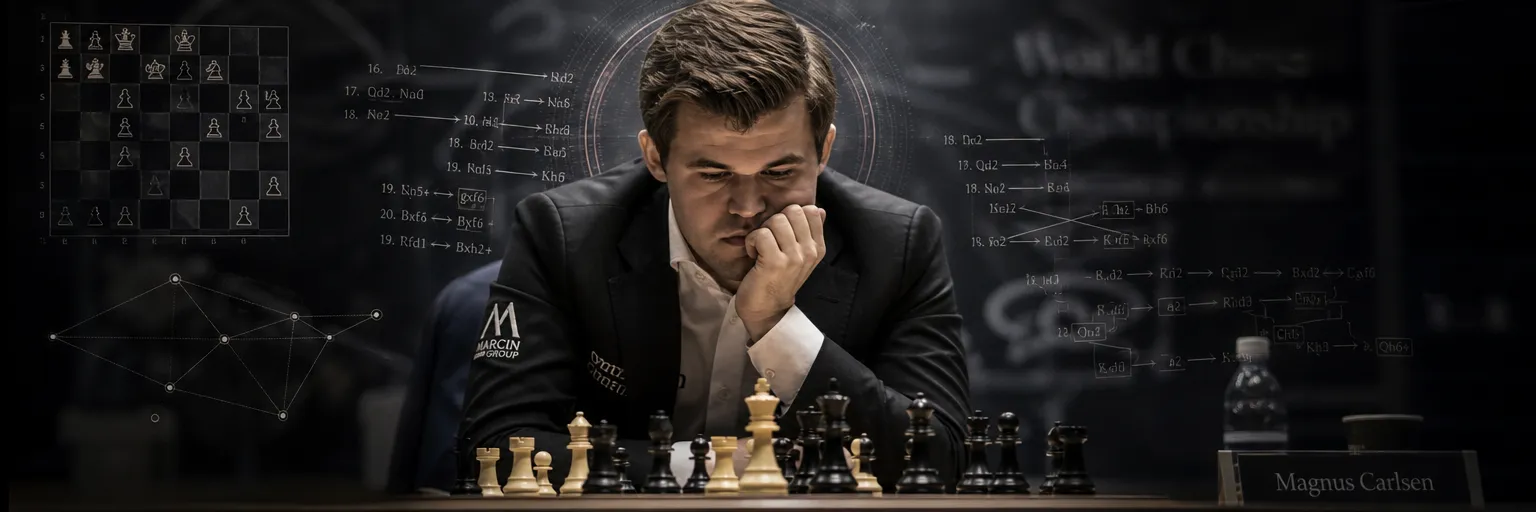
Magnus Carlsen's mental and tactical preparation
Behind Magnus Carlsen's exceptional consistency lies a working method built on clarity, psychological endurance, and a highly refined understanding of positions. His preparation is not based solely on accumulating variations, but on a rare ability to stay calm, assess accurately, and exploit the slightest weakness in a chess game.
Extraordinary mental resilience
One of the Norwegian champion's greatest strengths lies in his nerve and resilience. Even in equal or slightly inferior positions, Magnus Carlsen maintains remarkable concentration and continues to pose practical problems for his opponents. This mental strength allows him to hold on for hours without rushing, with a confidence that carries great weight in endgames.
This emotional control is also evident in how he handles pressure. At major events, he knows how to absorb the stakes, avoid impulsive reactions, and maintain an exceptionally high level of decision-making. In modern chess, where computer preparation is omnipresent, this psychological stability often makes the difference.
Tactical preparation focused on precision
Although his image is often associated with positional play, Magnus Carlsen is also a formidable tactician. He quickly spots imbalances, anticipates hidden resources, and calculates with great efficiency in critical moments. His strength comes not only from spectacular combinations, but from his ability to choose the right tactical plan at exactly the right moment.
His preparation therefore involves working on varied positions, reviewing typical patterns, and refining his sense of timing. Rather than relying exclusively on openings, he develops an overall reading of the board, which allows him to improvise naturally when faced with new situations.
The importance of endurance and adaptation
The demands of the very highest level require complete preparation, both physical and intellectual. Magnus Carlsen places importance on endurance, as long games demand continuous attention and great mental freshness. This dimension partly explains his superiority in long endgames, where many players eventually give in.
His other great quality is adaptability. Against each opponent, he adjusts his approach, chooses different structures, and avoids becoming predictable. This strategic flexibility reinforces his dominance in chess, as it prevents him from being confined to a single style of play.
Preparation focused on decisive details
For Magnus Carlsen, every detail matters: a pawn weakness, a poorly controlled square, a slightly exposed king, or a change of pace in the game. His mental and tactical preparation is precisely aimed at identifying these micro-advantages before anyone else, then gradually turning them into concrete dominance.
It is this combination of composure, precision in calculation, and practical sense that explains why he remains an absolute benchmark in chess. More than just a gifted player, he embodies a complete form of excellence, capable of combining preparation, intuition, and competitive efficiency.
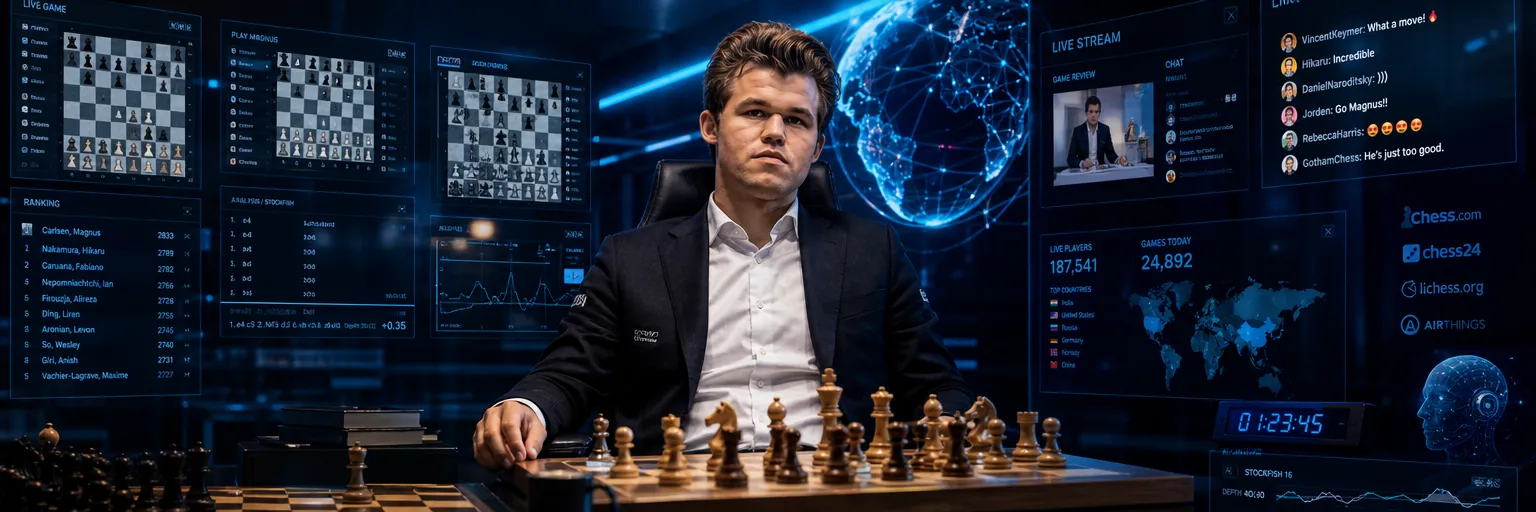
Magnus Carlsen and the influence of digital technology on chess
In the age of online platforms, streaming, and computer-assisted analysis, Magnus Carlsen embodies better than anyone the fusion of sporting genius and the digital revolution. His career shows how digital technology has changed the practice of chess, accelerating learning, making competitions more accessible, and bringing the best players closer to a global audience.
A champion shaped by modern tools
Reaching the very highest level no longer depends solely on books, coaches, and over-the-board tournaments. With databases, analysis engines, and specialized platforms, preparation has become faster, more precise, and more intensive. Magnus Carlsen has adapted to this environment with remarkable intelligence, using technology not only to study openings, but also to explore complex endgames, test new ideas, and sharpen his intuition.
This transformation has also changed the way young talents approach modern chess. By observing Carlsen’s career, many have understood that human creativity and the power of digital tools must be combined to remain competitive at the highest level.
The role of online play in his popularity
Magnus Carlsen’s success is not explained solely by his titles. His presence in the world of online play has helped bring chess into a new media dimension. Rapid games, blitz, and bullet broadcast on the internet have allowed spectators to discover a champion capable of shining in spectacular formats, perfectly suited to digital habits.
Thanks to this visibility, Carlsen has reached a much broader audience than that of traditional competitions. Live broadcasts, commentary on social media, and analysis videos have all helped strengthen his image as an essential reference in 21st-century chess.
A major influence on platforms and communities
The rise of training and competition platforms was also boosted by Magnus Carlsen’s fame. His name is associated with a period when millions of players began playing online, following grandmasters on streaming platforms, and analyzing their games almost instantly. This momentum encouraged the creation of highly active communities, where amateurs and experts exchange ideas on strategies, theoretical developments, and the performances of champions.
At the same time, his image strengthened the game’s commercial and cultural appeal. Mobile apps, online events, and educational content all benefited from this modernization, making chess a more visible, more interactive, and more international intellectual sport than ever before.
Digital technology as a driving force for the future of chess
The mark left by Magnus Carlsen therefore goes far beyond sporting results alone. By establishing himself in a world where computer analysis, online games, and instant broadcasting are redefining the rules, he embodies a new generation of champions. His career confirms that digital technology has not weakened the essence of chess, but on the contrary has enriched it, multiplying the ways it can be played, learned, and enjoyed as a spectacle.
Through him, modern chess appears as a field where tradition and innovation move forward together, with rare intensity. That also explains why his influence continues to leave a lasting mark on the present and future of this universal game.

What Magnus Carlsen’s legacy brings to new generations of players
Far more than a champion with an extraordinary list of achievements, Magnus Carlsen leaves young talents a new way of approaching chess: more flexible, more ambitious, and more creative. His journey shows that it is possible to dominate without limiting oneself to rigid patterns, relying as much on a deep understanding of the game as on the ability to adapt to each position.
A more complete vision of top-level play
One of Magnus Carlsen’s major contributions lies in the idea that a great player is not defined solely by their opening repertoire. New generations see in him the importance of endgames, technique, patience, and the constant pressure exerted on the opponent. This approach encourages many rising talents to develop a more complete profile, capable of shining in all formats and in all types of positions.
A taste for creativity and adaptation
His legacy also inspires a form of strategic freedom. Instead of systematically seeking the most theoretical line, many young players understand that it is possible to create imbalances in other ways, through practical choices, a nuanced reading of the position’s demands, and great confidence in their own strengths. This influence helps make modern chess more dynamic and less predictable.
A model of discipline and consistency
New generations also remember Magnus Carlsen’s exceptional rigor. His longevity at the highest level is a reminder that talent alone is not enough to establish oneself over the long term. Daily work, mental preparation, endurance in long games, and the ability to stay focused in critical moments become, through his example, standards for all those aiming for excellence.
An influence beyond the chessboard
The impact of his legacy extends beyond competitive play. Thanks to his global visibility, Magnus Carlsen has helped make chess more appealing to a young, connected, and international audience. By combining sporting prestige, media presence, and ease in the digital world, he has inspired a new generation to play, learn, and follow this sport with passion.
A lasting benchmark for future champions
For young players, his journey serves as a lasting benchmark: it proves that one can be at once universal, innovative, and formidably effective. Magnus Carlsen’s legacy is therefore measured not only in titles, but in the way it redefines ambitions, working methods, and the standards of the very highest level in chess.